The Scott Jennings Show
8:00 pm - 10:00 pm
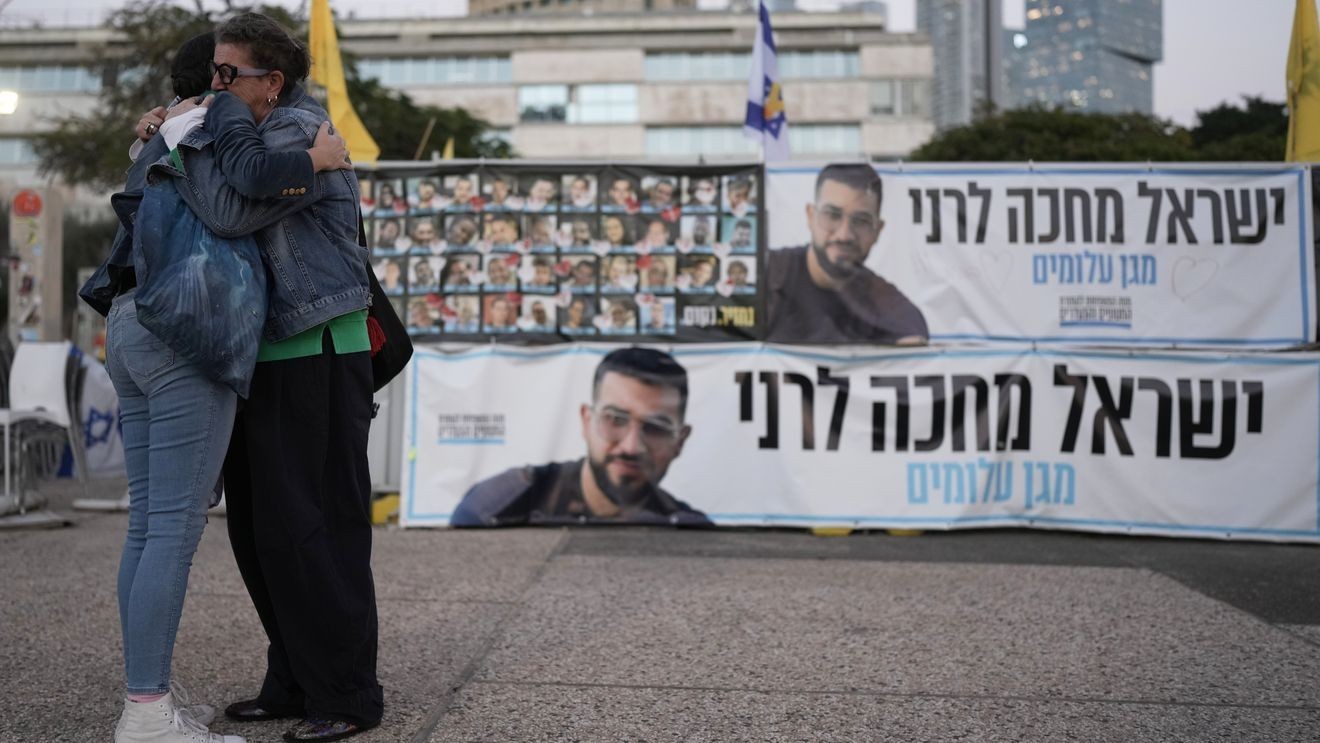
(TNND) — Israel has recovered the remains of the final hostage from Hamas, clearing the way for the next phase of the difficult peace process in Gaza.
With the remains of police officer Ran Gvili now home, Israel said all 255 hostages have been rescued or returned. Israel said 168 of them were returned alive and 87 were dead.
“I think it’s a very important moment of national healing,” said Gordon Gray, a former U.S. ambassador who now teaches at the Elliott School of International Affairs at George Washington University.
The terms of the first phase of the Gaza peace plan, signed in October, have now been fulfilled.
All hostages are back, exchanged for aid and the release of Palestinian prisoners.
Fighting is still happening, but not as frenetically as before.
“It’s a ceasefire, but not a complete one,” said Raphael Cohen, an expert in foreign policy, military strategy and the Middle East at RAND.
The Israelis have conducted limited but fairly continuous strikes against Hamas operatives even after the ceasefire began, he said.
Within Gaza, the influx of aid has improved the still-dire humanitarian situation, Gray said.
Now, the really hard part begins, both men said.
“I think the path ahead gets a little bit more difficult from here, to be very honest, because you’re going to run headlong into sort of thorny issues about Hamas disarmament,” Cohen said.
Securing the final hostage should mark the transition to Phase II of the peace plan, which should include the reopening of the Rafah border crossing between Gaza and Egypt, Hamas disarmament, and a partial pullback of Israeli forces, which are now occupying more than half of Gaza.
Tackling Gaza’s long-term governance and reconstruction still lies ahead.
And Gray said all of these complicated issues are intertwined.
There’s not going to be any meaningful reconstruction before a significant Israeli pullback, because no one’s going to want to invest significant amounts of money just to have it risked by further military operations, Gray said.
And an international stabilization force should, in theory, oversee the disarmament of Hamas. But that force has not been identified or introduced to Gaza yet.
And, of course, Hamas is going to be reluctant to disarm, even though that’s part of the deal.
President Donald Trump finally achieved a breakthrough in his Gaza peace efforts with a 20-point plan unveiled in September.
But the ultimate success of the plan won’t be known for years.
Over 80% of all buildings in Gaza City were destroyed in the war. Rebuilding will take years, even without complications along the way.
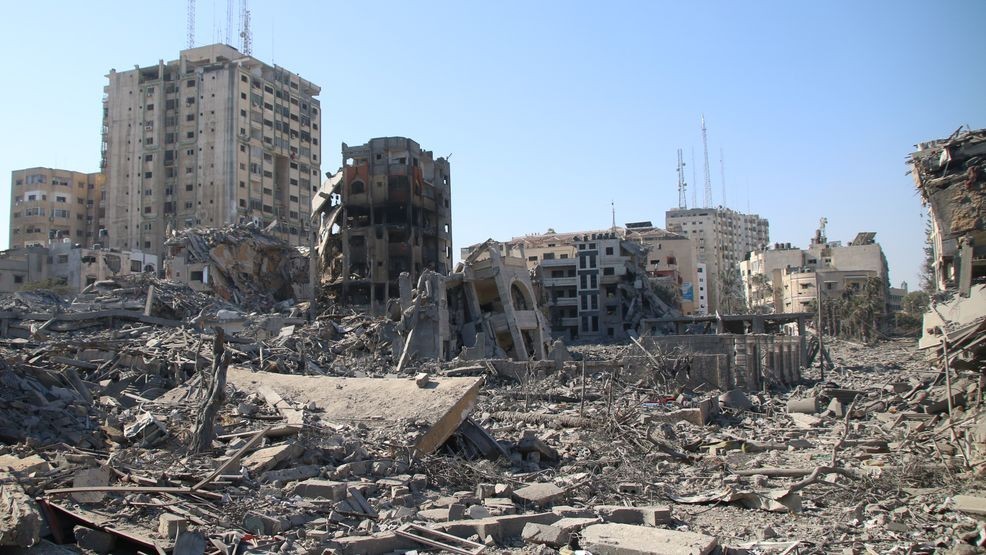
FILE – Palestinian citizens inspect damage to their homes caused by Israeli airstrikes on October 13, 2023, in Gaza City, Gaza. (Photo by Ahmad Hasaballah/Getty Images)
“The 20-point plan also talks about a dialogue between Israel and Palestinians on peaceful coexistence. It was the last point in the 20-point plan. It was the most, probably the most nebulous one,” Gray said. “And I think if we’re talking reconstruction is going to take years, establishing whatever that political resolution is going to take even more, even longer, unfortunately.”
Cohen said there’s an incentive for both sides to see the peace plan through, even if it’s a slow, arduous process.
Hamas has been “good and bloodied” over the last couple of years, he said.
So, the terrorist group isn’t likely to want to slide back to full-scale hostilities.
And Cohen said the Israelis have an incentive to keep pushing peace forward under pressure from the Trump administration and with other concerns, notably an unstable Iran and the rearming of Hezbollah, taking priority.
Gray said both sides have limited room to maneuver, which could complicate the second and potentially third phases of the peace process.
Hamas is severely weakened.
And Israeli Prime Minister Benjamin Netanyahu faces an election this fall.
“It’s hard to envision any rapid change in this situation,” Gray said.

 National Headline