HUNT VALLEY, Md. (TNND) — The United States/Israel-Iran war is on its 10th day, and the Russia-Ukraine war is on its 1,475th day – and one war is having a bizarre impact on the other.
While the U.S. and Israel keep lobbing attacks on Iran in a conflict that Iranian officials say has killed more than a thousand people, displaced hundreds of thousands and sent oil prices soaring, Russia is hoping it’s the true winner of the latest Middle Eastern fighting.
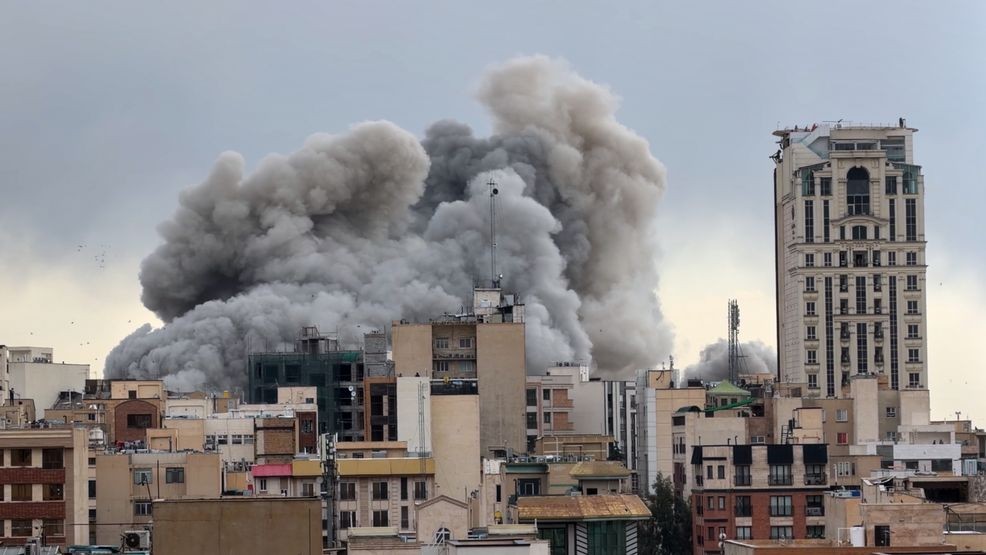
A plume of smoke rises after a strike in Tehran, Iran, Monday, March 2, 2026. (AP Photo/Mohsen Ganji)
When Russian President Vladimir Putin sent troops into Ukraine in February 2022, Tehran gave Russia Shahed drones and eventually licensed their production in Russia.
So far, Putin has condemned the U.S. and Israeli military action against Iran, calling the killing of Iranian Supreme Leader Ayatollah Ali Khamenei a “cynical violation of all norms of human morality and international law.”
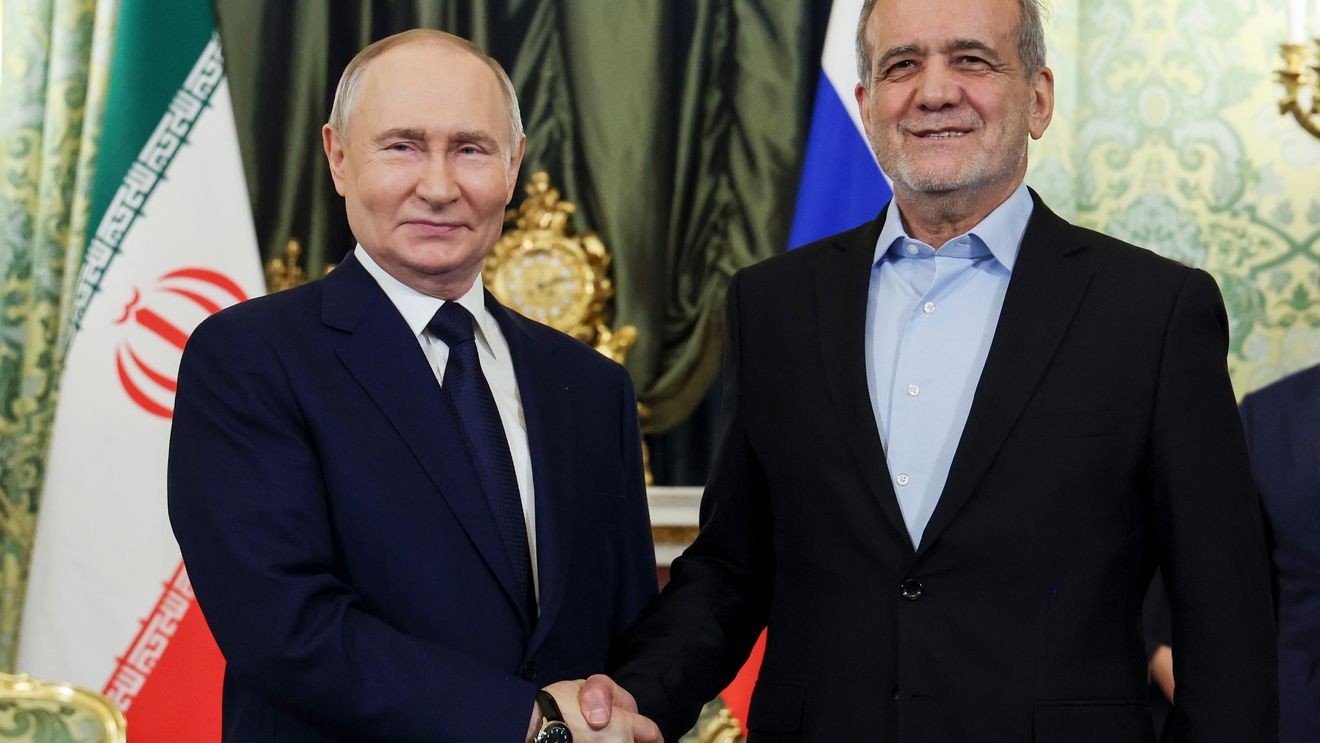
He offered his condolences to Iran’s President Masoud Pezeshkia too and called for an end to the hostilities.
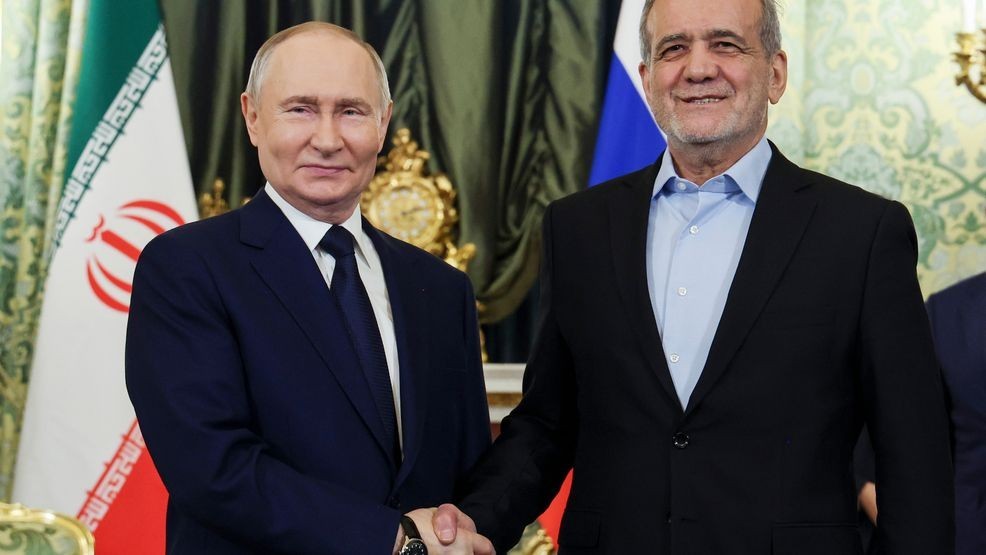
Russian President Vladimir Putin, left, and Iranian President Masoud Pezeshkian pose for a photo during their meeting at the Kremlin in Moscow, Russia, on Jan. 17, 2025. (Vyacheslav Prokofyev, Sputnik, Kremlin Pool Photo via AP, File)
Putin is also set to speak with President Donald Trump about the war in Iran and other issues, according to the Kremlin.
But beyond public statements, Russia hasn’t visibly supported Iran.
Multiple media reports have suggested Russia is providing Iran with information that could help Tehran strike U.S. warships, aircraft and other military assets in the region. But, U.S. intelligence reportedly hasn’t determined whether Russia is telling Iran what to do with that information, and Russian officials haven’t confirmed those reports.
It would be similar to the U.S. providing intelligence to Ukraine to help Kyiv launch attacks inside Russia, which is reportedly still ongoing.
Russian officials have skirted questions on whether or not it will provide material support to Iran. Analysts say the dynamic exposes how while Russia is part of the axis of evil according to some U.S. officials, it will often let other axis countries eat the military costs and remain on the sidelines.
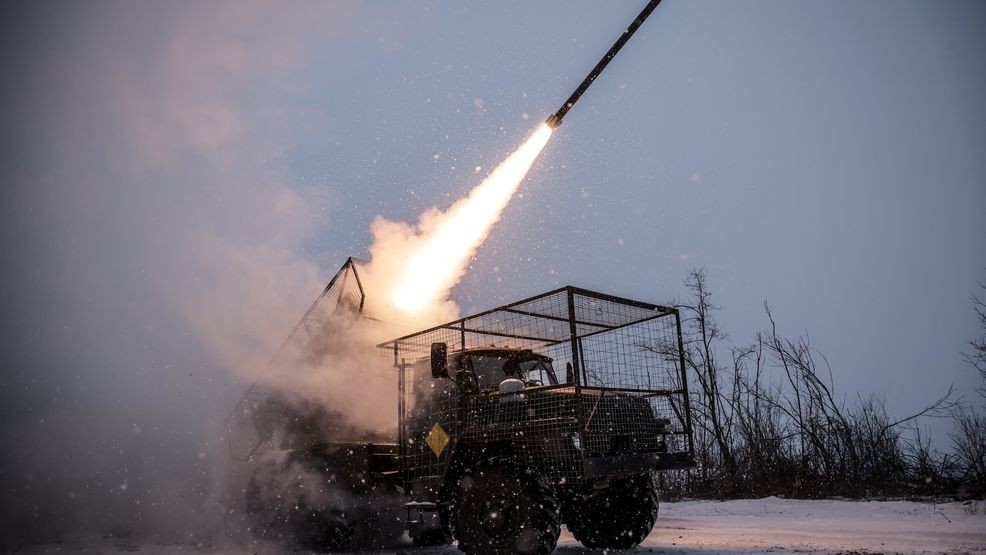
In this photo provided by Ukraine’s 24th Mechanized Brigade press service, declared to be taken on Jan. 24, 2026, an MRLS BM-21 “Grad” fires towards Russian army positions near Chasiv Yar, Donetsk region, Ukraine. (Oleg Petrasiuk/Ukraine’s 24th Mechanized Brigade via AP)
Instead, Putin appears to be more focused on oil, the linchpin of Russia’s declining economy.
Iran has threatened to attack cargo ships in the Strait of Hormuz, which is responsible for transporting one-fifth of the world’s oil supply.
This means Asian countries like China, India, Japan and South Korea – which rely on the strait for their oil – will move to Russia for cheaper oil, padding Russia’s pockets. Russian oil flows don’t rely on the strait.
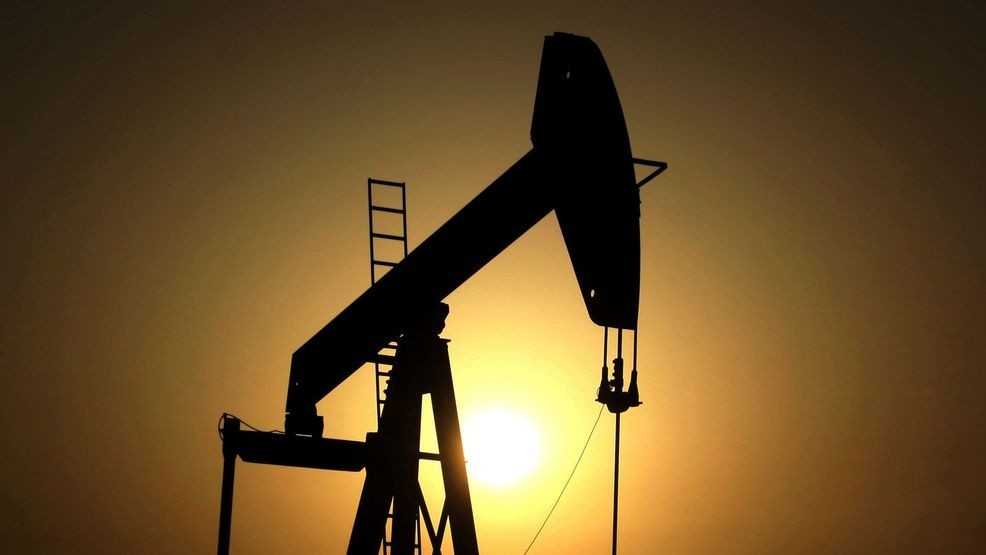
In this Wednesday, June 8, 2011 file photo, sun sets behind an oil pump in the desert oil fields of Sakhir, Bahrain. (AP Photo/Hasan Jamali, File)
The U.S. had to temporarily ease its restrictions on Russian oil to tame price spikes. The sanctions were meant to cripple Russia’s war machine.
More profits mean more money for Russia to fuel its invasion of Ukraine, a war Putin doesn’t appear to want to wrap up any time soon.
The Iran war could also level the playing field for Russia when it comes to weapons stockpiles.
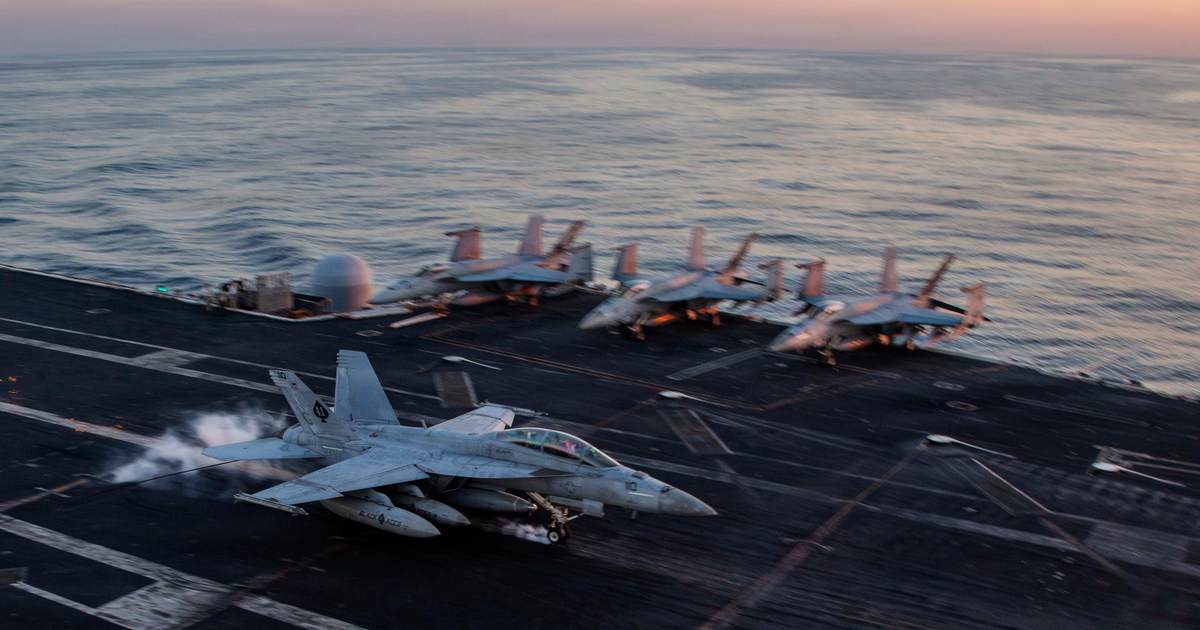
The U.S. is burning through Patriot air defense systems to shoot down Iranian ballistic missiles and drones targeting U.S. bases and Middle Eastern allies.

In this photo provided by Ukraine’s 24th Mechanized Brigade press service, servicemen fire a 2S1 Gvozdika self propelled howitzer towards Russian positions near Chasiv Yar town, Donetsk region, Ukraine, Sunday, Jan. 18, 2026. (Oleg Petrasiuk/Ukraine’s 24th Mechanized Brigade via AP)
Ukraine has long faced a shortage of those defense systems, and Russia is now taking advantage of that shortage and ramping up its missile strikes on Ukraine. The more Patriots that get used up, the fewer the U.S. has and the less the U.S. will feel inclined to share them. European allies also have a finite inventory.
And, Ukraine is helping the Gulf states intercept drones at the request of the U.S., but it’s a costly effort for both Ukraine and the U.S., and it’s cheap for Iran and Russia. Iranian drones are inexpensive and easy to mass-produce, so Iran can keep launching drone attacks and Russia can afford to keep buying Iranian drones to use against Ukraine. On the other hand, the Ukrainian counter-drone technology is expensive.
In general, the U.S. needs its own firepower, and fears have been rising that with fewer shipments to Ukraine, global attention will shift or Ukraine will suffer great losses in the event of a spring offensive by a Russia boosted by the oil crisis.
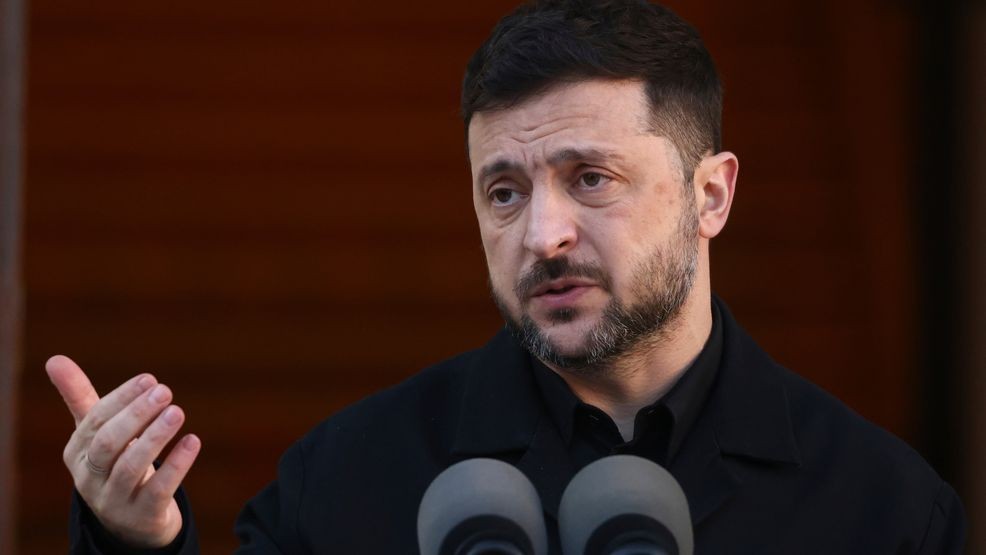
Ukraine President Volodymyr Zelenskyy, gestures while speaking as he takes part in a joint press conference with the Irish Prime Minister Micheal Martin in Dublin, Ireland, Tuesday, Dec. 2, 2025. (AP Photo/Peter Morrison)
Russia’s needs in its war with Ukraine largely revolve around money. Meanwhile, Ukraine’s revolve around allied support.
The Iran war just might play into Moscow’s hands on both fronts.
While U.S.-brokered peace negotiations between Russia and Ukraine haven’t appeared to yield any breakthroughs, they were still ongoing when the U.S. and Israel attacked Iran. But Ukrainian President Volodymyr Zelensky said the talks have been halted for now.
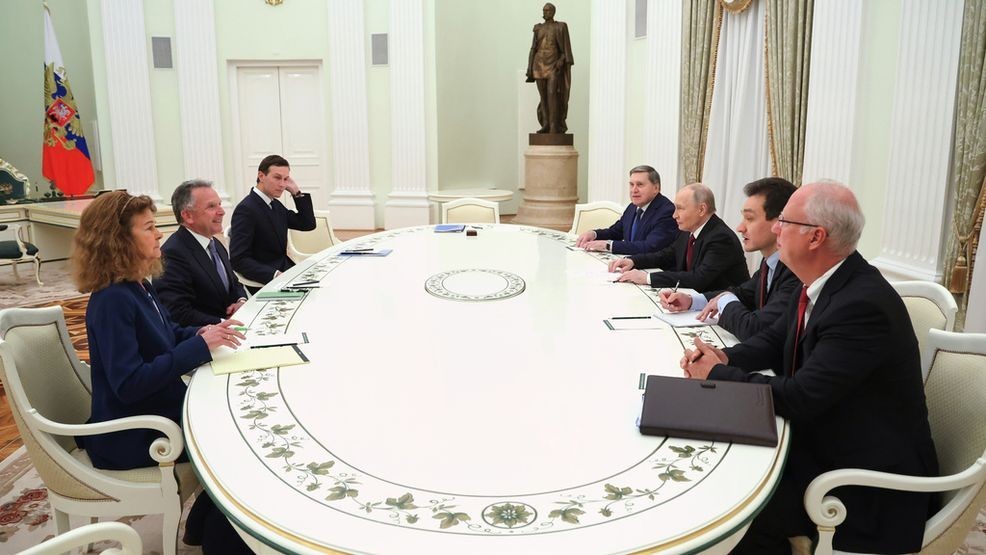
Russian President Vladimir Putin, third right, Russian Presidential foreign policy adviser Yuri Ushakov, fourth right, and Russian Direct Investment Fund CEO Special Presidential Representative for Investment and Economic Cooperation with Foreign Countries Kirill Dmitriev, right, attend the talks with U.S. special envoy Steve Witkoff, second left, and Jared Kushner, U.S. President Donald Trump’s son-in-law, third, at the Senate Palace of the Kremlin in Moscow, Russia, Tuesday, Dec. 2, 2025. (Alexander Kazakov, Sputnik, Kremlin Pool Photo via AP)
U.S. officials haven’t offered a solid timeline of how long the conflict with Iran will grind on, but Iran has said it’s ready for a long war, and U.S. officials say it could be weeks.
Even if peace talks between Russia and Ukraine resume, the two sides are far apart on their demands, and it’s unclear how Ukraine’s assistance to the U.S. and Russia’s assistance to Iran will affect Trump’s decision-making when it comes to a peace deal.
Plus, an empowered Russia could become less inclined to negotiate at all, especially if Ukraine keeps trying to link itself to Western allies.
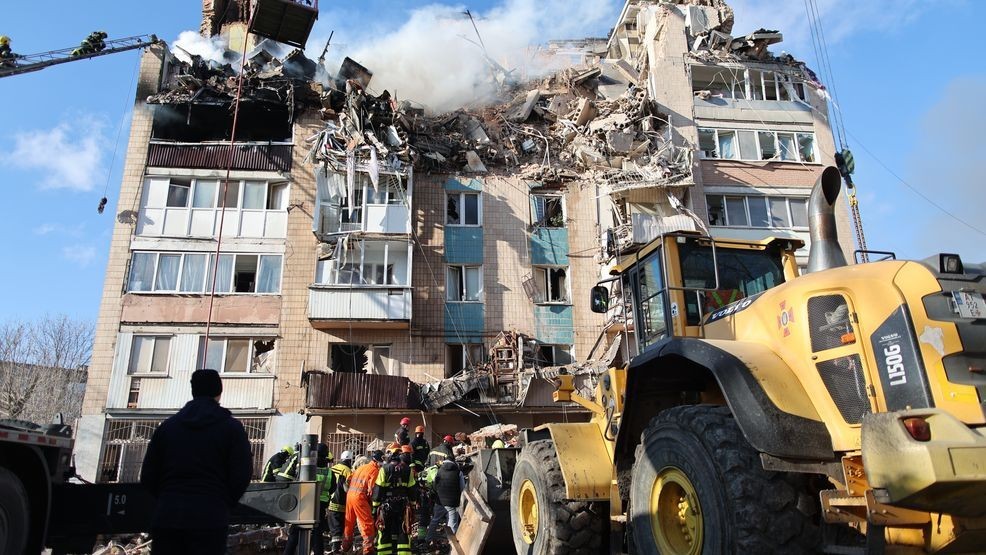
Rescue workers clear the rubble of a residential building which was heavily damaged by a Russian strike on Ternopil, Ukraine, on Wednesday, Nov. 19, 2025. (AP Photo/Vlad Kravchuk)
And, the U.S. may be losing trust from other countries that it can mediate conflict.
The U.S. has attacked Iran twice now during active negotiations, and some officials say the most recent round of diplomacy talks earlier this year were a sham meant to be a distraction when the U.S. already planned on attacking.
The Israel-Gaza ceasefire has produced meaningful results in the form of hostage releases, prisoner swaps, additional aid shipments and a halt in a lot of the fighting, but the ceasefire deal is shaky at best.
Faith in the U.S. to broker a deal that fulfills both sides’ demands may be fading for Russia and Ukraine.
Russia wants Ukrainian land and for Ukraine to stay neutral instead of joining the NATO military alliance. Ukraine wants its land back and binding security guarantees from allies.
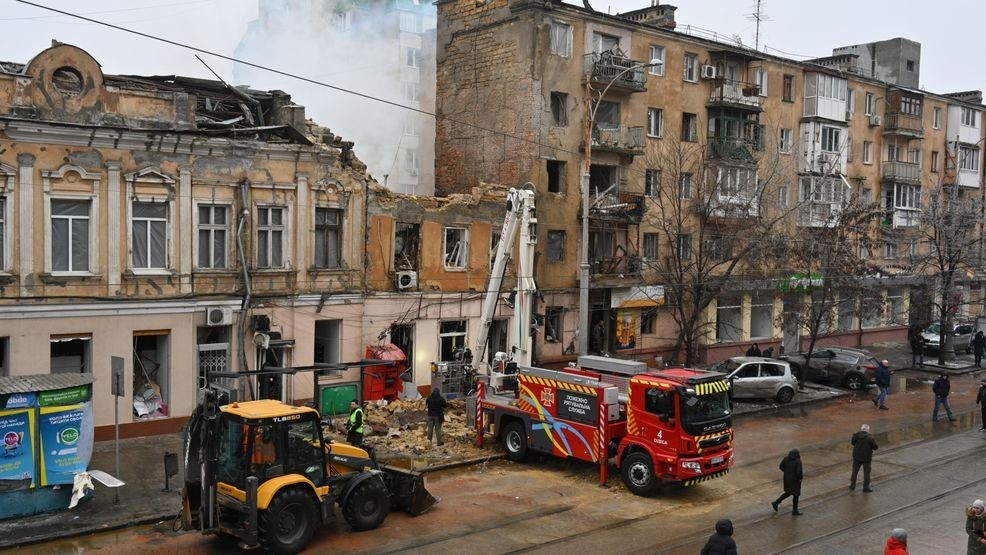
Rescue workers clear the rubble of a residential building which was heavily damaged after a Russian strike in Odesa, Ukraine, Tuesday, Jan. 27, 2026. (AP Photo/Michael Shtekel)
If the U.S.’s mediator status goes away, that plays into Moscow’s hands too.
Not to mention, Ukraine could be on the receiving end of isolationist spillover.
Trump campaigned on his “America First” agenda, which promised “no more forever wars” and a stronger focus on domestic issues. Critics – Democrat and Republican – argue the president is breaking that promise.

Army veteran Christopher William McFarland protests the war in Iran on Monday, March 2, 2026, in Clarksville, Tenn. (AP Photo/George Walker IV)
Early polling found nearly six in 10 Americans disapprove of the U.S. military action in Iran, and a similar number don’t think Trump has a clear plan for handling the situation.
The Iran conflict could harden U.S. opposition to overseas commitments and support, or, at the very least, edge Ukraine out of the list of military priorities.

 National Headline