(TNND) — The death of actor James Van Der Beek from colorectal cancer at just 48 has reinforced the importance of screenings and early detection.
DONATE to the Van Der Beek Gofundme
“Colon cancer is one of the cancers that actually we can prevent, and we can catch it early, on time, with a good outcome,” said Dr. Maen Abdelrahim, the chief of gastrointestinal oncology at Houston Methodist.
Localized colon cancer has a 91% five-year relative survival rate, according to the American Cancer Society.
The survival rate goes down to 74% for a colon cancer that has spread regionally and down to just 13% if the cancer has spread to distant parts of the body.
Van Der Beek himself urged people to be screened just a couple of months ago during an interview with The National News Desk.
He said he wanted to “shout from the rooftops” for anyone 45 or older to talk to their doctor about getting colorectal cancer screening.
Van Der Beek was diagnosed in 2023 with stage 3 colorectal cancer. He was just 46 at the time.
“And what I found out throughout all this is that colorectal cancer, it sounds scary, is the second deadliest cancer out there. And it’s the most curable if you catch it early,” Van Der Beek said. “And the crazy thing is that one in three Americans who are of screening age have not been screened.”
The overall rate of colorectal cancers has been dropping, but the downward trend is mostly among older adults, the American Cancer Society said.
Rates in people under 50 increased by 2.9% per year from 2013 to 2022.
Colorectal cancer is the second most common cause of cancer deaths for men and women combined.
About 55,000 Americans are expected to die of colorectal cancer this year, according to the American Cancer Society.

FILE – Cancer survivors, loved ones, and colorectal cancer advocates attend a rally at the Fight Colorectal Cancer “United in Blue” flag installation on the National Mall to spotlight the rise in young adult Colorectal cancer cases on March 10, 2025, in Washington. (Photo by Paul Morigi/Getty Images for Fight Colorectal Cancer)
Most colorectal cancers start as growths, called polyps, on the inner lining of the colon or rectum in the lower gastrointestinal tract.
Polyps are quite common, and most aren’t cancerous, according to the American Cancer Society.
But some types of polyps can change into cancer over time, usually over many years.
Van Der Beek’s family is not only grieving their loss – the actor left behind a wife and six children – but they’re also dealing with the financial strain of the devastating disease.
A friend set up a GoFundMe for the Van Der Beek family to cover living expenses and bills after Van Der Beek’s cancer fight left their funds exhausted, according to the page.
“They are working hard to stay in their home and to ensure the children can continue their education and maintain some stability during this incredibly difficult time,” the GoFundMe page reads. “The support of friends, family, and the wider community will make a world of difference as they navigate the road ahead.”
The American Cancer Society recommends people at average risk begin getting colorectal cancer screenings at age 45.
Abdelrahim agreed with that recommendation.
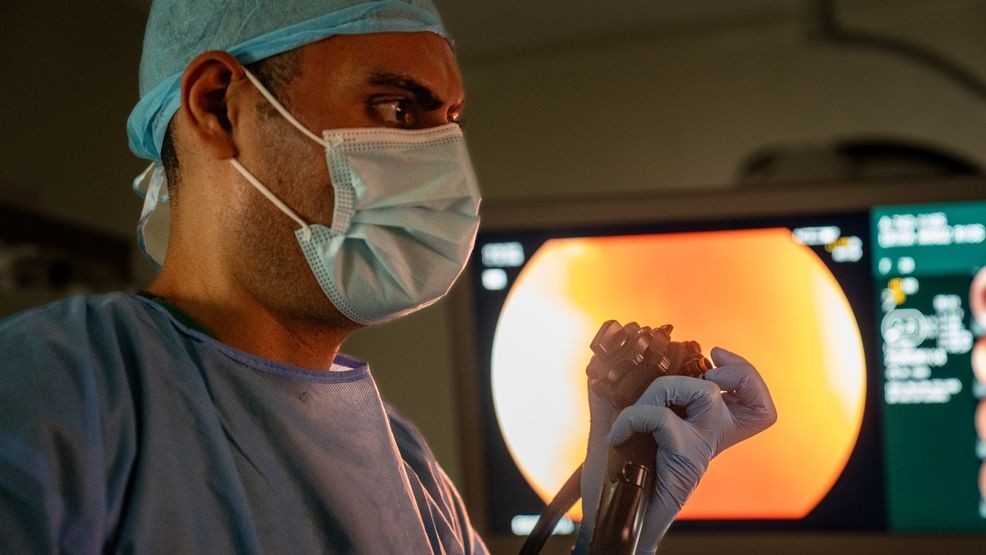
FILE – An Air Force gastroenterologist maneuvers an endoscope during a colonoscopy Sept. 19, 2025. (U.S. Air Force photo by Andrea Jenkins)
People can use a noninvasive, at-home stool-based test, like Cologuard, or get an exam that looks at the colon and rectum, such as a colonoscopy.
The stool tests are fine, but a colonoscopy is the “gold standard of care,” Abdelrahim said.
Abdelrahim said people can give themselves a better shot at avoiding cancer with a healthy lifestyle, including eating fruits and vegetables, staying hydrated, avoiding highly processed foods, and staying physically active.
And he urged people to be vigilant about red flags for colorectal cancer, symptoms such as blood in the stool or unexplained abdominal pain or weight loss.

 National Headline