The Savy Investor
6:00 pm - 7:00 pm

WASHINGTON (TNND) — The pace of inflation slowed in January with lower costs at the pump and for used vehicles, giving stressed consumers some relief after years of elevated price increases.
Inflation fell to 2.4% in January from the same time last year, a drop from 2.7% last month. It was the slowest annual increase since May. Core prices, which exclude the volatile food and energy categories, rose 2.5%.
Gas prices fell 3.2% from December, while groceries increased 0.2% in January after a significant 0.6% increase the month prior. Airline fares increased 6.5%, personal care rose 1.2% and shelter climbed 0.2%.
Inflation has slowed significantly from the post-pandemic highs near 9% but consumers prices are still 25% higher than they were five years ago. The gap between wage increases and inflation has also shrunk in recent months, adding further strain to household budgets that are increasingly being held up by credit, especially on the lower end of the income spectrum.
Slower wage gains are helpful to bringing the rate of inflation down as companies don’t have to raise prices to offset higher employment costs. Reduced pay increases are a primary driver behind economists’ expectation that inflation could continue to decline this year.
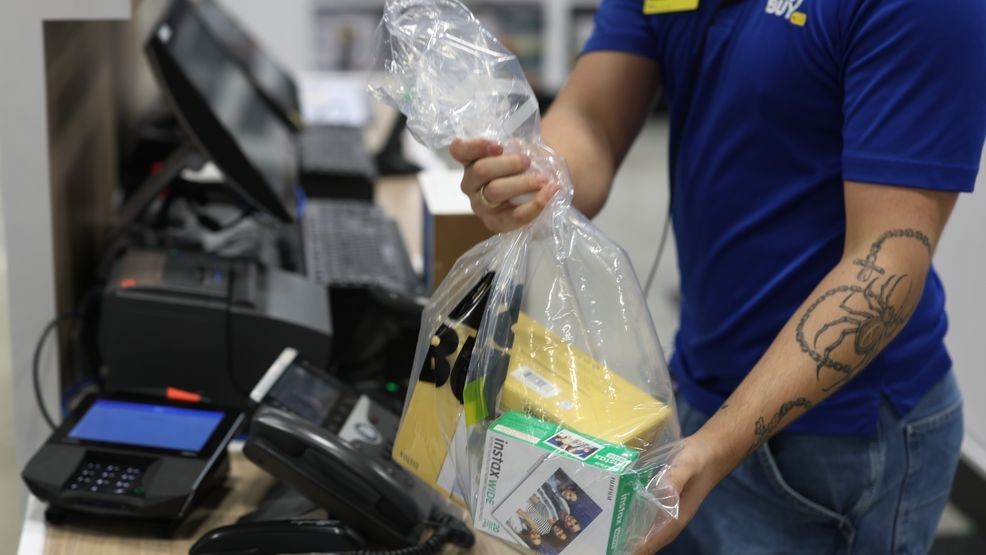
Joshua Leyva, Best Buy sales advisor, packages up a customers purchase at Best Buy on December 23, 2025, in Miami. (Photo by Joe Raedle/Getty Images)
The outlook on inflation is uncertain amid questions over whether companies will have to raise prices to keep up with President Donald Trump’s tariffs. The effects of the tariffs have been more moderate than initially feared but it’s unclear whether they have fully worked through the economy.
A Federal Reserve Bank of New York study released on Thursday found U.S. companies and consumers are paying for almost 90% of the cost of tariffs. Businesses have tried to avoid passing increased costs onto consumers through stockpiles of products or absorbing them at the cost of profit margins, but there are questions about how long that can last. Economists and Fed officials are trying to parse when the cost effects of tariffs will reach their peak.
Energy prices have been a mixed bag for consumers, with prices at the pump dropping 7.5% over the last year while costs for electricity jumped 6.3% and natural gas climbed 9.8%.
Last year’s lengthy government shutdown is blurring the picture on inflation after data collection was interrupted for weeks with lasting effects that may be distorting figures lower. Economists say the gaps in collection specifically distorted estimates for shelter costs that are a big influence on the monthly rate of inflation.
“We expect inflation to remain somewhat sticky in the first half of the year. The downward bias to CPI inflation created by the data-collection gap during the government shutdown will continue to distort the data through April,” said Lydia Boussour, senior economist at EY-Parthenon.
The lower inflation figures come two days after a stronger-than-expected jobs report that showed employers added 130,000 positions in January and the unemployment rate fell to 4.3%. But revisions to previous data were large, cutting total job creation in 2025 to 181,000 from an original estimate of 584,000. It was the slowest pace since 2010 outside of the pandemic year of 2020.
Along with the inflation data, which is still above the 2% target, officials at the Federal Reserve are unlikely to budge from their wait-and-see stance on lowering interest rates. They will have February’s jobs report and inflation data before their next meeting in March, but most forecasts see the Fed staying on pause unless there is a dramatic shift to the economy.
A rapid increase in rates helped bring inflation down from 9.1% in 2022 to around 3% in 2024, where it has been mostly stuck since. Officials have cut rates by nearly 2% since mid-2024 but are trying to find a balance between leaving them high enough to reduce inflation without sending the labor market into a tailspin.
After five years of inflation above target, officials are hesitant to cut rates too quickly and risk prices spiking again without more data showing drops in the inflation rate. They are facing pressure from the White House to cut rates, but Fed chair Jerome Powell and other officials have said they can afford to wait and see how the economy evolves.
Kevin Warsh, Trump’s nominee to replace Powell once his term ends in May, has been supportive recently of cutting rates but has a history of being an inflation hawk. He will be walking into a Federal Open Markets Committee with little appetite for cutting rates like the president has called for.
Fed governor Stephen Miran, who was appointed from the White House Council of Economic Advisers, has been the main backer within the central bank of cutting rates. He has argued that tariffs are not inflationary and the economy is in need of support through lower rates.
“The biggest risk I think to the economy is that we’re misconstruing just how tight monetary policy is,” Miran said at a Thursday event at the Dallas Fed.

 National Headline