WASHINGTON (TNND) — Inflation held steady in February, but rising energy prices because of the war with Iran could soon renew upward pressure on costs for American households.
Consumer prices increased 2.4% in February, matching January’s pace, the Labor Department reported Wednesday. Core inflation, which strips out the volatile food and energy categories, also held at 2.5% and matched a five-year low.
Both core and overall inflation were in line with economists’ expectations, but analysts are already looking ahead to see what comes next and how long inflationary effects from the Middle East conflict will last.
“In normal times, these prints would be benign — ‘Nothing to see here, please move along.’ But these are far from normal times, and the data must be interpreted through the lens of distortions from the government shutdown, unprecedented trade policy volatility, and record swings in energy prices tied to the conflict in the Middle East,” said EY-Parthenon chief economist Gregory Daco.
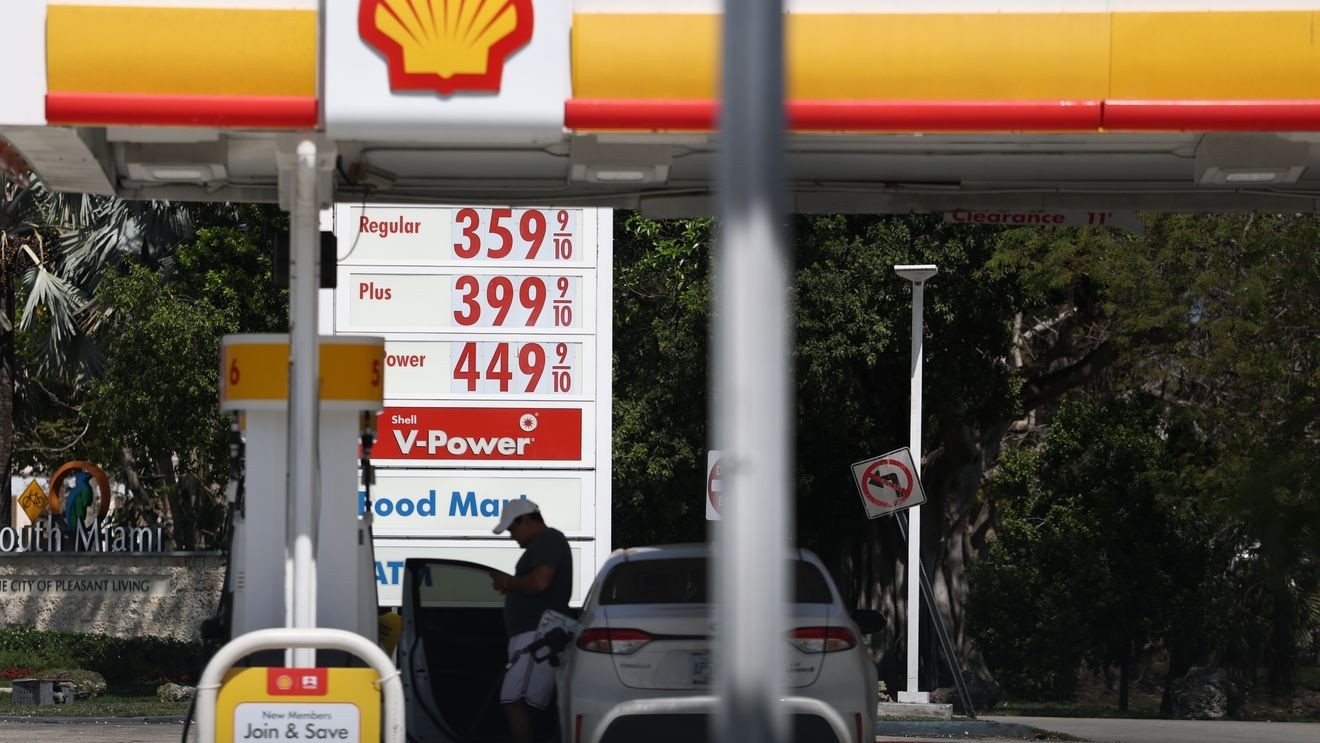
Oil and gas prices have jumped significantly since the war started on Feb. 28 and will push inflation for this month higher once the data is released in April. Higher oil prices cascade through the economy, increasing costs for air travel and shipping, which could make foods and other goods more expensive.
Energy prices were already on the way up in February, posting a 0.6% increase after falling 1.5% in January. Gas prices have already jumped more than 50 cents a gallon on a national average since the war started, according to AAA.
Oil prices soared in the initial aftermath of the U.S.-Israeli strikes on Iran with traffic in the Strait of Hormuz, a vital chokepoint where 20% of the world’s oil supply passes through, effectively closed. Prices hit nearly $120 a barrel on Sunday before falling back toward $90 once President Donald Trump signaled the conflict could come to an end soon. Prices moved back upward on Wednesday after the U.S. military said it attacked Iranian vessels carrying mines near the strait.
“The longer the Strait of Hormuz remains closed, the greater the upward pressure on energy prices. Even if today’s CPI data seem relatively stable, rising energy costs could still reduce household purchasing power and weigh on affordability in the months ahead,” said Steve Swedberg, a research fellow at the Competitive Enterprise Institute.
Those increases could prove temporary once the conflict comes to an end, but are another hit for Americans whose budgets have been battered by nearly five years of elevated prices.
Iran has also launched missiles and drones at oil fields and refineries in neighboring Gulf countries to pressure the U.S. and Israel to end their strikes over economic pain.
The White House said Wednesday’s report showed inflation was cooling and Trump was restoring the U.S. economy.
“The American economy is strong and once we are past temporary disruptions from Operation Epic Fury, we will see even greater economic progress with cooling inflation, higher real wages, and robust private sector growth thanks to President Trump,” White House spokesperson Kush Desai said in a post on X.
Food prices were one of the biggest factors in February’s increase to inflation, rising 0.4% from January and 3.1% from a year earlier. Grocery prices rose 2.4% from a year ago and food away from home jumped 3.9%.
Sectors exposed to Trump’s tariffs have also continued to get more expensive. Prices for appliances are 2.9% higher than a year ago and furniture jumped 4.2%.
Inflation has cooled significantly from the high of 9.1% in 2022 but has been above the Federal Reserve’s target of 2% for almost five years and prices have climbed 25% since 2020. Economists also believe residual effects from the record-length shutdown are also pushing inflation figures artificially lower through missing data on increases to housing costs.
February’s inflation figures are unlikely to shift the Fed’s perspective on keeping its benchmark interest rate steady when they meet next week. Markets are pricing in just a 0.7% chance of a quarter-point cut this month, according to the CME FedWatch tool.
Most Fed officials have said rates are at or nearing a neutral level where they do not bolster or suppress economic activity and that they are well-positioned to see how the economy develops before making any more cuts. Some may want to see more sustained progress on inflation moving closer to target before signing off on another cut, which may be delayed due to the shocks from conflict with Iran.
But the Fed is also facing risks to the labor market that has shown more signs of softening after employers cut 92,000 jobs in February and the unemployment rate climbed to 4.4%. High inflation and a cooling labor market pose a unique challenge for officials to navigate.
“If the job market is getting worse and inflation is getting worse at the same time, it’s not obvious to me what the immediate response should be,” Austan Goolsbee, president of the Federal Reserve Bank of Chicago, told Bloomberg on Friday.

 National Headline