WASHINGTON (TNND) – Nuclear negotiations between the United States and Iran are set to continue in Geneva on Tuesday. Diplomats from each country have said they’re not entirely sure if a deal on Iran’s nuclear program and economic sanctions can be reached, but for now, they’re willing to try. In the meantime, each side is putting military forces on standby.
On Monday, Iranian state media released a video of Iran’s Revolutionary Guard conducting naval exercises in the Strait of Hormuz, a waterway essential to oil trade.
Within hours, U.S. Central Command posted images of squadron exercises on the deck of the USS Abraham Lincoln aircraft carrier stationed in the Middle East. It will soon be joined by the military’s largest aircraft carrier group, the USS Gerald R. Ford.
“If we don’t have a deal, we’ll need it. If we have a deal, we could cut it short. It’ll be leaving. It’ll be leaving very soon,” President Donald Trump said Friday.
Ahead of Tuesday’s talks, which, like the first round of talks will be mediated by Oman, Iranian Foreign Minister Abbas Araghchi met with the head of the International Atomic Energy Agency for “deep technical discussion.”
“I am in Geneva with real ideas to achieve a fair and equitable deal. What is not on the table: submission before threats,” Araghchi posted on social media.
Iran’s fundamental goal in these negotiations is to see economic sanctions lifted.
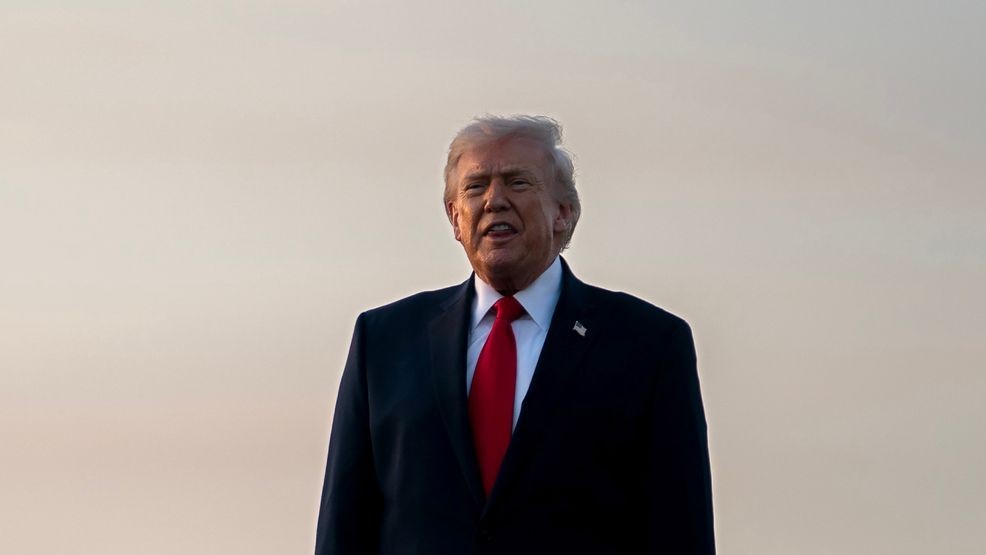
WEST PALM BEACH, FLORIDA – FEBRUARY 13: U.S. President Donald Trump shouts toward members of the media after exiting Air Force One at Palm Beach International Airport on February 13, 2026 in West Palm Beach, Florida. The President is spending the weekend at Mar-a-Lago in Palm Beach, Florida. (Photo by Nathan Howard/Getty Images)
“One cannot accept the notion that Iran has to do certain things without the other side committing itself to do their share. It has to be a give-and-take. That is what compromise is all about,” Iran’s Deputy Foreign Minister Majid Takht-Ravanchi told BBC.
The objective of the U.S. is to prevent Iran from developing a nuclear weapon, in large part by blocking Iran from enriching uranium, which it has already done to a near weapons-grade level. Trump has insisted that Iran cease all enrichment. Takht-Ravanchi said “zero enrichment is not on the table.”
Another point of friction: Iran’s ballistic missile program. Secretary of State Marco Rubio previously said in order for these talks to “actually lead to anything meaningful,” this needs to be part of the conversation. Iranian leaders said this is not up for discussion, viewing it as a national defense issue.
According to CBS News, Trump told Israeli Prime Minister Benjamin Netanyahu in December that if talks with Tehran fail, he would support Israeli strikes on Iran’s ballistic missile program.

 National Headline