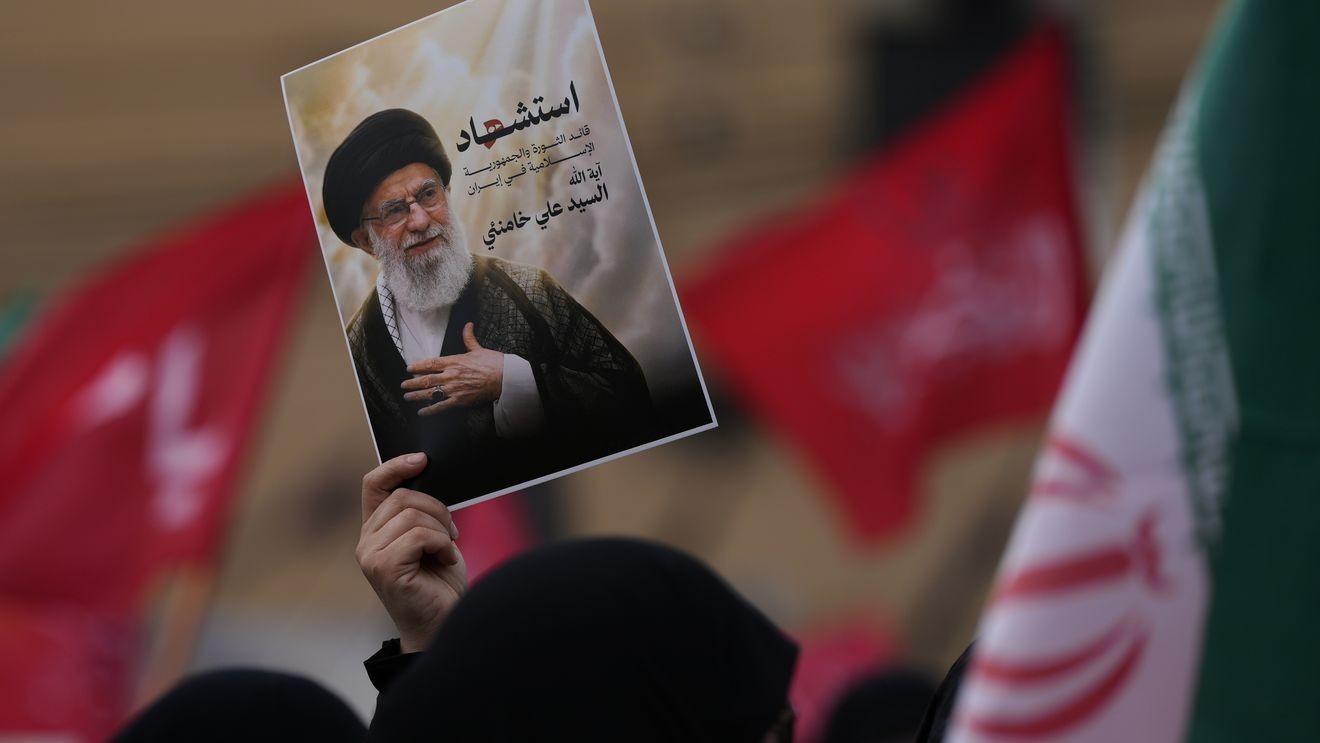
(TNND) — Iran’s supreme leader is dead, but the regime remains intact.
The new leader might be a reformer, someone the U.S. and Israel can work with better than they could with Supreme Leader Ayatollah Ali Khamenei, who ruled Iran for 37 years before he was killed in air strikes this weekend.
Or a new leader could be a continuation of Khamenei’s hard-line policies.
That call will be made by an assembly of religious authorities, Shiite clerics.
And a decision is expected soon, in a matter of days.
A new leader who shares Khamenei’s views would be a “distinction without a difference,” said Gordon Gray, a former U.S. ambassador to Tunisia who now teaches at the Elliott School of International Affairs at George Washington University.
Gray called the Iranian regime resilient, with a sophisticated bureaucracy and powerful protection apparatus in the Revolutionary Guard.
Donald Heflin, a former ambassador to Cabo Verde and a veteran diplomat who now teaches at Tufts University, said the Iranian regime is “four deep” at all its major jobs in case something happens to any one of them.
Khamenei was 86, so a succession plan was reportedly already underway given his age.
But Hussein Banai, an expert in Iran and associate professor of international studies at Indiana University, said Iran also started to put alternative command-and-control structures in place following last June’s “12-day war” carried out by Israel and the U.S. against Iran.
Banai said Israeli Prime Minister Benjamin Netanyahu very clearly wants to hasten regime collapse in Iran.
Banai said the Israelis don’t want to simply end up with a “rebranding of the Islamic Republic.”
The goals of the American administration are less clear, all three experts said.
“This is not a so-called regime change war, but the regime sure did change, and the world is better off for it,” Defense Secretary Pete Hegseth said at a Monday morning news conference.
Banai said President Donald Trump appears to be in a “bargaining mode” and is drawing correlations between Iran and Venezuela. Trump might think removing the obstacles from the old regime will allow him to work with whoever takes over, Banai said.
In Venezuela, the U.S. captured President Nicolás Maduro and is now dealing with acting president Delcy Rodríguez.
But Gray said the U.S. is likely to get better cooperation in Venezuela than it is in Iran.
Heflin said the ball is largely in the Iranians’ court.
If they choose leadership that the U.S. can work with, Operation Epic Fury could end pretty soon, followed by long, complicated negotiations over the issues that led to the conflict.
If they choose another hard-liner, the U.S. and Israel will have tough decisions on how far to push the bombing campaign.
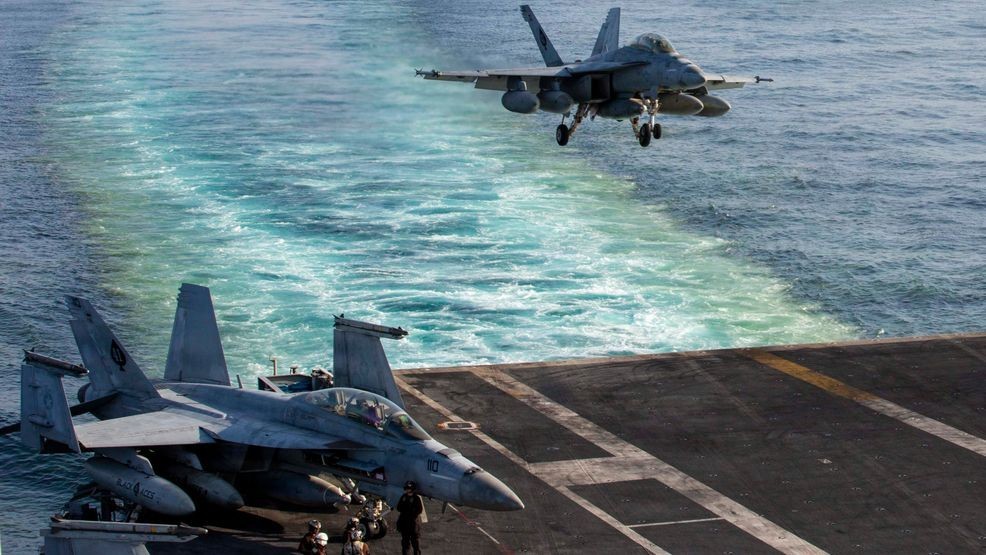
This image provided by U.S. Central Command shows a F/A-18E Super Hornet preparing to make an arrested landing on the USS Abraham Lincoln (CVN 72) after a mission in support of Operation Epic Fury, on Saturday, Feb. 28, 2026. (U.S. Navy via AP)
Banai said he’s keeping an eye on Iran’s judiciary chief Gholamhossein Mohseni Ejei as a possible pick for supreme leader.
He’s a top-level official who is very close to the security establishment.
Ejei is also part of the provisional governing council. And he’s a hard-liner in the mold of Khamenei, Banai said.
Alternatively, the regime might see the need to pick a reformer, realizing they can’t stand up to America’s military might. So, they could opt for someone they feel could work with the West and cut a deal they can live with.
Gray said the regime might seek a path back to negotiations as a tactical decision for survival.
Such a reformer could also potentially work with the Iranian public, Heflin said.
He said there are some people within Iran who benefit from this government being in power, but there are a lot of people who want reform.
And Heflin said the younger generations in Iran are fed up with the regime.
They can’t travel, the economy is in shambles, and they want fresh leadership, he said.
Both Gray and Banai also said the Iranian public wants to see the regime go.
A “retrenching or a rebranding of the old regime” would feel like “a major betrayal” for the Iranian public if that’s the result of this military campaign, Banai said.
But he’s not optimistic that there will be a regime change.
The experts also said the Iranian people don’t have the power to overthrow their government, despite encouragement from Trump for the people to do just that.
“I can tell you from years of experience overseas, you can’t tear down a dictatorial regime with your bare hands like the Iranian people have been encouraged to over the last few days,” Heflin said. “The Iranian government shot down at least 10,000 of its people in the last couple months. They have a very elaborate security and domestic intelligence system. This is not going to be something where people-power in the streets can bring a government down. It would take foreign boots on the ground.”
And he said the U.S. doesn’t have the appetite to deploy ground troops to Iran.

 National Headline