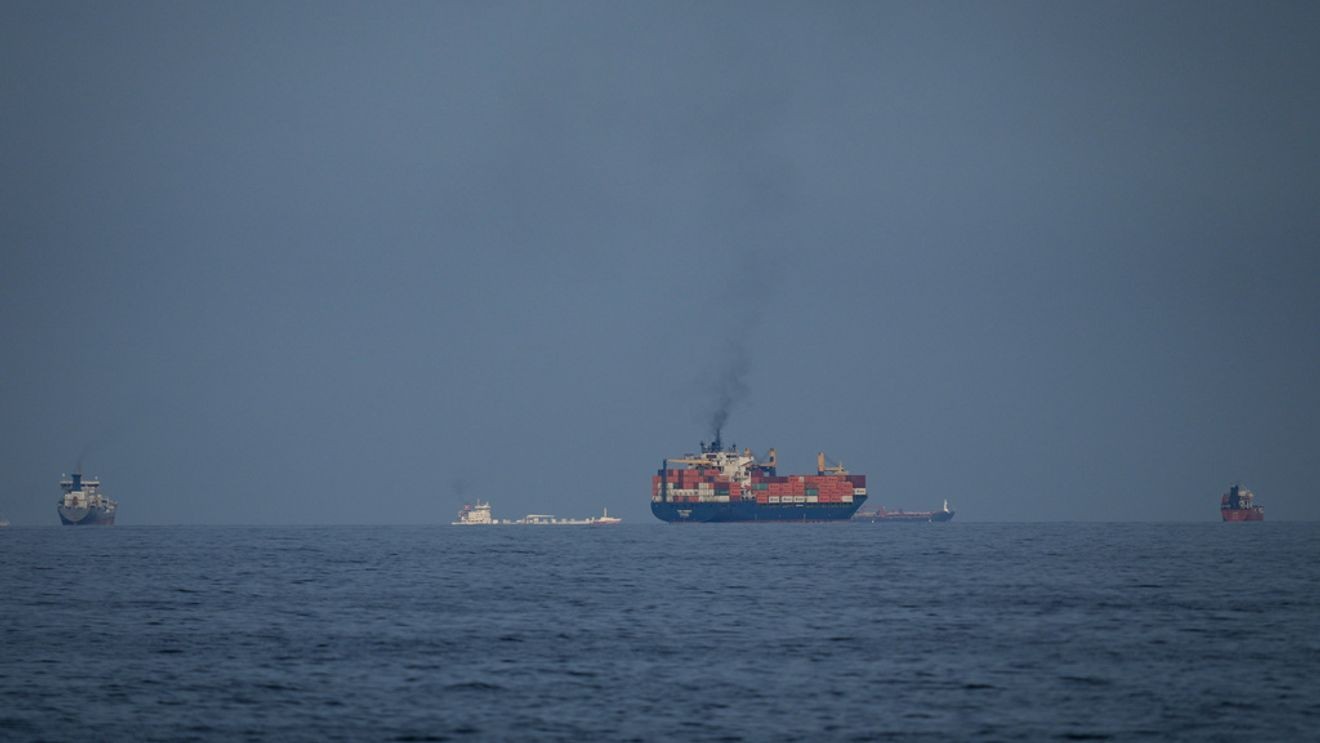
(TNND) — The war with Iran has spread to the seas, with three more merchant vessels struck overnight in the Strait of Hormuz, including a container ship that caught fire, according to UK Maritime Trade Operations (UKMTO).
“The Master has reported the container ship was struck by an unknown projectile causing a small fire onboard,” UKMTO reported. “Full damage assessment impaired by darkness. All crew are reported as safe.”
The latest incidents mark an escalation in attacks on vessels operating in the Persian Gulf, as Iran has ramped up strikes on oil tankers, cargo ships and regional energy infrastructure.
The Joint Maritime Information Center (JMIC) raised the regional maritime threat level to “critical” after images on Wednesday showed a Thai cargo ship, Mayuree Naree, ablaze in the narrow waterway.

This image released by the Royal Thai Navy shows Thai cargo ship, Mayuree Naree, that was struck and set ablaze in the Strait of Hormuz Wednesday, March 11, 2026. (Royal Thai Navy via AP)
“Recent incident patterns suggest a campaign focused on operational disruption and the creation of uncertainty across maritime traffic flows,” JMIC wrote in its advisory. “Recent events are elevating maritime security concerns for commercial shipping transiting the Arabian Gulf, Strait of Hormuz and Gulf of Oman.”
Iran’s near-total blockade of the shipping corridor— a chokepoint that carries nearly 20% of the world’s oil — sent prices surging past $100 a barrel in overnight trading.
“The war in the Middle East is creating the largest supply disruption in the history of the global oil market,” the International Energy Agency (IEA) said in its monthly oil market report, adding production has been reduced to a “trickle.”
The surge came despite IEA members agreeing on Wednesday to release a record 400 million barrels of oil into global markets in an effort to stabilize prices.
Iranian officials have threatened to choke off the narrow waterway, declaring they will “not allow even a single litre of oil” to pass through to the United States, Israel, or their partners. Tehran also warned that any vessel or tanker bound for those destinations could be considered a legitimate target.
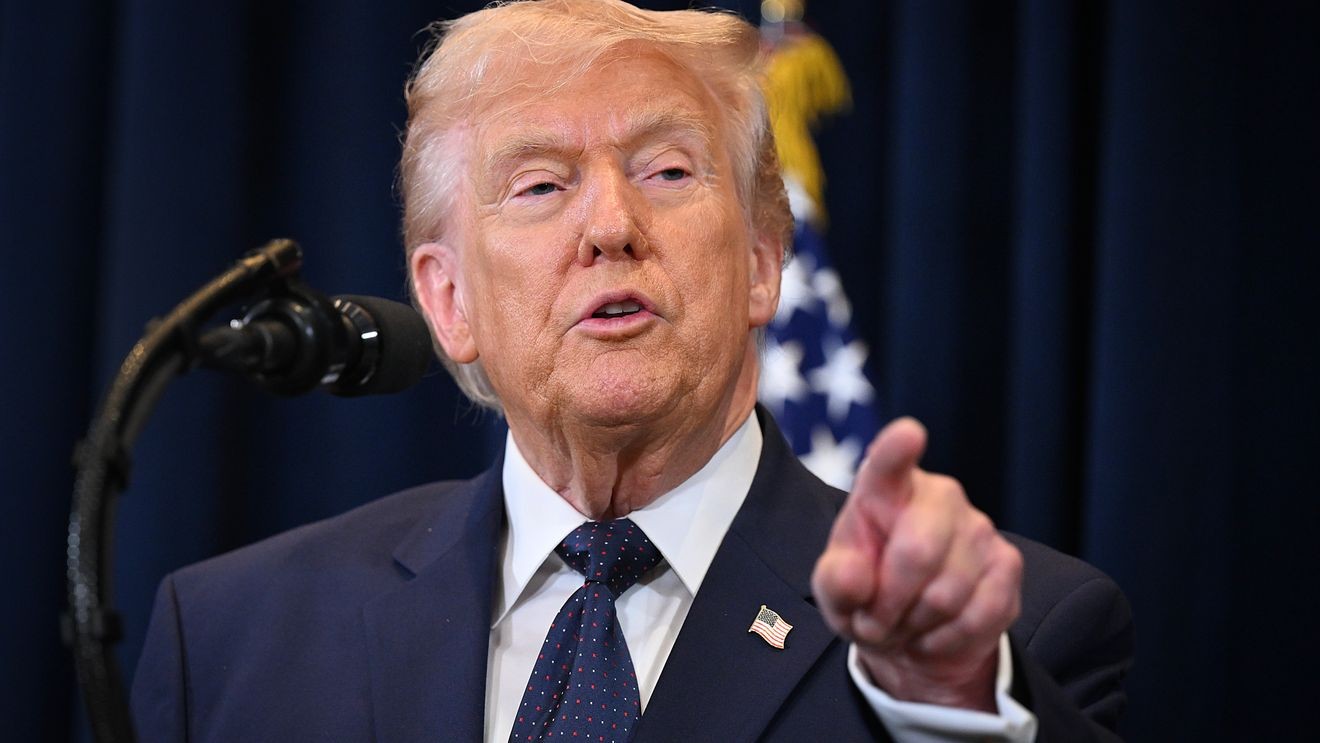
Despite the risks, President Donald Trump said he believes the waters remain safe enough for companies to continue operating.
“I think they should,” Trump said when asked whether companies should continue using the Strait. “Look, we took out all of their mine ships in just about one night,” he added, referencing American forces sinking 16 Iranian mine-laying vessels.
Iran’s Parliament speaker on Thursday warned the United States against any invasion of Iranian islands.
“Any aggression against soil of Iranian islands will shatter all restraint,” Mohammad Bagher Qalibaf wrote on X. “We will abandon all restraint and make the Persian Gulf run with the blood of invaders. The blood of American soldiers is Trump’s personal responsibility.”
At least 19 commercial ships have been damaged since the conflict began, according to JMIC.
As tensions escalated at sea, fighting intensified across the region.
U.S. Central Command shared video of strikes targeting three Iranian military aircraft, saying American forces are “not just defending against Iranian threats” but are “methodically dismantling” Iranian capabilities.
Meanwhile, the Israeli military confirmed it continued strikes in Lebanon, saying the Israel Defense Forces (IDF) were targeting “terrorist infrastructure in the heart of Beirut.”
Targets included Hezbollah infrastructure and intelligence headquarters, the IDF said.
Defense Minister Israel Katz warned that if Lebanon’s government does not prevent Hezbollah from launching attacks, Israel “will take the territory and do it ourselves.”
In a video statement released by his office, Katz said he and Prime Minister Benjamin Netanyahu had instructed the military to prepare for “an expansion” of operations in Lebanon to “restore calm and security to the northern communities.”
_____
Editor’s note: The Associated Press contributed to this article.

 National Headline