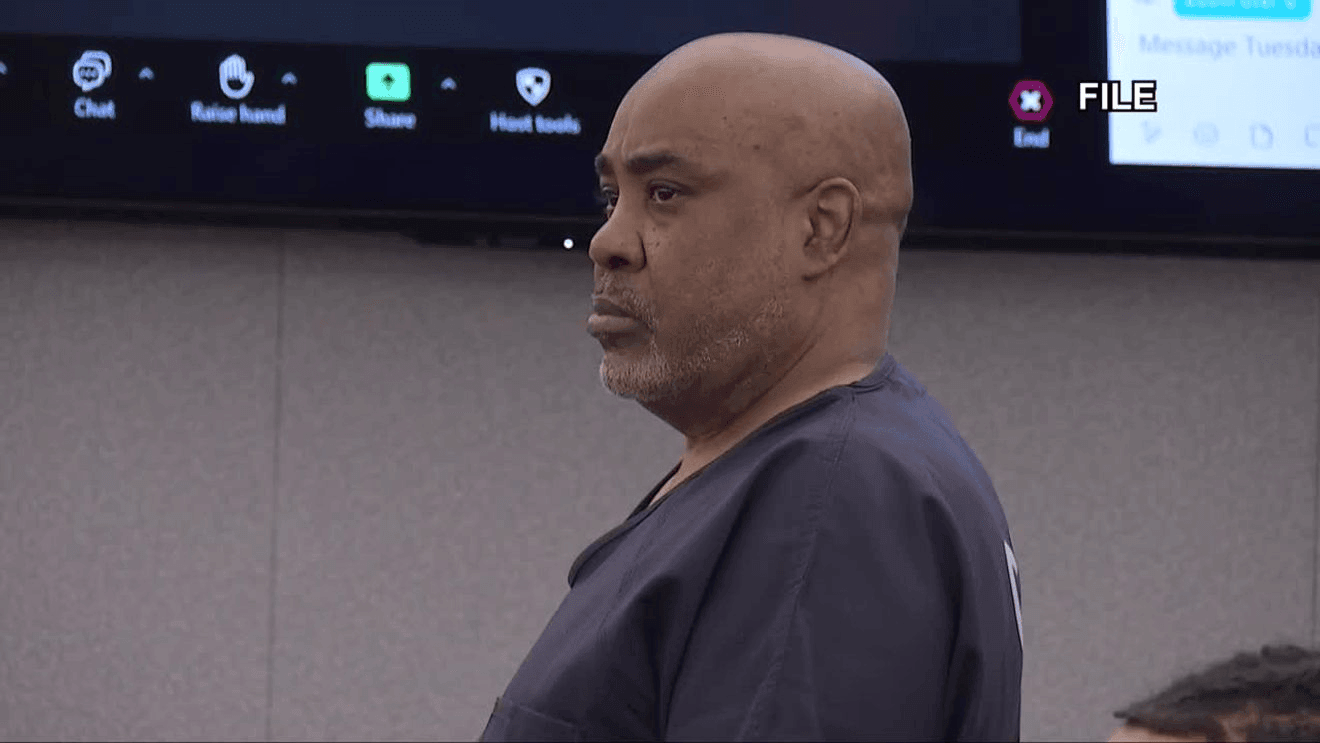
LAS VEGAS (KSNV) — The man charged with the murder of rap icon Tupac Shakur wants to block evidence collected during a nighttime police search from being admitted at trial.
Attorneys for Duane Davis filed a motion this week to suppress evidence collected from his home in 2023, claiming there are numerous defects in the affidavit used for the search that make it unlawful.
Prosecutors have charged Davis with ordering the fatal shooting of Shakur while in Las Vegas in 1996 as retaliation for a brawl that broke out on a casino floor. They’ve cited comments Davis himself has made in several media accounts as evidence of his involvement.
The motion argues that Davis’ accounts are “implausible and uncorroborated.” There are several contradictions from a jailhouse informant, the attorneys say, and no eyewitness or police accounts support some of Davis’ claims.
RELATED | Tupac Shakur murder suspect’s trial in Las Vegas pushed to summer of 2026
“Put simply, the Affidavit’s case for probable cause amounted to trying to breathe new life into evidence that was more than a quarter century old, a process that required credulously crediting Davis’s public statements—statements that were themselves years old, and plainly self-serving, and often at odds with the evidence,” the motion argues (emphasis theirs).
The attorneys also say the search warrant relied on a faulty pretext of danger to support conducting a nighttime search of the property. The affidavit stated that Davis had prior felony convictions, but the most recent was in 1998 and he was no longer a threat to anyone, they argue.
“The Affidavit never claimed that evidence would be destroyed, or that there was any other cause for urgency,” reads the motion. “Nor could there be considering the investigation was 27 years old, and the ‘new’ evidence came from a five-year-old documentary, a four-year-old book, and two-year-old YouTube videos.”
Davis’ lawyers have asked the judge to either suppress the evidence or hold an evidentiary hearing to determine if the affidavit included “falsity or reckless disregard” for the truth.
Court records indicate a hearing for the motion is scheduled for Jan. 6. A jury trial is scheduled to begin on Aug. 10.

 National Headline