WASHINGTON (TNND) — The Supreme Court on Tuesday heard arguments in two closely watched cases that could reshape who is allowed to compete in girls’ and women’s sports nationwide, as justices consider whether states can bar transgender athletes from female athletic teams.
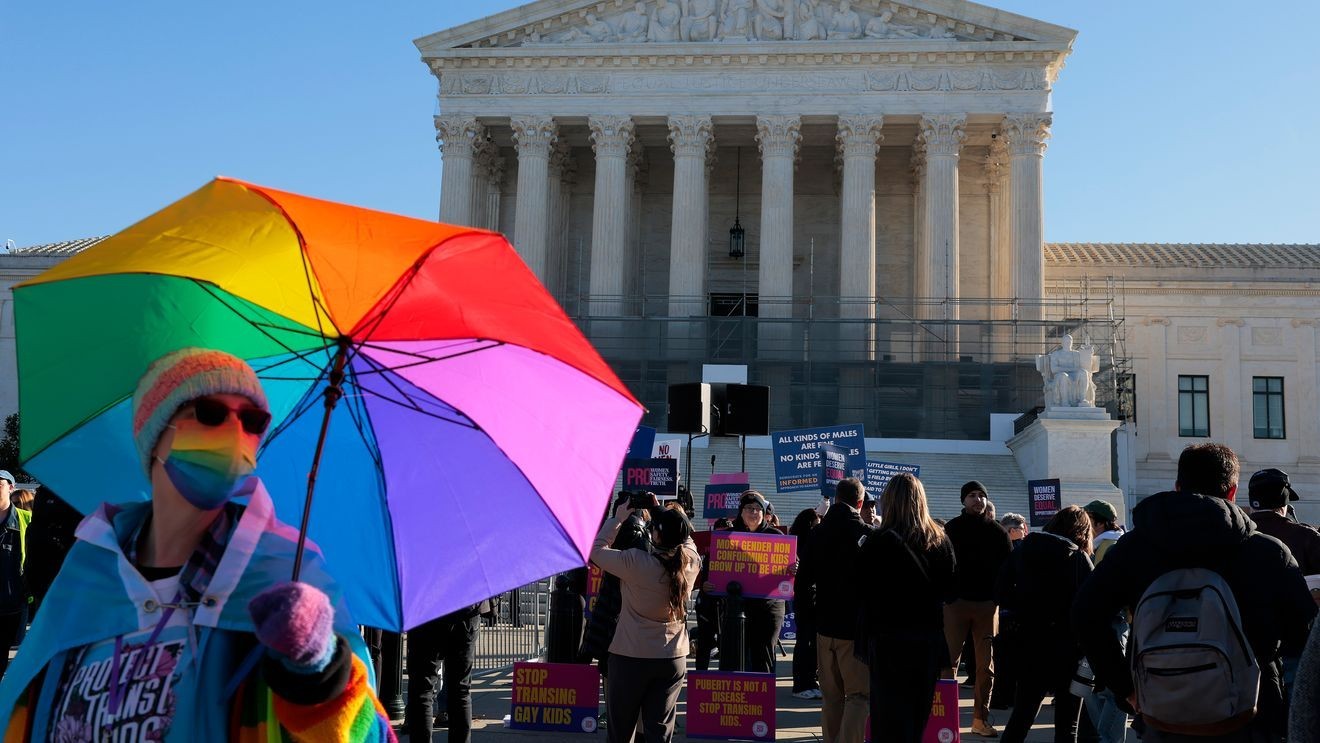
Outside the court, advocates and athletes from both sides of the issue gathered to make their voices heard. (TNND)
Inside the courtroom, attorneys for transgender athletes argued the bans violate constitutional protections by singling out a small group of students and excluding them from school activities. Outside the court, advocates and athletes from both sides of the issue gathered to make their voices heard.
Among them was Chelsea Mitchell, a former Connecticut high school track athlete who lost four state championships to a transgender athlete.
“It was heartbreaking to line up against biological males time after time and know that I didn’t have a chance,” Mitchell said.
Another former Connecticut runner, Selina Soule, also spoke out, saying her experiences pushed her to advocate for policy changes.
“If the adults in the room weren’t going to protect us, then I felt I had to stand up,” Soule said.
On the other side of the debate, supporters of transgender athletes traveled to Washington from across the country to warn that the court’s ruling could have broader consequences for transgender rights beyond sports. Lily, who traveled from New Jersey, described the cases as a “Trojan horse.”
Jacqueline, who transitioned as an adult and also traveled from New Jersey, said sports played an important role in her life growing up and should remain accessible to all children.
“Being in sports teaches teamwork and life skills that help people succeed,” she said.
The cases, brought from Idaho and West Virginia, challenge state laws that limit participation in girls’ and women’s sports at public schools and colleges to athletes designated female at birth. Together, they place the court at the center of a debate over gender identity, fairness in competition and states’ authority to regulate school athletics.
Both Idaho and West Virginia are among 27 states that have enacted similar restrictions, according to data compiled by the Movement Advancement Project. Supporters of the laws argue they are necessary to preserve competitive balance and opportunities for female athletes, while opponents say the measures unfairly target transgender youth and deny them the benefits of sports participation.
Legal analysts say recent Supreme Court rulings in other transgender-related cases suggest the justices may be inclined to allow states to keep their bans in place. A decision in the cases is expected by the end of June, a ruling that could have sweeping implications for schools, athletes and state lawmakers across the country.

 National Headline