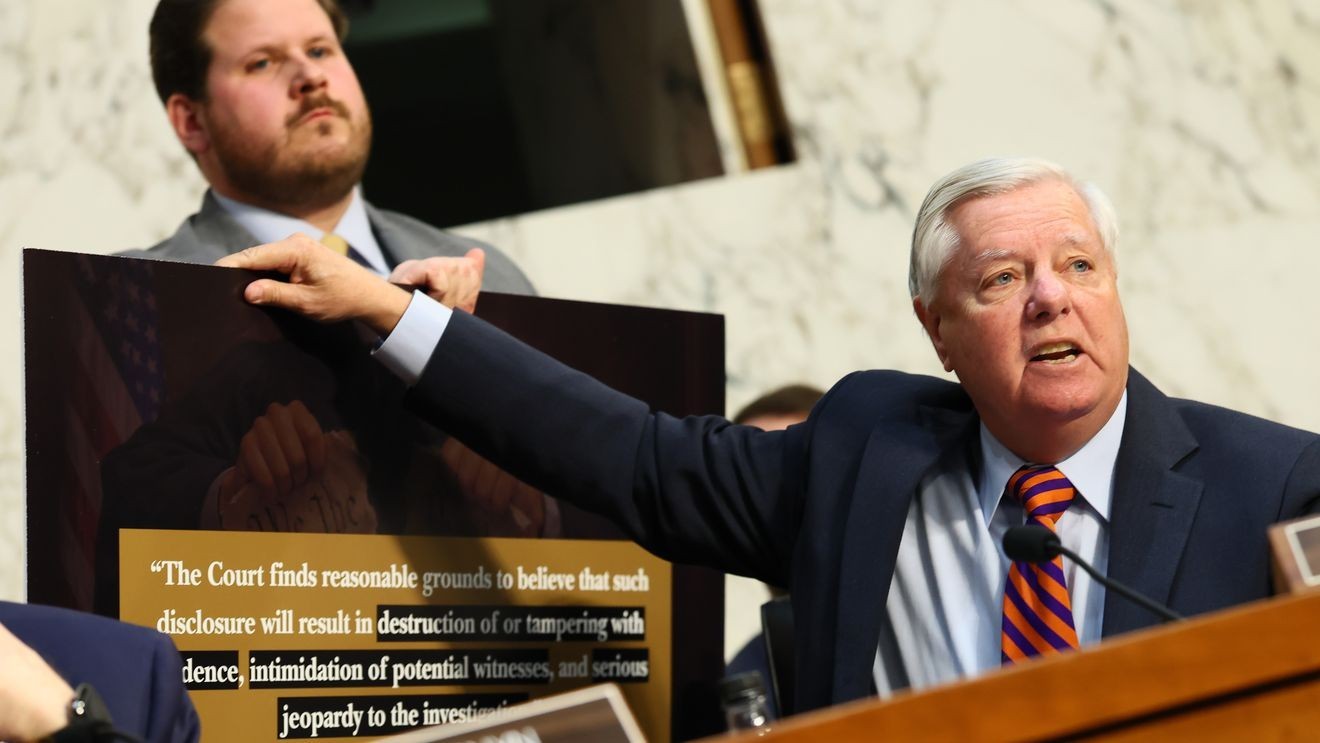
(TNND) — Executives from Verizon, T-Mobile and AT&T were grilled by Republican senators in a hearing Tuesday over why they handed over GOP lawmaker phone records to special counsel Jack Smith’s Arctic Frost investigation into alleged efforts by President Donald Trump to overturn the 2020 election.
Legal experts who also testified at the hearing defended Smith’s efforts to subpoena the so-called “toll records” associated with lawmakers’ phone lines.
But the Republicans on the Senate Judiciary Committee, including those who had their phone data subpoenaed, said the telecom companies violated their privacy and a constitutional clause that should shield them from having their records handed over in secret.
“No. 1, an observation, if the shoe were on the other foot, it’d be front page news all over the world that Republicans went after sitting Democratic senators’ phone records,” Republican Sen. Lindsey Graham, of South Carolina, said at the hearing.
Graham was among five members of the Senate panel that had their phone records subpoenaed in Smith’s investigation, along with Mike Lee, Josh Hawley, Ted Cruz and Marsha Blackburn.
“And the cavalier attitude that some of you have, ‘Well, you know, nothing really bad here happened,’ I disagree, fundamentally disagree,” Graham said. “And if you ever had a doubt about where the media is at and where our friends on the other side are at, this should bring us all together. Apparently, it will not. So, I just want to let you know, I don’t think I deserve what happened to me.”
Blackburn, a Tennessee Republican and the chair of the subcommittee holding the hearing, called Arctic Frost a “political witch hunt.”
Blackburn’s fellow Tennessee senator, Bill Hagerty, meanwhile, has filed a complaint with the Federal Communications Commission, alleging Verizon violated the law by disclosing his information and for failing to take reasonable measures to protect his information.
At the hearing, Blackburn said Smith issued 197 subpoenas to over 430 conservative individuals and organizations.
Blackburn called the subpoenas for phone records of sitting lawmakers a “deep invasion of our privacy,” and she said she saw no basis for the nondisclosure orders that accompanied the subpoenas.
Judiciary Committee Chairman Chuck Grassley, an Iowa Republican, has made probing Arctic Frost a priority.
And Tuesday marked the first in a series of planned Arctic Frost hearings, he said.
Grassley said the special counsel’s “invasive efforts were spearheaded by partisan agents and prosecutors.”
Grassley said Smith’s team understood that their request for lawmaker phone records might violate the Speech or Debate Clause of the Constitution, yet they “irresponsibly steamrolled ahead while intentionally hiding their activities from members of Congress.”
“So, (Smith’s) deceitful conduct was a substantial intrusion into the core constitutional activities of constitutional officers,” Grassley said. “If this happened to my Democratic colleagues, they’d be as rightly outraged as we Republicans are. My work will continue, because transparency brings accountability.”
And Grassley said Verizon, AT&T and T-Mobile were called to the hearing to explain why they gave Smith what he wanted without alerting the associated lawmakers.
Dick Durbin, the ranking member and an Illinois Democrat, called the hearing an “embarrassing use of the committee’s limited time.”
Durbin said Smith was investigating an alleged criminal effort by Trump to overturn the 2020 election, which culminated with the Jan. 6, 2021, riot at the U.S. Capitol.
“That same day, President Donald Trump was on the phone calling members of Congress to solicit their aid in blocking certification,” Durbin said. “Special counsel Jack Smith investigated this criminal effort by President Trump to overturn the election. So, it’s not surprising that Mr. Smith subpoenaed the call records of those the president tried to enlist in his conspiracy. To the extent the committee has questions about this, it should be former special counsel Smith testifying as a witness today before this committee, not three telecom companies who responded to legally issued subpoenas.”
Chris Miller, the general counsel for Verizon, told the Republican senators that he understood their frustration and concerns.
“No matter who is the subject of a subpoena, Verizon cannot ignore a valid legal demand or a court order,” Miller said. “But our processes could have been better suited to meet what was a new and unique set of circumstances for us and for other companies.”
Miller said Verizon has since put new processes in place to increase transparency to lawmakers whose information is sought by law enforcement.
He said Verizon gets hundreds of thousands of subpoenas each year for phone records related to criminal investigations.
For law enforcement requests related to members of Congress, Miller said Verizon will now ensure that the company’s senior leadership is notified and consulted before any information is disclosed.
Verizon will now contact law enforcement officials to verify that they, in fact, intend to seek records for a member’s telephone number.
Verizon will notify a lawmaker of the law enforcement request to the fullest extent provided by the law, he said.
And Miller said Verizon will now challenge a nondisclosure order preventing notice to the lawmaker.
Representatives from the other phone companies voiced similar sentiments. David McAtee and Mark Nelson, the general counsels for AT&T and T-Mobile, respectively, also testified.
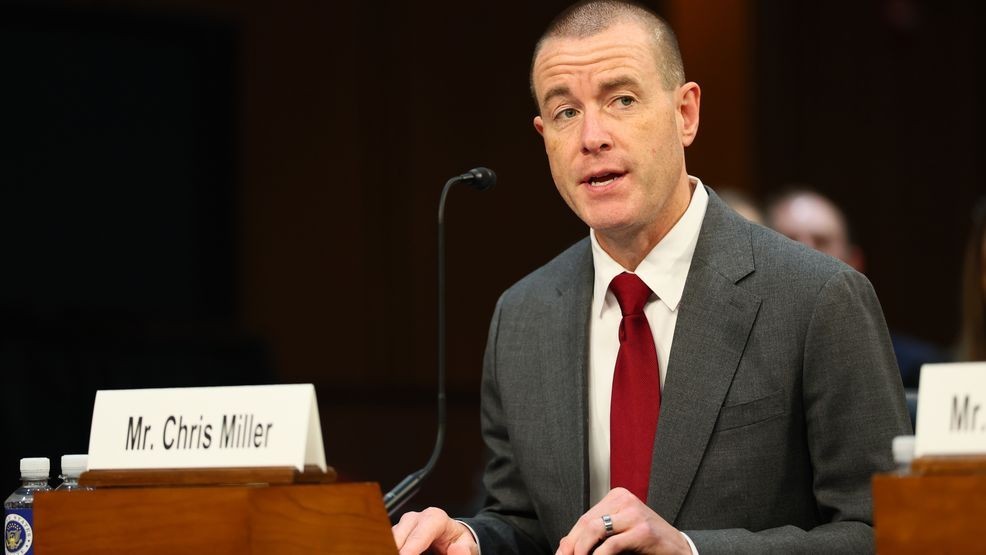
Chris Miller, Senior Vice President & General Counsel–Verizon Global Services speaks during a hearing on “Arctic Frost Accountability: Oversight of Telecommunications Carriers’ Responses to Jack Smith’s Witch Hunt” in the Hart Senate Office Building on February 10, 2026 in Washington, DC. The Privacy, Technology, and the Law Subcommittee brought in current and former telecommunications executives and government officials to testify about Jack Smith’s investigation into President Donald Trump. (Photo by Michael M. Santiago/Getty Images)
Mike Romano, a former attorney in the Department of Justice, testified that Smith’s subpoenas for “toll records” from lawmaker phones weren’t unusual for the investigation Smith was conducting.
“Subpoenas for toll records are routine in criminal investigations, especially when they involve conspiracy and obstruction of justice,” said Romano, who prosecuted crimes committed during the Capitol riot.
Toll records show that a phone number called another phone number, when the call was placed, and how long it lasted, Romano said.
They do not include the content of the calls.
They don’t capture conversations, voice mails or text messages, Romano said.
“This collection of toll records was not weaponization,” Romano said.
Romano said the special counsel’s office seemingly followed department policy in the collection of evidence, safeguarded that evidence, and kept it confidential, just as he would expect any federal prosecutor to do.
“I understand that some of you had your toll records collected and are unhappy about that, and that’s understandable,” Romano said. “Nobody enjoys having the government collect their information. But apart from that unhappiness, you were not harmed.”
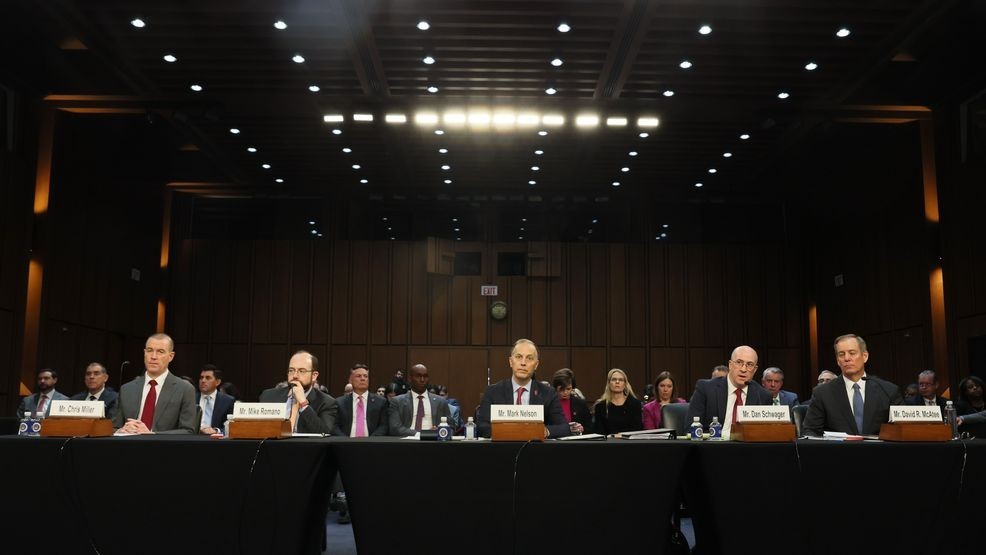
Chris Miller, Senior Vice President & General Counsel–Verizon Global Services, Mike Romano, former Justice Department prosecutor, Dan Schwager, counsel at Verdi & Ogletree PLLC, and David R. McAtee, senior executive vice president & general counsel at AT&T, attend a hearing on “Arctic Frost Accountability: Oversight of Telecommunications Carriers’ Responses to Jack Smith’s Witch Hunt” in the Hart Senate Office Building on February 10, 2026 in Washington, DC. The Privacy, Technology, and the Law Subcommittee brought in current and former telecommunications executives and government officials to testify about Jack Smith’s investigation into President Donald Trump. (Photo by Michael M. Santiago/Getty Images)
Dan Schwager, who was the general counsel to the secretary of the Senate on Jan. 6, 2021, and was asked to testify regarding the practice of using noncontent toll records in criminal investigations, said these were very different from wiretaps or other content searches.
“Nondisclosure orders are also commonly warranted and sought,” Schwager said. “The basis for seeking them is not necessarily that the owner of the phone may jeopardize an investigation themselves, but that intimidation, destruction of evidence, or jeopardy may occur if the subpoena became public to others.”
Hawley, the Republican senator from Missouri who had his phone records subpoenaed, applauded AT&T for questioning the subpoena for Cruz’s records but criticized the other companies for not pushing back on the requests.
Hawley also called the nondisclosure orders that prevented the phone companies from alerting the lawmakers “totally illegal.”
“As we’ve covered now exhaustively in this hearing and in others, statutes in place on the books in 2020 … required notification to sitting members of Congress if their information is subpoenaed in any way,” Hawley said. “Not to mention the contract that the sergeant at arms has with all three of the major telecoms.”
Hawley questioned the Verizon executive, specifically, why his company didn’t make an effort to associate the phone numbers included in the subpoena with those of sitting lawmakers or subsequently question the special counsel’s office about its requests.
“With one exception, Mr. McAtee’s company, AT&T, all the other guys just handed over this data,” Hawley said. “They couldn’t do it fast enough. They rushed to do it. They can find you, when they want to bill you, they can find you in a heartbeat. When it comes time to protect your data, they’re nowhere to be found. It is absolutely a disgrace.”
Graham noted that Verizon had a contract with the Senate for communication services and contended that the contract contained a clause that obligated Verizon to notify the senators that their records were subpoenaed.
Graham said Verizon failed him and his fellow senators.
“This is a major breakdown of constitutional checks and balances, a major breakdown of protecting people you have a contractual obligation to protect, and I think the biggest weaponization of the law, but that is yet to be determined,” Graham said.

 National Headline