RMWorld Travel
11:00 pm - 12:00 am
Calls for AI regulation have become bipartisan. But even Republican proposals, however well-intentioned, can create problems of their own.
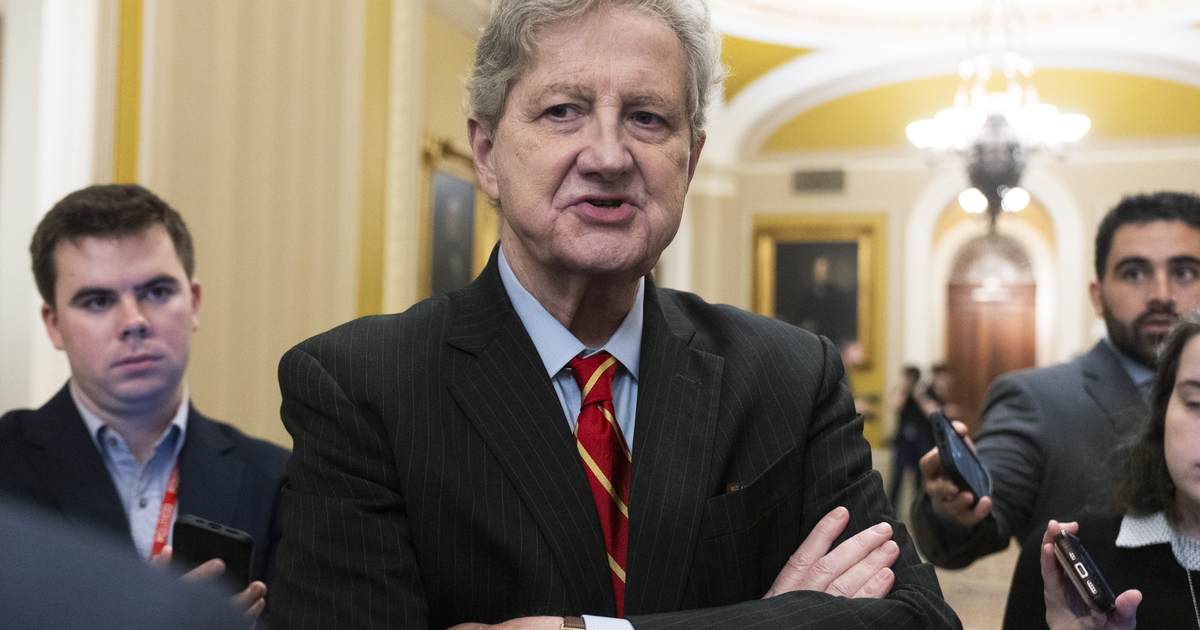
Louisiana Sen. John Kennedy’s AI Emergency Button Act was blocked in the Senate on Wednesday after Majority Leader John Thune declined to bring it to the floor and Sen. Rand Paul objected to Kennedy’s attempt to pass it by unanimous consent. The bill would have required sellers of “advanced AI models” to include an emergency kill switch.
The idea is simple in theory: if an AI model begins acting autonomously or maliciously, humans could shut it down immediately. Kennedy stressed that the government would not control the switch; the AI companies, or those operating the models, would retain that power. Kennedy warned that beyond blatant misuse of AI, the larger danger is “recursive self-improvement,” AI learning and improving itself until it ceases to be a tool and becomes, in his words, “an independent species” that no longer shares human values. He compared that prospect to The Terminator, arguing that similar behavior has already appeared in several recent incidents.
🔥🚨 BREAKING — Sen. John Kennedy says John Thune wouldn’t even let his AI “kill switch” bill on the floor — so he tried unanimous consent, and Rand Paul killed it…
“I proposed a bill last night that was pretty simple. It just said these AI companies have to have kill switches… pic.twitter.com/T7AOiJ2LA6
— The Patriot Oasis™ (@ThePatriotOasis) September 17, 2026
The problem is that this bill treats AI like a single machine that can actually have one big red off button. It is not.
AI is quickly being built into everything from search engines and cybersecurity tools to medical research and small-business software. And even if Congress mandates a “kill switch,” it has not explained what that would actually mean. Shutting down an AI command? Revoking access to a system? Disabling software or encryption keys? Or something else entirely?
Recommended
The more debate Washington has over AI, the clearer it becomes that very few people involved actually understand what they are regulating. What, exactly, constitutes an “advanced” model? Is it based on computing power, the number of users, a model’s ability to write code, or its capacity to operate autonomously? Would a small open-source model that can be modified by anyone qualify? What about an AI tool used to help doctors detect cancer or businesses identify cyberattacks?
The lack of specificity, and the broader ignorance surrounding the technology, is bound to create dangerous new vulnerabilities, and is something we need to consider amid the broader debate. For example, forcing a kill switch into AI systems may sound reassuring, but that switch would itself become a priority target for hackers, foreign adversaries, and anyone looking to disrupt critical services. A remotely accessible shutdown mechanism in an AI program used for cybersecurity, healthcare, finance, energy, or logistics could give attackers exactly what they need to effectuate severe harm: one point of failure capable of disabling an entire system.
Sen. Rand Paul made a similar point when he blocked the unanimous-consent vote: nobody truly knows what they are doing when it comes to this technology. For those who trust the incentives and competitive pressure of free markets, the responsible approach is to wait until lawmakers better understand AI, then target specific, demonstrable harms as they arise, not rush to regulate it for its own sake.
🚨 JUST IN: Sen. Rand Paul BLOCKS Sen. John Kennedy’s effort to unanimously require an AI “KILL SWITCH” nationwide, in one fell swoop by law
PAUL: “Ben Franklin said failing to plan is planning to fail. Approaching something as important as AI, we need as many facts as possible… pic.twitter.com/Q09pSJwN3U
— Eric Daugherty (@EricLDaugh) September 16, 2026
“I wouldn’t put Congress in charge of a McDonald’s.”
Sen. @RandPaul dismisses the idea of Congress regulating AI — especially when some lawmakers acknowledge they barely use the technology.
“They maybe shouldn’t be the same people who are running the Post Office, alright? The… pic.twitter.com/MfZSjUnI0h
— Fox News (@FoxNews) September 16, 2026

 National Headline