The Scott Jennings Show
8:00 pm - 10:00 pm
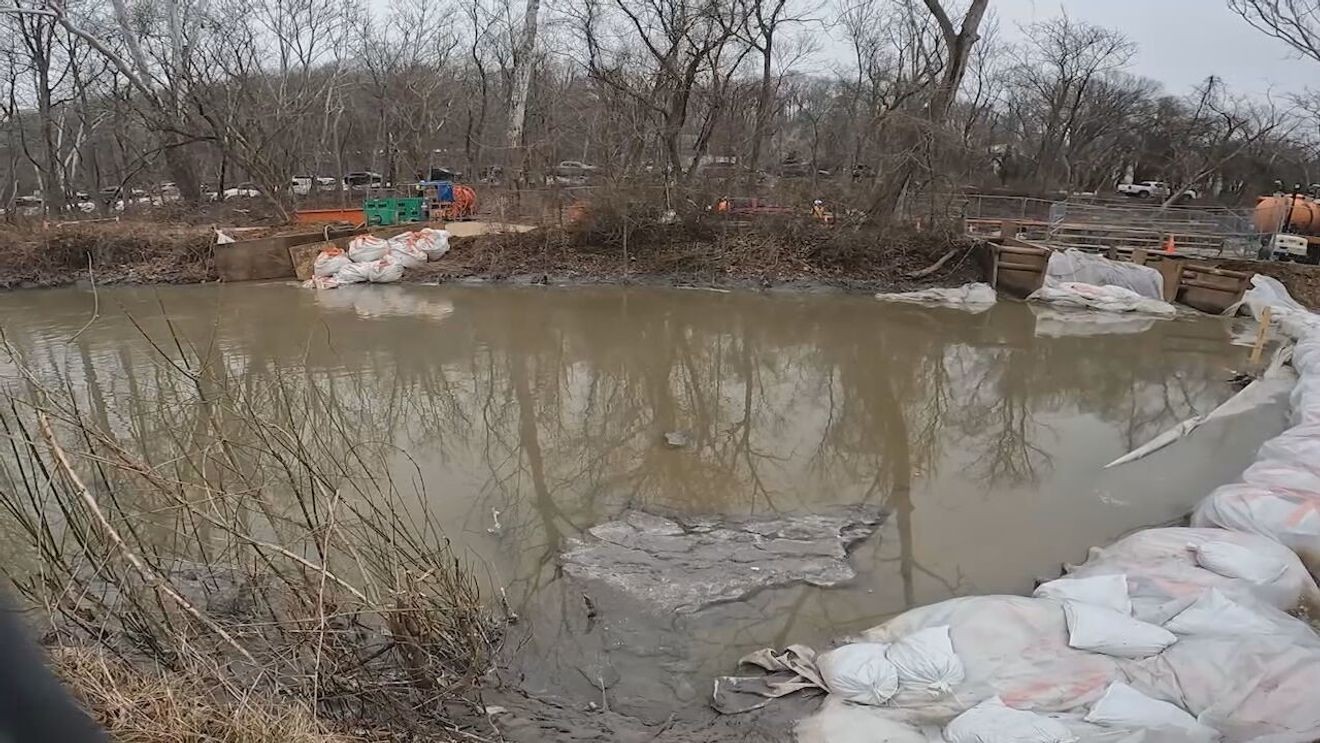
WASHINGTON (7News) — New testing by the Potomac Riverkeeper Network suggests sewage-contaminated water may still be reaching the Potomac River through a tributary that runs beneath the C&O Canal, even after DC Water began diverting sewage from the failed Potomac Interceptor into a day-lit portion of the canal.
In a report dated March 9, 2026, the Potomac Riverkeeper Network said fecal bacteria levels in the tributary increased sharply as the stream traveled through a stone masonry culvert located between Locks 11 and 10 of the C&O Canal. The culvert runs directly underneath the canal, which the group said is currently filled with bypassed sewage and settled solid waste, as well as underneath the towpath.
The organization said the tributary is the same waterbody that conveyed more than 200 million gallons of raw sewage to the Potomac River during the first weeks of the Potomac Interceptor overflow.
SEE ALSO | Repairs on pipeline that caused Potomac sewage spill expected to be completed by mid-March
Over two weeks, Potomac Riverkeeper staff sampled at four locations: just upstream of the culvert and below the Clara Barton Parkway; about 6 feet inside the culvert; directly below the culvert; and farther downstream at the confluence where the tributary meets the Potomac River.
Samples were placed on ice and transported to the group’s mobile laboratory, the SeaDog, at National Harbor, Maryland. The SeaDog is described as a Tier III Virginia and Maryland certified lab.
According to the data provided, E. coli levels above the culvert declined over the sampling period, from 4,361 MPN on Feb. 19 to 313 MPN on March 5. The group said those above-culvert levels “have steadily dropped over the past two weeks,” and were “now within the EPA safety limit of 410 MPN.”
But readings taken below the culvert remained far higher. The group reported E. coli levels below the culvert of 64,880 MPN on Feb. 19; 17,605 MPN on Feb. 23; 36,518 MPN on March 3; and 25,873 MPN on March 5. At the tributary’s confluence with the Potomac River, the group reported 20,075 MPN on Feb. 19; 1,510 MPN on Feb. 23; 41,060 MPN on March 3; and 18,597 MPN on March 5.
The group also collected samples inside the culvert on March 5, reporting an average E. coli level of 42,420 MPN from three samples taken at the left, center, and right sides toward the end of the culvert. It said that was the highest reading from that sampling day.
In addition to the lab results, the Potomac Riverkeeper Network said staff observed “continuous dripping” from the ceiling of the culvert during each of the four sampling events, estimating 20 to 30 visible drip locations. The report said the dripping was evident during both wet- and dry-weather conditions and was “often loud enough to echo throughout the tunnel.”
Downstream of the culvert, the group described a stronger odor and a streambed “covered in orange microbes, fungus filaments, and dark-colored pockets of sludge.” It said E. coli levels below the culvert were consistently “1 to 2 magnitudes higher” than samples taken above the culvert, and that bacteria levels at the Potomac River confluence were “always above the EPA safety limit.”
The organization called on DC Water and federal and state environmental regulators to “urgently respond” by investigating and abating the source of the contaminated discharge, monitoring fecal bacteria and other pollutants, and assessing the integrity of both the bypass operation and the culvert.

 National Headline