
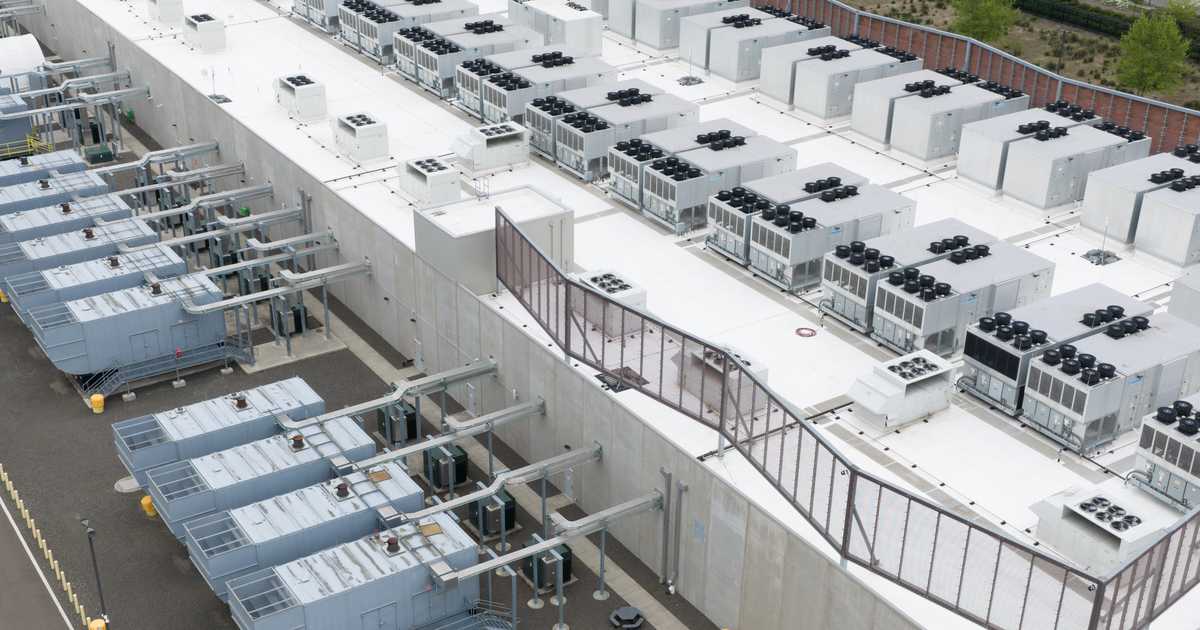
AI data centers are growing into a source of intense controversy as the United States decides the path it wants to take in the latest technological race, the new frontier of artificial intelligence.
The latest in the string of controversy is a project planned by Canadian entrepreneur Kevin O’Leary, who plans to build a massive 40,000-acre data center in Utah. The project has drawn ire from both locals and the nation more broadly.
Concerns range from land use to effects on the local climate and ecosystem, as well as water and power grid usage, to limited job creation and more. And while some of these concerns are valid, it is unclear where the broader pushback against AI and data centers is coming from, whether it stems from fears that AI will take people’s jobs or that it will accelerate society toward a dystopian future.
One creator took it upon himself to challenge a few commonly held beliefs about AI data centers, specifically regarding O’Leary’s project in Utah.
Fucking THANK YOU pic.twitter.com/bCuLF8qXsF
— Caleb Hammer (@sircalebhammer) May 18, 2026
He explained that the project will not simply be stealing land, as the developers are buying land from property owners in the state and using existing electricity and water rights to supply the data center. In other words, it would not pull in new water that was previously reserved, or at least not to the extent some people assume. He also argued that a cited 26-degree rise in temperatures due to the heat of the center itself may not be as significant as critics suggest, since the site is located in an uninhabited portion of the Utah desert. He also added that “the project is expected to bring in $30 million annually for Box Elder County in the first phase and more than $100 million annually at full build-out,” nearly tripling the county’s revenue.
While he didn’t entirely refute the concerns of critics, he framed the trade-offs as far more balanced, something many people are missing.
Among both Republicans and Democrats, AI data centers are striking a chord as a point of concern, as policymakers and communities seek to address and mitigate their impacts.
Are new Data centers positive or negative for the country
🟤 Negative 47%
🟢 Positive 22%YouGov #A – A – 5/16
— Political Polls (@PpollingNumbers) May 18, 2026
🚨 JUST IN: Florida Gov. Ron DeSantis has just BANNED AI data centers from using up all the water needed by citizens during a drought
And the law BANS utility companies from charging higher prices because of data centers
“How are you going to say that somehow the water can go… pic.twitter.com/f7PhNoEAZ2
— Eric Daugherty (@EricLDaugh) May 7, 2026
However, people’s initial reaction seems to be a preference for slowing or drastically limiting the expansion of AI rather than embracing it, with the thought in mind that the United States risks falling behind foreign adversaries, like China.
Some of the concerns, like water usage, have reportedly been over-dramatized or based on false data.
“Facts don’t really matter for the de-growth mob.” — The Washington Post’s James Hohmann
The anti–data center hysteria around water was built on a bogus stat about a data center’s water consumption in Chile that was off by a factor of 1,000.
All U.S. data centers use less… pic.twitter.com/FgGCXaB3Oc
— Steve Guest (@SteveGuest) May 19, 2026
People can never claim that AI data centers and their construction don’t come with concerns or risks, but those raising those concerns often are not engaging seriously with the next frontier of technology. They are afraid of AI, they don’t want to integrate new technology into the American economy, and they don’t appear to offer a clear path for how the United States should remain competitive if it pulls back from development and deployment.
AI is coming whether we like it or not. If we choose not to embrace it, that will be to our detriment. But we should be careful to recognize that the choice is not simply between embracing it uncritically or rejecting it outright.
 National Headline