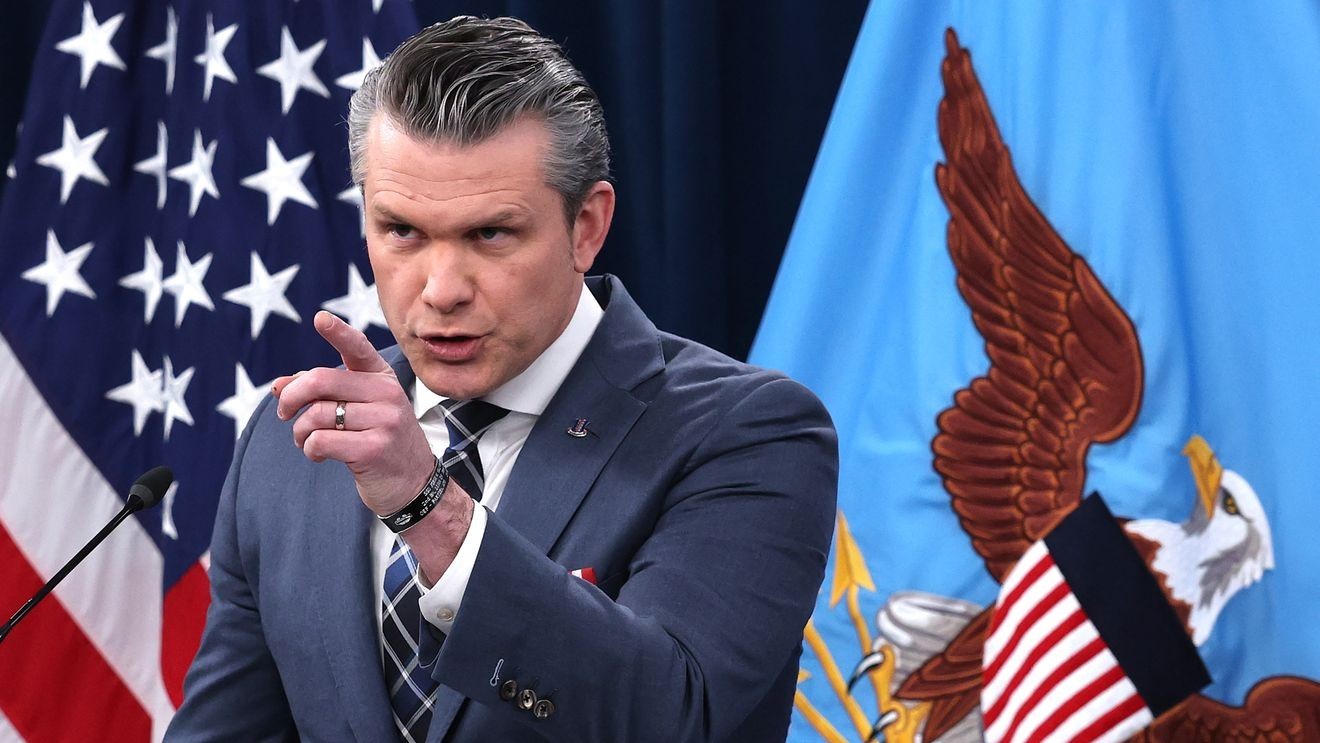
WASHINGTON (TNND) — The Trump administration is forcefully defending its military strategy in Iran as new questions emerge about how far U.S. involvement in the conflict could go.
Defense Secretary Pete Hegseth on Thursday pushed back against criticism that the operation risks becoming a prolonged war, rejecting comparisons to past U.S. conflicts in Iraq and Afghanistan. (TNND)
Defense Secretary Pete Hegseth on Thursday pushed back against criticism that the operation risks becoming a prolonged war, rejecting comparisons to past U.S. conflicts in Iraq and Afghanistan.
“…wants you to think, just 19 days into this conflict, we’re somehow spinning towards an endless abyss or a forever war, or a quagmire. Nothing could be further from the truth,” Hegseth said.
He described the mission as “laser-focused” and “decisive,” emphasizing that its objectives remain unchanged.
“This is not those wars. President Trump knows better,” Hegseth added.
Despite those assurances, a new report suggests the administration has at least discussed the possibility of sending thousands of U.S. troops into Iran to reinforce ongoing operations — a move that would mark a significant escalation.
President Donald Trump appeared to downplay that prospect during remarks in the Oval Office, while leaving open the possibility of further action.
“I’m not putting troops anywhere and if I were, I certainly wouldn’t tell you,” Trump said. “But I’m not putting troops and we will do whatever is necessary.”
Meanwhile, tensions continue to rise around the Strait of Hormuz, a critical global shipping route that Iran has effectively disrupted, sending energy prices higher and raising concerns about broader economic fallout.
Trump has urged U.S. allies to help secure the waterway, at times criticizing NATO partners for not doing more.
“In the case of NATO, they don’t want to help us defend the Strait and they’re the ones that need it,” he said.
Ahead of a White House meeting with Japan’s prime minister, six U.S. allies — including Japan, France and Germany — issued a joint statement supporting a potential coalition to reopen the strait. However, the statement stopped short of committing ships or other military resources.
As the situation intensifies, Trump has also escalated warnings toward Iran, signaling he could target oil facilities on Kharg Island, the country’s main export hub in the Persian Gulf.
Such a strike could deal a severe blow to Iran’s economy and further disrupt global oil supplies at a time when markets are already volatile.
For now, the administration maintains its strategy is limited. But with rising tensions and mixed signals on next steps, questions remain about whether the conflict can be contained.

 National Headline