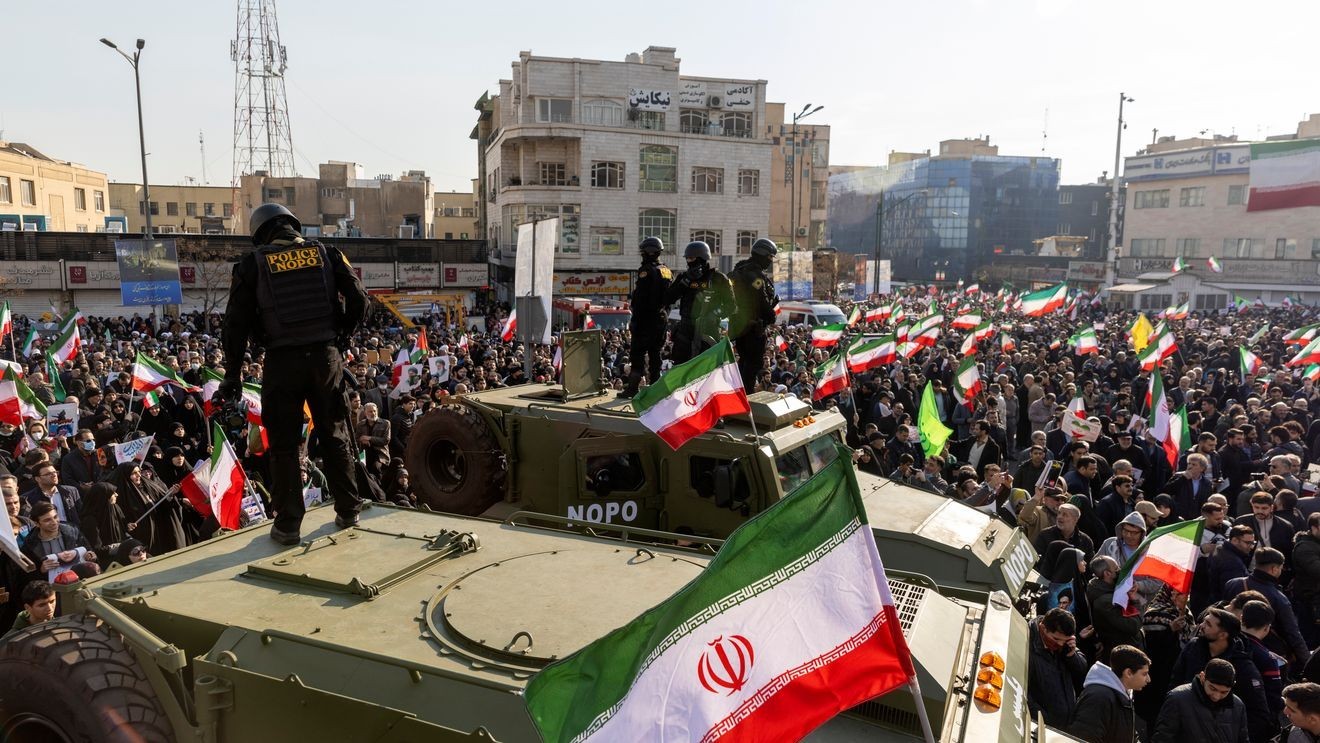
WASHINGTON (TNND) — President Donald Trump is weighing a range of military options against Iran, including targeted strikes on security forces and senior leaders, as the United States continues a significant buildup of military assets in the Middle East.
The deliberations come amid mounting internal pressure on Iran’s leadership and reflect what U.S. officials describe as an effort to deter Tehran’s nuclear ambitions while also capitalizing on unrest inside the country. (TNND)
The deliberations come amid mounting internal pressure on Iran’s leadership and reflect what U.S. officials describe as an effort to deter Tehran’s nuclear ambitions while also capitalizing on unrest inside the country. Reuters reported that President Trump is considering strikes designed to weaken Iran’s internal security apparatus and potentially spur renewed protests, with the broader aim of creating conditions for possible regime change.
In the Oval Office on Friday, President Trump confirmed the U.S. military has positioned substantial forces in the region.
“We have a large armada — flotilla, call it whatever you want — heading toward Iran,” Trump said. “If we do make a deal, that’s good. If we don’t make a deal, we’ll see what happens.”
The president said he has conveyed two clear demands to Tehran to avert military action: an end to Iran’s nuclear program and a halt to what he described as the killing of protesters.
“Number one, no nuclear,” Trump told reporters Thursday evening. “And number two, stop killing protestors.”
Over the past several weeks, the U.S. has moved additional warships, aircraft, and support assets into the region, a buildup senior defense officials say is intended both to deter Iran and to provide President Trump with military options if diplomacy fails.
Earlier this week, Ali Shamkhani, a senior adviser to Iran’s supreme leader, warned that any U.S. military action would be treated as an act of war and met with what he called an “immediate, all-out, and unprecedented” response.
By Friday, Iran’s foreign minister struck a softer tone, signaling openness to renewed diplomacy.
“Iran is ready to participate in any diplomatic process that is meaningful, logical, and fair,” Foreign Minister Abbas Araghchi said, adding that Iran is prepared to re-enter nuclear negotiations.
The escalation comes as Iran faces what analysts describe as its most serious internal crisis in years, marked by widespread protests, a deepening economic downturn, and increasing international isolation.
Sima Shine, a senior researcher at the Institute for National Security Studies at Tel Aviv University and a former head of research at Israel’s Mossad intelligence agency, said Iran’s leadership is at its weakest point since the 1979 revolution and that the U.S. may see a narrow window of opportunity.
“There are more chances that there would be a strike than that there will not be,” Shine predicted.
However, she cautioned that regional politics could complicate any decision to use force. Key Gulf states, including Saudi Arabia, have warned that strikes could destabilize the region and trigger a wider conflict, something countries like Saudi Arabia aim to avoid.
Senior defense and intelligence officials from Israel and Saudi Arabia were in Washington this week for meetings with U.S. officials as the White House weighs its next move. Israeli officials focused on intelligence-sharing related to potential targets in Iran. Israel’s military intelligence chief had meetings at the Pentagon, CIA and White House. Meanwhile, Saudi Arabia has been acting as a mediator passing messages between the US and Iran in an effort keep communication open and de-escalate tensions.
At the moment, however, officials say there are no formal negotiations underway between Washington and Tehran.

 National Headline


