WASHINGTON (TNND) — President Donald Trump has dismantled long-standing U.S. trade norms since he returned to the White House about one year ago, imposing broad tariffs that have transformed the nation’s economic posture.
Trump’s double-digit taxes on imports from almost every country have raised tens of billions of dollars for the U.S. Treasury, with The Associated Press reporting they raked in at least $236 billion through November.

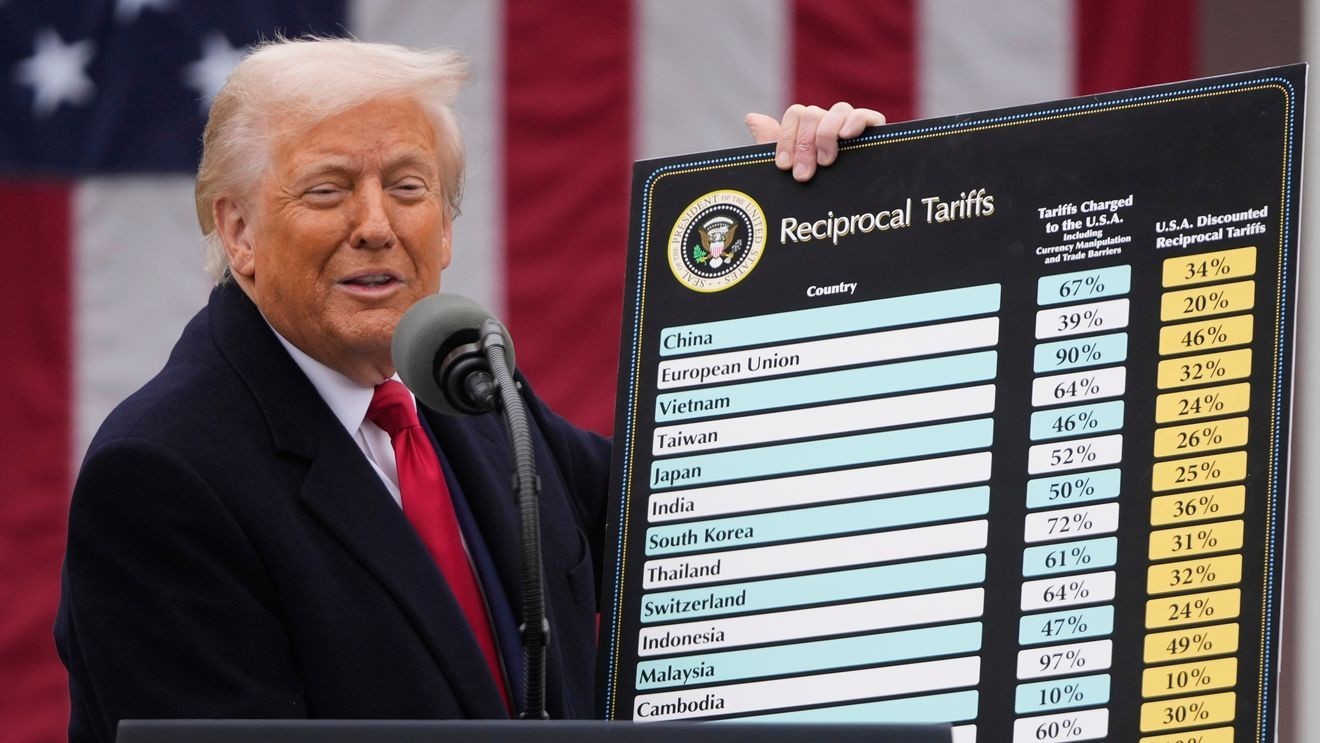
The graphic combination above highlights four graphics that analyze the impact of U.S. tariffs this year. (AP Digital Embed)
In 2025, per data from the Yale Budget Lab, the effective U.S. tariff rate peaked in April. But it’s still far higher than the average seen at the start of the year. Before finalizing shifts in consumption, November’s effective tariff rate was nearly 17% — seven times greater than January’s average and the highest seen since 1935.
In mid-December, the U.S. Customs and Border Protection (CBP) announced a record-breaking $200 billion in tariff revenue under Trump. Crediting upwards of 40 executive orders championed by Trump and his administration, the agency said it collected the funds from January 20 through December 15.
“CBP’s enforcement delivers results,” CBP Commissioner Rodney Scott said in a news release. “By combining intelligence-led targeting, rigorous oversight, and swift action, we are safeguarding the U.S. economy, protecting American industries, and holding accountable those who seek to break our trade laws.”
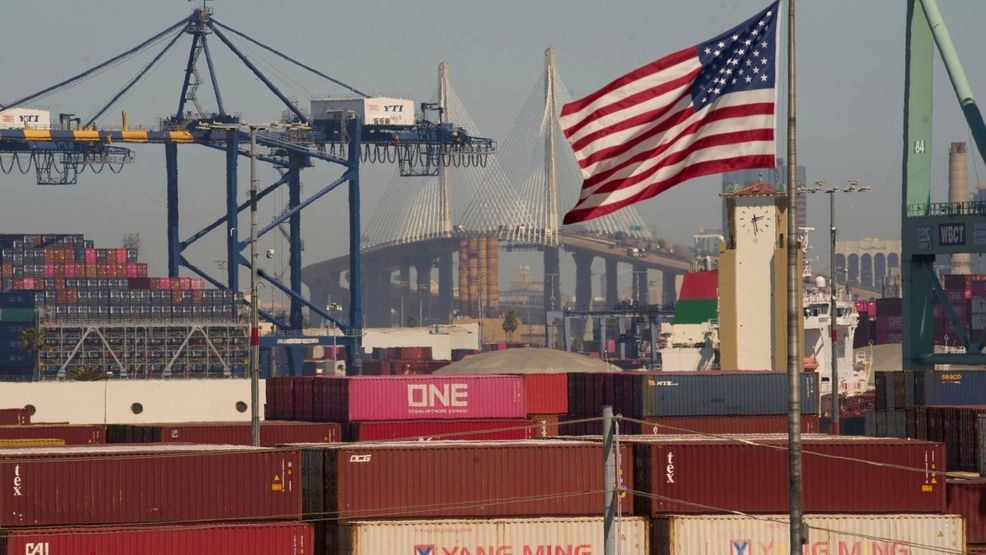
FILE – Containers with Yang Ming Marine Transport Corporation, a Taiwanese container shipping company, are stacked up at the Port of Los Angeles with the the Long Beach International Gateway Bridge seen in the background on Wednesday, April 9, 2025 in Los Angeles. (AP Photo/Damian Dovarganes, File)
According to the release, CBP used the latest data analytics tools to uncover what it described as “tariff evasion schemes,” such as undervaluation, misclassification, transshipment, antidumping and countervailing duty violations, illegitimate shell companies, and “double dipping” by claiming more than one tariff exemption to avoid paying revenue owed to the government.
The release noted that CBP uncovered and addressed tariff-evasion schemes through the following ways:
“These actions are enabled by CBP’s robust trade processing systems, such as the Automated Commercial Environment, which keep operations up to speed and enable CBP to effectively enforce U.S. trade laws,” according to the release. “Additionally, CBP publishes timely updates and trade guidance through the Cargo Systems Messaging Service.”
________________
BE THE FIRST TO COMMENT
EDITOR’S NOTE: The Associated Press contributed to this report.

 National Headline