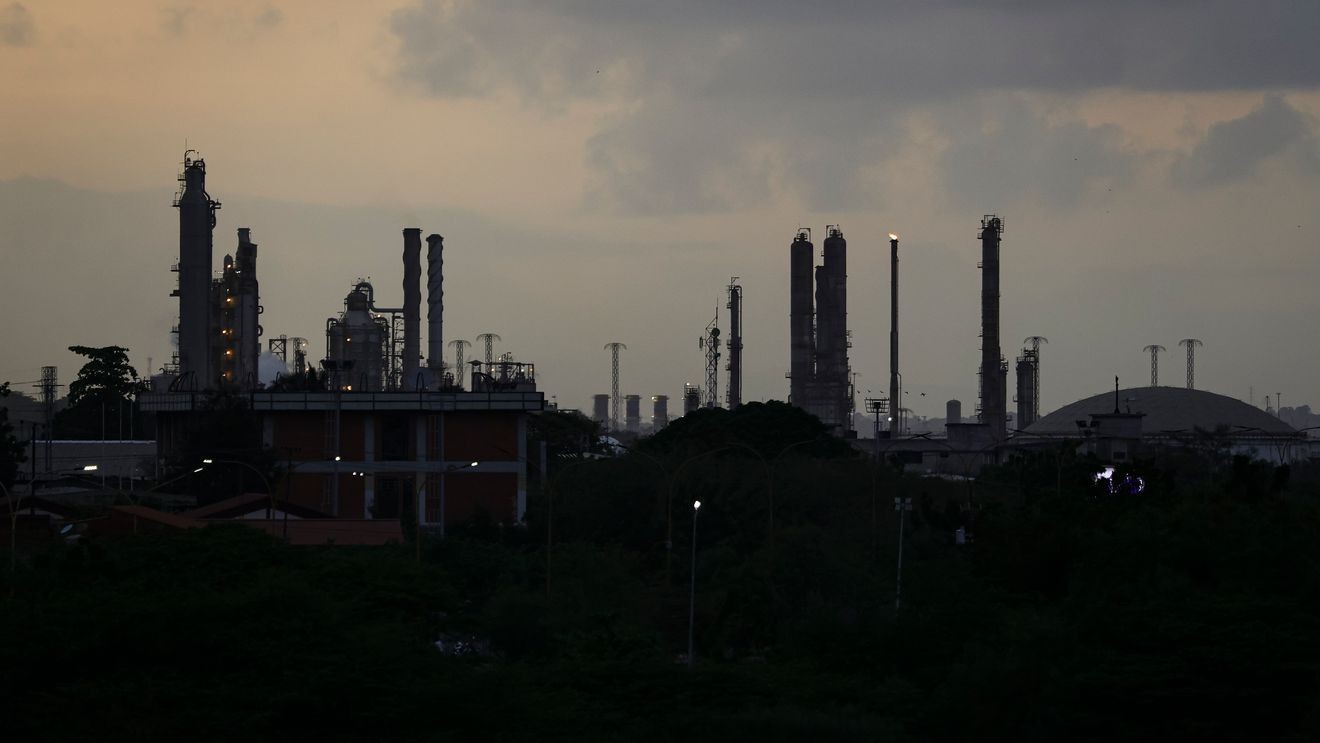
WASHINGTON (TNND) — Venezuela approved a new law opening the nation’s oil sector to private companies again, giving foreign companies more control over operations and starting a path to cutting the royalties they would pay to the government under pressure from the Trump administration to reopen its market to U.S. entities.
The legislation gives private companies more control over the production and sale of oil, bringing an end to state-owned Petróleos de Venezuela SA’s monopoly. Private companies “will assume full management of the activities at its own expense, account, and risk,” after getting a business plan approved by the country’s Oil Ministry.
It also allows for independent arbiters to settle disputes between companies and the government, a guardrail for potential investors after a previous mandated requirement disagreements be settled in Venezuelan courts and increased their risk of the government seizing assets.
President Donald Trump has sought to take control of Venezuela’s oil exports and remake its struggling oil industry through foreign investments. He is pushing U.S. companies to invest $100 billion in the country with assurances about security for their employees but has so far met a skeptical industry that is already backing off expanding domestic projects with lower oil prices.
Shortly after the Venezuelan law was being passed, the Treasury Department also began easing sanctions on Venezuelan oil that were put in place during the first Trump administration and expanded the ability for U.S. companies to operate there.
ExxonMobil CEO Darren Woods said on CNBC Friday that Venezuela will need to transition to democracy for the outlook to change.
“Those priorities start with one, stabilizing the country,” Woods told “Squawk Box.” “Second is to kick start the economy and try to recover some of the damage that’s been done over the decades of abuse that the dictators brought in, and then ultimately to transition into representative government.”
He told Trump during a meeting earlier this month with oil executives at the White House that Venezuela is “uninvestable” in its current state, prompting the president to threaten to cut the company out of any future investments there.
“We’ve had our assets seized there twice, and so you can imagine to reenter a third time would require some pretty significant changes,” Woods said during the White House meeting.
Venezuela nationalized its oil operations in the 2000s, which included seizing the assets of Exxon Mobil and ConocoPhillips. The only U.S. company still operating in Venezuela is Chevron, whose executives are optimistic about their ability to expand operations in light of the regime change and backing of the Trump administration.
What the future holds for Venezuela’s government is still an open question in the weeks since Maduro was captured by U.S. forces. Delcy Rodriguez, a longtime leadership figure under Maduro, is the acting president trying to keep the government unified while meeting the White House’s demands.
Whether the remnants of the Maduro regime or a future democratically elected government structure will remain open to foreign involvement in Venezuela’s oil industry is a major unknown.
“What one government gives, the next government can take away. The history of Venezuela is that’s exactly what happens,” said Ed Hirs, an energy fellow at the University of Houston. “You’re still dealing with the same people in the Maduro regime, the only one that’s changed is the CEO.”
The bill Rodriguez signed on Thursday still gives the government wide discretion over how much taxes companies will pay but says rates could be reduced based on the economics of particular projects and other factors. Administration officials and industry analysts said it was a productive starting point but may not be enough to entice companies to devote billions to rebuilding outdated infrastructure.
“It probably doesn’t go far enough to attract sufficient investment, but it’s a big step from where they were three weeks ago,” Secretary of State Marco Rubio told lawmakers on Wednesday.
Making the economics work will also be a challenge, especially for companies that did not maintain a presence in Venezuela after the industry was nationalized. The oil in Venezuela is expensive to produce and refine, costing $80 a barrel according to estimates by energy market consultants Rystad and Wood Mackenzie. U.S. crude is trading around $65 a barrel while brent crude is around $70, making the economics of Venezuelan reserves less appealing than investments in places like Libya.
Oil companies have been hesitant to opening more rigs within the U.S. with oil prices down, making the prospect of foreign investments in a country with a track record of nationalization and asset seizure a bigger gamble.
The security situation will also be a challenging dynamic for the country to get more foreign investment in. During the White House meeting, Trump said he would provide protection to companies and that the U.S. would work with Venezuela’s government on the issue.
“Until the Trump administration and the Maduro regime, minus one, can absolutely guarantee the safety of personnel, their families and the capital equipment. No one’s going there,” Hirs said.
After the administration “reopened” Venezuelan airspace, Trump said during a Cabinet meeting that the security situation in the country was improving. The State Department still lists Venezuela at the highest level of advisory because Americans face a high risk of wrongful detention, torture and kidnapping.
“American citizens will be, very shortly, able to go to Venezuela, and they’ll be safe there, and be safe. It’s under very strong control,” he said.

 National Headline