WASHINGTON (TNND) — More than four decades of hostility between the United States and Iran erupted into open war after coordinated U.S. and Israeli strikes hit Iran on Feb. 28, setting off a fast-moving conflict that has spread across the Middle East, disrupted global travel and energy markets, and killed U.S. troops.
WATCH OUR LATEST VIDEO EXPLAINING OPERATION EPIC FURY BELOW
The operation, called Operation Epic Fury, began after U.S. and Israeli agencies reportedly determined Iran’s missile and nuclear programs had reached a “critical threshold.” The assault included air and naval operations targeting Iranian military infrastructure, missile facilities, drone factories and Iran’s leadership.
Within hours of the first strikes, President Trump announced the military action killed Iran’s Supreme Leader, Ayatollah Ali Khamenei. Iran then appointed Khamenei’s son, Mojtaba Khamenei, as the new Supreme Leader. The Trump administration has publicly rejected the succession, with Trump calling Mojtaba “unacceptable.”
The United States and Israel described the campaign as necessary to halt Iran’s nuclear ambitions, degrade its missile capabilities, dismantle its naval power and disrupt its ability to support allied militant groups such as Hezbollah. The conflict is described as the most significant military action involving American forces since the Iraq War.
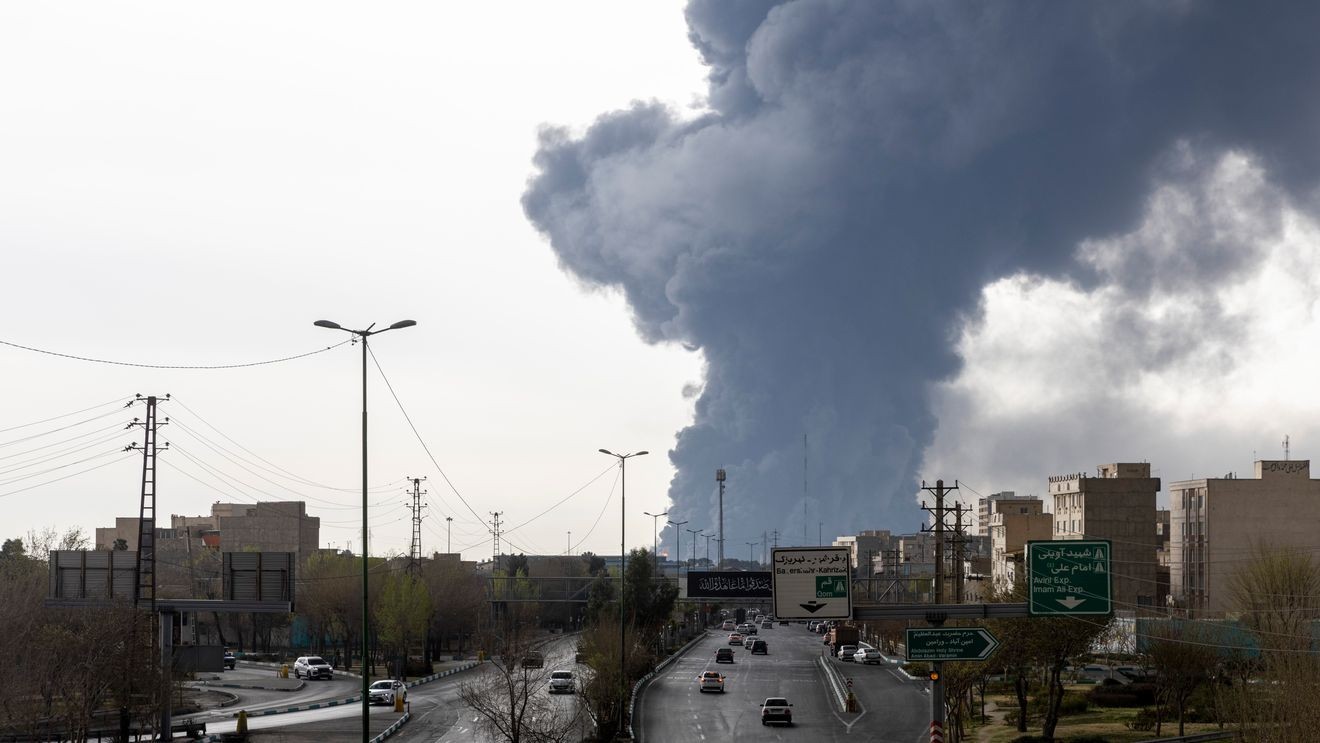
Iran responded with waves of missile and drone attacks across the Middle East, targeting Israeli cities, U.S. military bases and infrastructure in Gulf nations, including the United Arab Emirates and Bahrain. Explosions have rocked Tehran and other major Iranian cities as air defense systems worked to intercept incoming strikes. Iran has also reportedly fired missiles toward Saudi Arabia and Qatar, and drones have been intercepted over Turkey and other neighboring nations.
Iran-aligned groups have also been drawn in. Hezbollah in Lebanon launched counterattacks on Israeli territory in response to the strikes, prompting further Israeli bombardment.
Within the first 100 hours of the attack on Iran, a U.S. submarine struck an Iranian warship with a torpedo, described as the first time since World War II. The Pentagon also reported that more than 140 U.S. service members have been wounded since the war began.
The conflict has also killed U.S. troops. Last week, six U.S. soldiers were killed in Kuwait after a strike hit the makeshift operations center they were in. All six were assigned to the 103rd Sustainment Command, an Army Reserve unit out of Iowa. A seventh U.S. soldier died after sustaining injuries from an Iranian attack at the Prince Sultan Air Base in Saudi Arabia.
The fighting has closed much of the Middle East’s airspace amid continuing missile and drone attacks, stranding tens of thousands of people. Since the attacks began, more than 23,000 flights have been canceled. Dozens of countries, including the United States, the United Kingdom, France and Germany, have organized charter flights for their citizens. About 43,000 Americans have been returned to the United States since the strikes started Feb. 28.
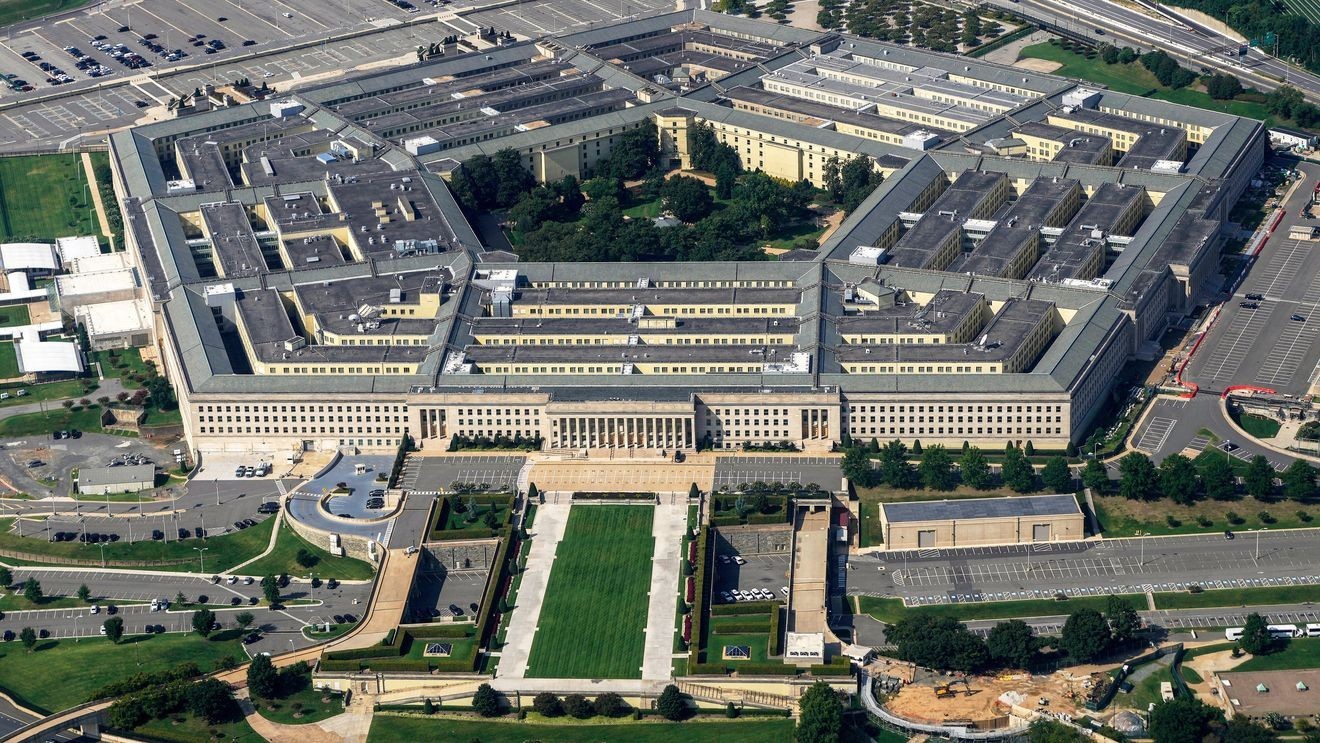
Pentagon officials, including Secretary of War Pete Hegseth and Chairman of the Joint Chiefs Gen. Dan Caine, said the campaign is intended to decisively weaken Iran’s military capabilities and prevent nuclear proliferation. Hegseth described new strikes as “the most intense yet,” saying U.S. forces are targeting embedded military infrastructure and Iranian naval assets. Caine reported significant reductions in Iran’s offensive capacities, including sharp declines in ballistic missile and drone attacks and widespread damage to Iranian naval assets. The U.S. military has also emphasized it is not pursuing a long-term occupation or “nation building,” but a campaign with clear military objectives.
The war has also disrupted global energy markets by affecting traffic through the Strait of Hormuz, a critical maritime route for nearly 20% of global oil supplies. The closure of the strait has driven rapidly rising oil prices, and major oil producers in the Gulf have also cut oil output.
Iran reportedly began laying mines in the Strait of Hormuz. Trump later posted on Truth Social that the U.S. had “hit, and completely destroyed, 10 inactive mine laying boats and/or ships, with more to follow!” Three ships have since been hit by unknown projectiles, with Iran claiming it had launched its most intense operation since the start of the war. The U.K.’s maritime agency reported that two cargo vessels and the master of a bulk carrier were under attack, resulting in a fire on one of the ships. Crew members were reported to be safe and accounted for.
International leaders have urged de-escalation. French President Emmanuel Macron has spoken with Iranian leadership to urge a halt to regional strikes and to protect the Strait of Hormuz.
The United Kingdom sent the HMS Dragon, an air defense destroyer, to Cyprus after the RAF base on sovereign British territory was hit by an Iranian drone, with further attacks intercepted. Prime Minister Keir Starmer said he was sending four more Typhoon aircraft to Qatar for “defensive operations,” citing his “strong views” on the need to de-escalate. Italy’s defense minister, Guido Crosseto, said Italy and other European partners were planning to send naval units to support Cyprus.
As the war enters its second week with no clear end in sight, U.S. and Israeli forces continue intense air and naval strikes, while Iranian forces continue to retaliate across the region.

 National Headline