(TNND) — For the second time, a parent has been held criminally responsible for a mass school shooting allegedly committed by their child.
A veteran defense lawyer said Wednesday that such cases haven’t yet set a legal precedent for parental criminal liability, but he said another successful prosecution might possibly give other prosecutors the green light to pursue such cases.
Colin Gray, a Georgia man, was convicted Tuesday of second-degree murder and involuntary manslaughter for supplying the gun his 14-year-old son, Colt, allegedly used to kill two students and two teachers at Apalachee High School in September 2024.
A Michigan couple, Jennifer and James Crumbley, were previously convicted of involuntary manslaughter stemming from a 2021 school shooting carried out by their son.
The alleged shooter in the Georgia case, Colt Gray, has pleaded not guilty and has a status hearing coming up in court.
Colin Gray, Colt’s father, bought his son an AR-15-style semiautomatic rifle and ammunition despite the boy’s deteriorating mental health and sufficient warning that Colt Gray would harm and endanger other people, according to prosecutors.
Craig Trocino, a law professor at the University of Miami and the director of Miami Law’s Innocence Clinic, said neither the Crumbley case nor the Gray case have set precedent in a legal sense.
“But what it does is (it) informs prosecutors around the country that this is available,” Trocino said. “And once that bar is set, prosecutors will lower that bar sequentially until they … stop getting convictions.”
Trocino said these cases are “incredibly fact-specific.”
It’s not just that the parent supplied a gun to the child.
It’s not just the knowledge of mental health struggles.
It’s the totality of damning evidence, including the style of weapon, that piles up to give the prosecution a case, Trocino said.
“In general terms, is a parent responsible for the actions of their child? The answer is no,” Trocino said. “But when you get into the facts, you know the egregious facts … then it starts looking worse and worse and worse.”
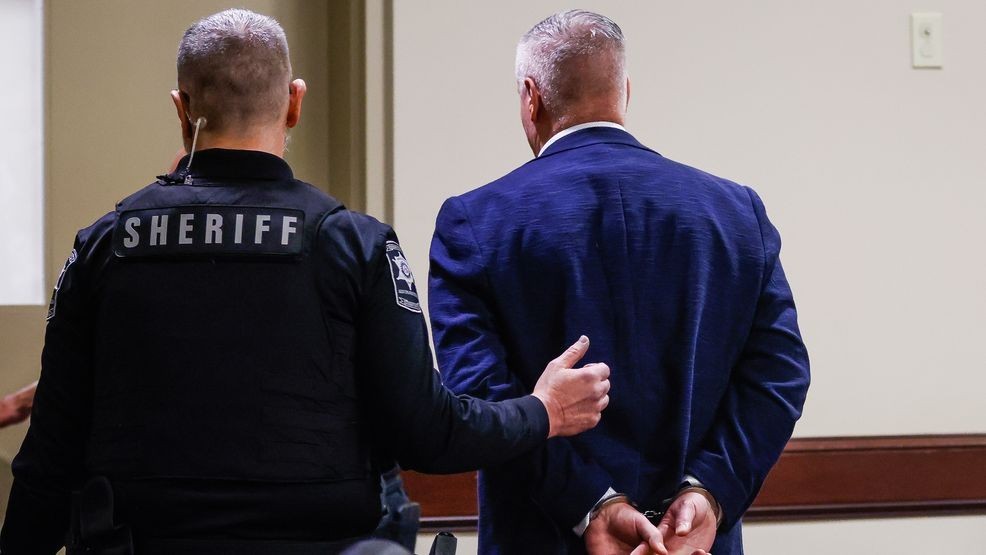
Colin Gray, the father of Apalachee High School shooting suspect Colt Gray, is handcuffed and escorted out of the room after jury deliberations at his trial at Barrow County Courthouse in Winder, Ga., Tuesday, March 3, 2026. (Abbey Cutrer/Atlanta Journal-Constitution via AP, Pool)
Trocino said he’s been a defense lawyer for 35 years and understood the rationale for prosecuting Colin Gray.
“I don’t know that there’s very many people who would look at the Crumbley case and the Gray case and say, ‘Oh, that’s just ridiculous. I can’t believe they prosecuted it,’” Trocino said.
But he did express concerns that such cases could be “weaponized” against parents who are racially or socioeconomically disadvantaged if prosecutors set the bar too low.
“I think it’s still going to be very, very fact-specific, but the danger can be that once the door has been opened that prosecutors will try and widen the opening,” Trocino said.

 National Headline