(TNND) — Controversy is again swirling in California over transgender athlete participation, weeks before the Supreme Court is expected to issue a ruling that could determine the future of state-level bans on transgender sports participation.
A transgender high school track and field athlete, AB Hernandez, won several events this weekend at sectional finals.
California law allows transgender students to participate in school sports consistent with their gender identity.
But under a pilot program first implemented last year, the top cisgender female athlete shared the podium with Hernandez. And additional cisgender female athletes qualify for the state finals in events where transgender athletes participate.
President Donald Trump, who has issued an executive order intended to keep biological males off sports teams intended for females, took to social media last year to call Hernandez’s competition in girls’ track and field illegal and “TOTALLY DEMEANING TO WOMEN AND GIRLS.”
And Trump’s Justice Department filed a Title IX lawsuit against California last summer for allowing male-born transgender athletes to compete on girls’ teams.
In response to Trump’s order last year, the NCAA changed its policy to prohibit athletes born as males from competing in women’s sports.
Just over half of the states have laws in place banning transgender students from competing on a sports team aligned with their gender identity.
The Williams Institute at UCLA, a research center on sexual orientation and gender identity law and public policy, said about 300,000 youth 13-17 identify as transgender. More than 117,000 of those teenagers live in the 27 states that have passed bans on transgender sports participation.
Movement Advancement Project, a progressive think tank focused primarily on LGBTQ policy and advocacy, said two other states have regulations or policies in place to restrict transgender sports participation. The organization has published a map showing which states have bans.
“In the past, states often conditioned their inclusion on evidence of testosterone suppression,” Doriane Coleman, a law professor at Duke University who has focused some of her work on gender issues and sports eligibility rules, said via text message on Monday. “Today, there’s really no appetite for that—from any corner. As a result, today there are states that exclude and states that include, regardless of the athlete’s hormone status.”
While transgender people make up a small share of the U.S. population, the public is generally in favor of transgender sports bans.
The Pew Research Center reported in 2022 that less than 1% of U.S. adults are transgender, though the shares are higher in younger adults – 2% for adults younger than 30 and 3.1% for adults under 25.
Gallup has found that a majority of Americans, 69%, side with restricting transgender athletes to only sports teams that match their gender at birth. That view was held by 90% of Republicans, 72% of independents and 41% of Democrats.
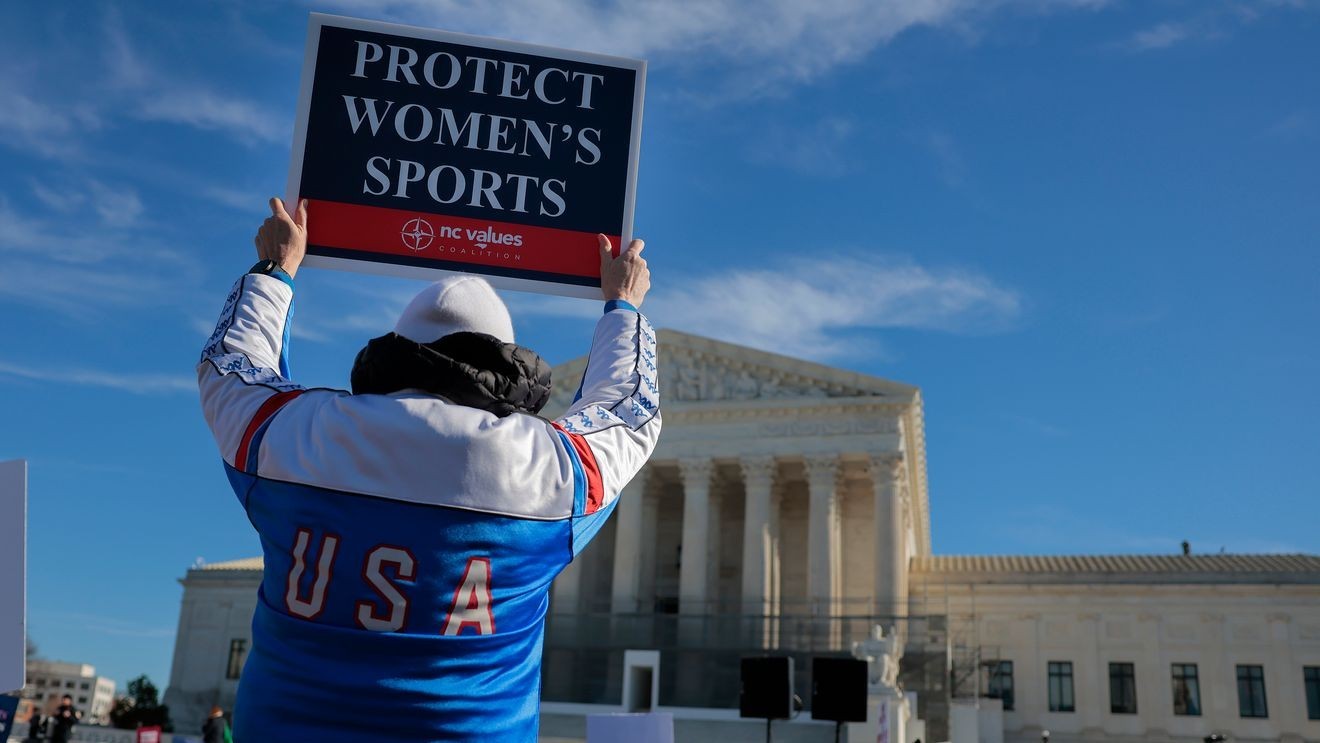
The Supreme Court is expected to rule on two cases by the first week of July that could determine whether states can continue enforcing their transgender sports bans.
The challenges come from transgender athletes in Idaho and West Virginia, which enacted bans in 2020 and 2021, respectively.
The court is weighing whether the state bans on transgender sports participation violate Title IX, which prohibits sex-based discrimination in education programs and activities that receive federal financial assistance, or the Constitution’s equal protection clause under the Fourteenth Amendment, according to SCOTUSblog.
—
KMPH anchor/reporter Dania Romero in Fresno, California, contributed to this report.
 Local Story