HAGERSTOWN, Md. (7News) — As the United States celebrates “America 250,” farmers – who have been important to the country since the beginning – are facing new pressures they didn’t face in earlier eras.
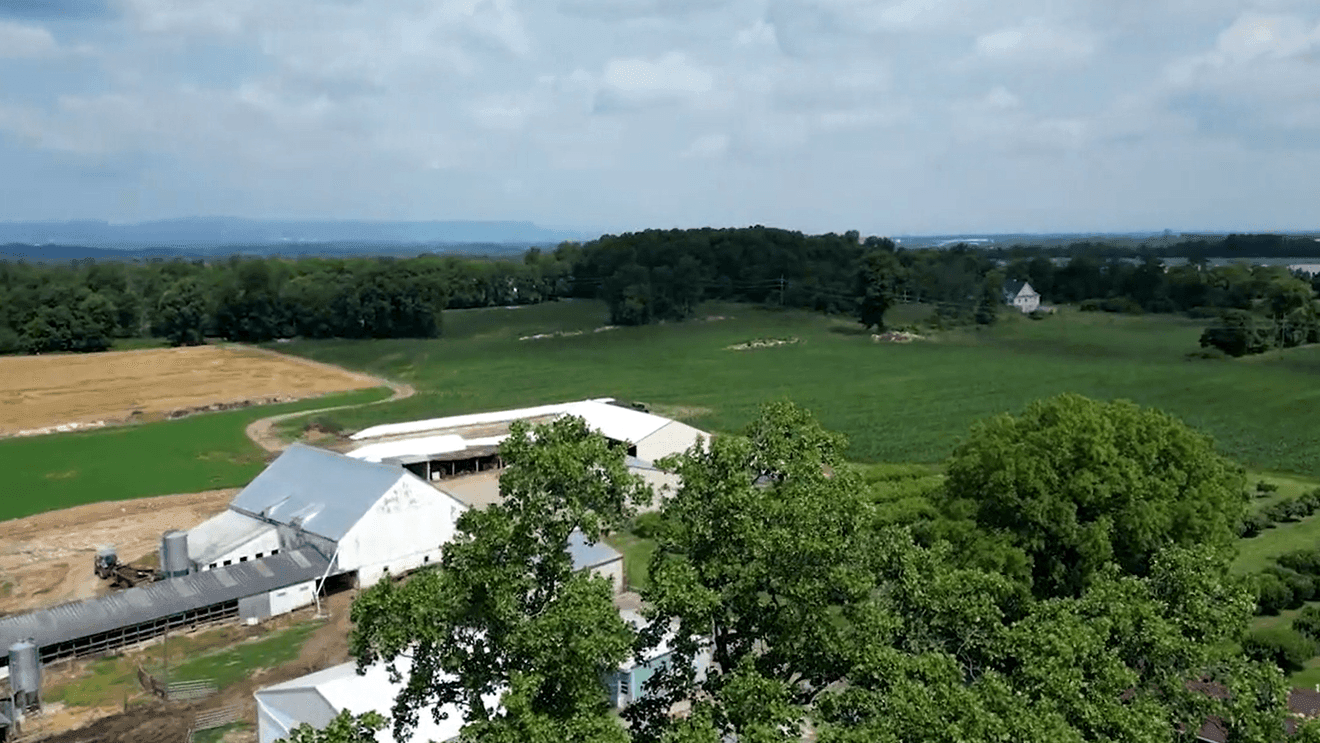
We spoke with Brian and Nicole Forsythe, who own Linden Hall Farm just south of Hagerstown. The couple said they’ve seen the land around them change a lot recently.
“We have a warehouse over here, a school building over here, solar panels being built over here,” said Nicole Forsythe as she gestured in different directions from inside her home. “It’s kind of closing in around us.”
SEE ALSO | Former Hagerstown cop’s fight against opioid addiction becomes feature film
The front of the Forsythes ’ home dates to around 1790, just 14 years after the Declaration of Independence and just one year after the Constitution was put into effect. Since that time and even before it, the property has been farmland. For the past 150 years, the farm has been owned by Brian Forsythe’s family.
“Hopefully it stays in the family,” he said while showing us the property.
The Forsythes said farming in 2026 is not easy, but diversifying what they use their land for helps them to survive. Besides using it for cows and chickens, they have an apple and peach orchard, and they grow other crops like corn, alfalfa, soy, and tomatoes.
“So if milk prices are down, we’re hoping that the orchard part of our farm can carry us through the next year,” Nicole Forsythe said.
The Forsythes are examples of what farming organizations would love to see more of – younger farmers.
“Younger people are not getting involved in agriculture,” said Jamie Raley, President of the Maryland Farm Bureau. “Maryland only has about .2300 people under the age of 30 who are agricultural producers in our state. That’s not enough to backfill for older farmers like myself.”
“When you have development pressure from solar generating facilities taking up land, and power lines that are coming across farms and diminishing value, it kind of has a chilling effect and restricts younger people from wanting to get involved in agriculture,” Raley said.
“We cannot find the workers that want to do the work on farms today,” said Zippy Duvall, President of the American Farm Bureau Federation. “It doesn’t make any difference the hours they work, it doesn’t make any difference what you pay them, or the houses you put them in – nobody wants to do this farm work anymore because it’s hard work. And farmers that do it each and every day, it’s not a job to them, it’s a way of life.”
Duvall said the American Farm Bureau Federation is advocating for two bills that have already passed the U.S. House of Representatives but face an uncertain future in the Senate.
One is a large farm bill that, among other things, would make farming less risky. The other would enable farmers to sell more corn by allowing gasoline to be made of 15% ethanol year-round.

 Local Story