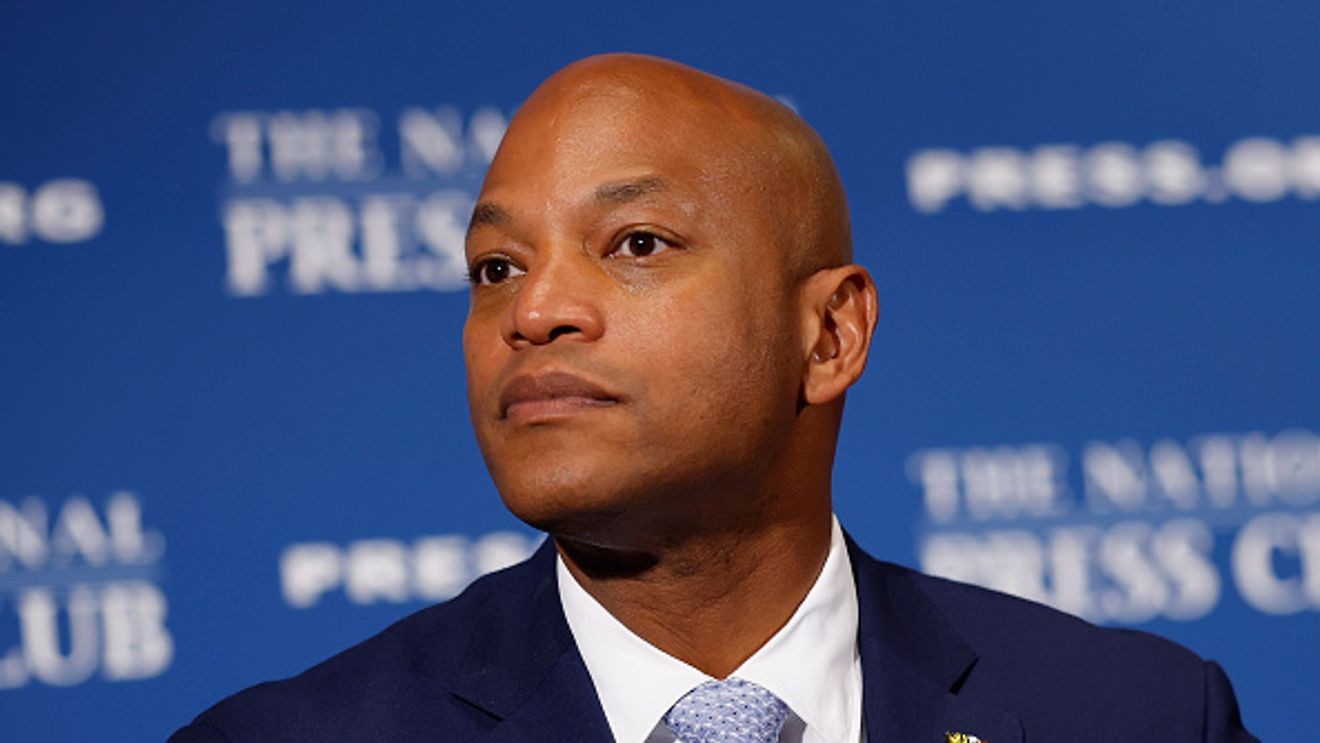
ANNAPOLIS, Md. (WBFF) — With Maryland voters four months away from choosing their next governor, Gov. Wes Moore’s reelection campaign is unfolding on two fronts.
There’s a bare-bones effort in Maryland, where residents are facing rising electricity costs, long-term state budget pressures and continued questions about the governor’s military records. And there’s also a national media blitz, where Moore is increasingly being introduced and questioned as a potential face of the Democratic Party in 2028.
This strategy is practiced by both his campaign and his state office.
Moore’s taxpayer-funded state spokesperson, Ammar Moussa, recently said in an X post that “as local press slowly withers away and squanders their credibility, our team is doing incredible work to reach voters everywhere.”
The governor formally launched his 2026 reelection campaign in Baltimore in May, pitching a second term around public safety, economic growth and education. His campaign has made a point of emphasizing his historic status as Maryland’s first Black governor and as one of the few Black governors elected in American history.
As months have passed and Moore’s local campaign management was shaken up days before his presumed Primary Election victory, the governor’s public-facing strategy has moved far beyond traditional Maryland political campaigning, notably devoid of localized television ads, 4×8 signs dotting high-traffic streets and a traditional ‘Get Out The Vote’ volunteer ground game seen since America became a representative democracy.
Instead, Moore has transitioned to national television appearances, progressive podcasts, social media shows and influencer-driven programs, where the questions often focus less on the politics of Annapolis and more on the White House, President Donald Trump, the Democratic Party and speculation about an assumed 2028 bid for the Democratic presidential nomination.
His campaign has refused to add Spotlight on Maryland to its media distribution list, effectively attempting to block coverage of Moore’s reelection bid and preventing Spotlight from questioning him at campaign-led press conferences.
A spokesperson for Moore’s campaign did not respond Tuesday to questions about this story, including the governor’s priorities and focus.
The shift comes as Maryland faces historic political and fiscal struggles that have become more complicated.
Moore’s fiscal 2027 budget closed a deficit of more than $1.5 billion, but nonpartisan Maryland Department of Legislative Services analysts warned the plan did little to resolve projected structural gaps that will exceed billions in several upcoming years.
Energy costs have also become a defining affordability issue, with rates in the BGE and PEPCO service areas rising, adding hundreds more per month to some customers’ bills than before Moore assumed office. More recent figures reported by Spotlight on Maryland show that energy costs have increased by 17% year over year.
The Maryland Office of the People’s Counsel has also warned throughout Moore’s time in Government House that rising electric bills are tied to the rapid closure of traditional power plants and regional power-market costs.
Others, including PJM Interconnection, the region’s power grid operator, have told Spotlight on Maryland over the years that the state’s rapid shift toward a green energy portfolio has put cost pressure on customers’ energy bills. One of Moore’s top priorities upon becoming governor was to transition Maryland to a state that produces 100% clean energy, nearly 10 years before statutory requirements, by 2035.
All the while, Moore’s military claims and records have remained under consistent scrutiny, with few questions answered directly by the governor or by his staff. Although Moore received a Bronze Star in 2024, 18 years after his Afghanistan deployment, he claimed to have received it during a 2006 White House Fellowship application.
The governor has defended his service and falsely claimed he did not mischaracterize his military career, even though the facts show he claimed a Bronze Star nearly two decades before he received it. He never corrected his White House application or the media and talk show hosts who introduced him as a Bronze Star recipient when he wasn’t one.
A newly obtained photo also shows Moore was awarded an Army Commendation Medal at an end-of-tour ceremony in Afghanistan — not a Bronze Star.
Spotlight has sent Moore hundreds of questions about his military record that he refuses to answer.
Against the backdrop of his record and years of Spotlight on Maryland’s reporting about Marylanders feeling “left behind,” Moore’s consistent stream of national appearances and his attempts to interject his voice into the national political conversation have successfully placed him in a broader Democratic conversation.
During a CBS News town hall promotion earlier this year, filmed on Maryland’s Eastern Shore with a preselected audience, Moore was framed as being asked whether he could be “the future of the Democratic Party” and whether he could “take on MAGA and the Republicans in 2028,” according to the event’s preamble.
In a June appearance with controversial former CNN anchor Don Lemon, Moore was asked directly about 2028 two weeks ago after Lemon praised the governor’s approach to confronting Republicans.
Moore did not announce a presidential campaign but rather used the interview to outline a broader media argument.
“We have to support local journalism, independent journalism, Black journalism,” Moore said. “We’ve got to do a better job of making sure that real journalists are supported, and we cannot watch the manipulation of an incredibly important industry.”
The comment followed Moussa’s X post criticizing local press for withering away and squandering credibility.
In the X post, Moussa, one of at least two former communications staffers from Vice President Kamala Harris’s unsuccessful presidential campaign who now work in Moore’s official Maryland executive office, did not mention Maryland, the state-funded position that employs him as its official spokesperson.
Moussa pointed to a similar strategy that he and his colleagues were deploying for the then-Biden-Harris campaign in February 2024, targeting Black voters through nontraditional channels in battleground states.
Some of those tactics, including Harris’ hiring of hip-hop artist Megan Thee Stallion during one of the then-vice president’s initial speeches after Biden dropped out of the race, fell flat with voters and rally attendees. Some in the audience at the presidential campaign rally were visibly unamused by Megan Thee Stallion’s performance, sparking outrage among some who dubbed the artist “fake mad.”
Meanwhile, local attempts to question Moore have often focused on the incumbent’s governing record rather than his budding national profile. In January, Spotlight on Maryland pressed Moore on how he would close a budget gap without raising taxes or cutting services.
“We are going to introduce a balanced budget,” Moore said at the time.
Asked whether that meant a tax increase or spending cuts, Moore responded: “I just said we’re not raising taxes,” then added that the administration would make “smart, strategic investments.”
In June, Spotlight on Maryland also asked Moore whether his campaign claim that he was lowering energy costs was misleading amid the higher energy bills customers were paying.
“No, I’m not being misleading,” Moore said.
Hundreds of questions remain unanswered as the governor refuses to address discrepancies in his military and educational records, among other matters.
Do you have any tips or information related to this story? Send news tips to gmcollins@sbgtv.com or contact Spotlight on Maryland’s hotline at (410) 467-4670.
Follow Gary Collins on X and Instagram. Spotlight on Maryland is a collaboration between FOX45 News, WJLA in Washington, D.C., and The Baltimore Sun.
 Local Story