BALTIMORE (WBFF) — Baltimore City officials are working to replace an aging 911 dispatch system, which failed while police were responding to a mental health crisis last year. However, officials say a new system is still years away.
“I am here because my son asked for help, and instead of help, he died in the middle of a preventable system collapse,” Eleshiea Goode, the mother of Dontae Melton, Jr., said.
ALSO READ | Authorities release six hours of bodycam footage tied to in-custody death of Baltimore man
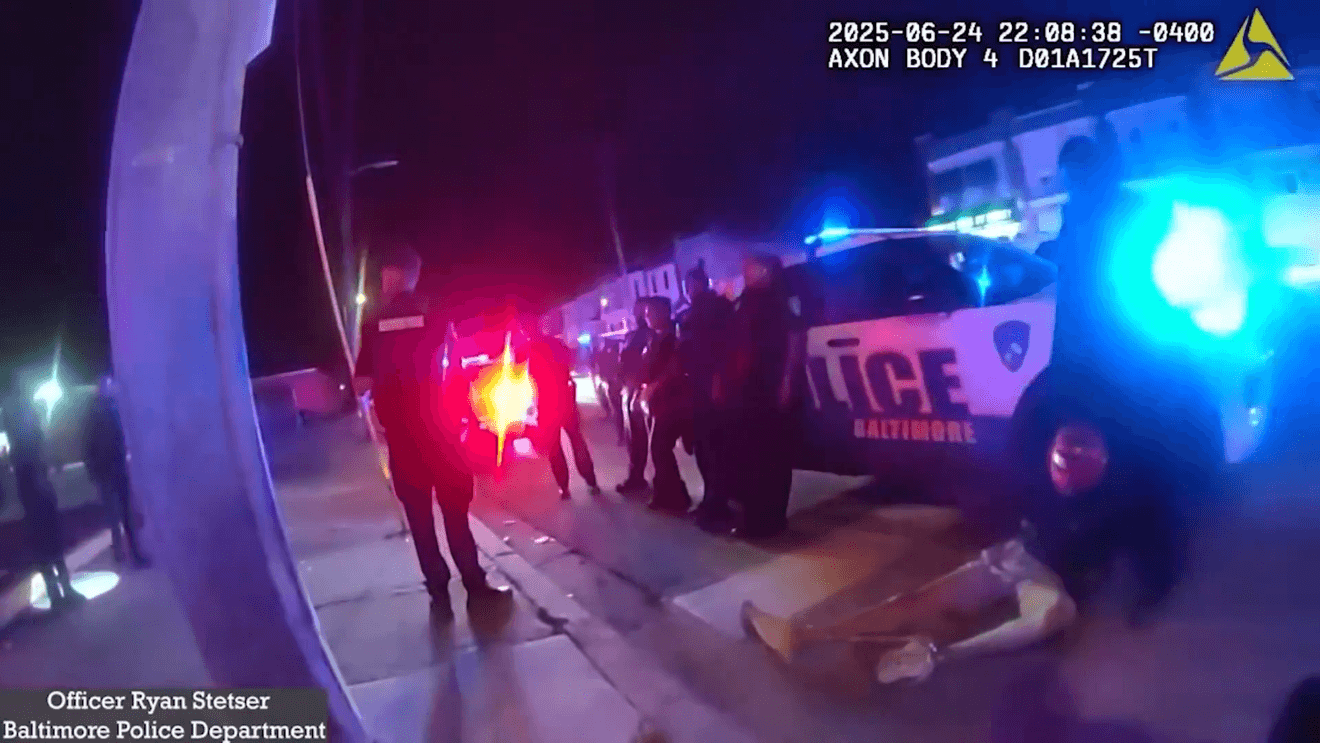
In June of 2025, Melton, who appeared to be having a mental health crisis, approached a Baltimore Police Officer near West Franklin Street and North Franklintown Road. Officers restrained Melton in handcuffs and leg restraints after they said he repeatedly ran into the street. The officers called for emergency medical services multiple times; however, EMS never responded. After waiting almost 40 minutes for EMS, officers transported Melton to a nearby hospital where he was pronounced dead.
A report from the Attorney General’s Office said, a “subsequent investigation revealed that although BPD dispatch told the officers that requests for EMS had been sent, due to an extended malfunction with the city’s Computer-Aided Dispatch (CAD) system, the Baltimore City Fire Department (BCFD) never received the requests.”
I’m asking you to fix what broke my son’s life, a CAD system that must never go dark again,” Goode said.
The current emergency dispatch system handles about 2.1 million calls a year. The current software is about 20-years-old.
During a hearing on Thursday, Baltimore City Council President Zeke Cohen said for years, the IT Department has warned that the CAD system is aging and facing operational challenges. The system ensures the right emergency responders respond to the right place when someone calls 911.
While the city has made updates to some of the hardware, T.J. Mayotte, the Chief Information Officer (CIO) for Baltimore City Information Technology, said the new system would lead to expanded 911 services, faster response times and other features to help the emergency system operate more efficiently.
“Imagine if you’re able to route a call back to a medical center or a mental health provider or some other means of helping our residents that isn’t necessarily a traditional emergency response,” T.J. Mayotte, CIO for Baltimore City Information Technology, said.
ALSO READ | Family seeks justice after AG declines charges in Baltimore in-custody death case
However, Mayotte said the implementation of a new system could take years. He said it has taken other cities, like Denver, four years to make the upgrades. While he did not anticipate Baltimore’s upgrade to take that long, he cautioned City Council members on the timeline.
“My concern that I enumerated, and just want to reiterate and just be very clear about, is the timeline, and wanting to make sure that we are one, expediting and moving as quick as is humanly possible,” Baltimore City Council President Zeke Cohen said.
We need to be cognizant. We need to do this in a quality way that meets our city’s long future needs,” Mayotte said.
City officials still need to find the appropriate vendors to help complete the system upgrade.
A spokesperson for the Baltimore City Office of Information and Technology said, “the timeline for a new CAD system reflects the complexity of implementing a mission-critical public safety platform. While timelines can evolve, the City is actively working with stakeholders to move the process forward as efficiently as possible while ensuring the system continues to meet operational needs. Large-scale systems like CAD require careful planning, testing, and coordination to avoid unintended risks.”
“Procurement timelines for systems of this scale are designed to ensure transparency, competition, and compliance with City and state requirements. Procurement processes are managed in accordance with established policies to ensure the best long-term outcome for the City while incorporating the technical aspects of system requirements and implementation, ” the spokesperson continued to say. “For example, the current system has 26 integrations which provide links to other tools like records systems, mapping software, and reporting platforms that keep data synchronized across the City. The upgraded platform will add at least 7 new ones, meaning fewer manual handoffs and more reliable information across public safety agencies.”
Moving forward, they said the city continues to monitor the current CAD system closely while continuing to invest in system security and stability. Since FY22, the administration has invested over $4 million in the current system.
 Local Story