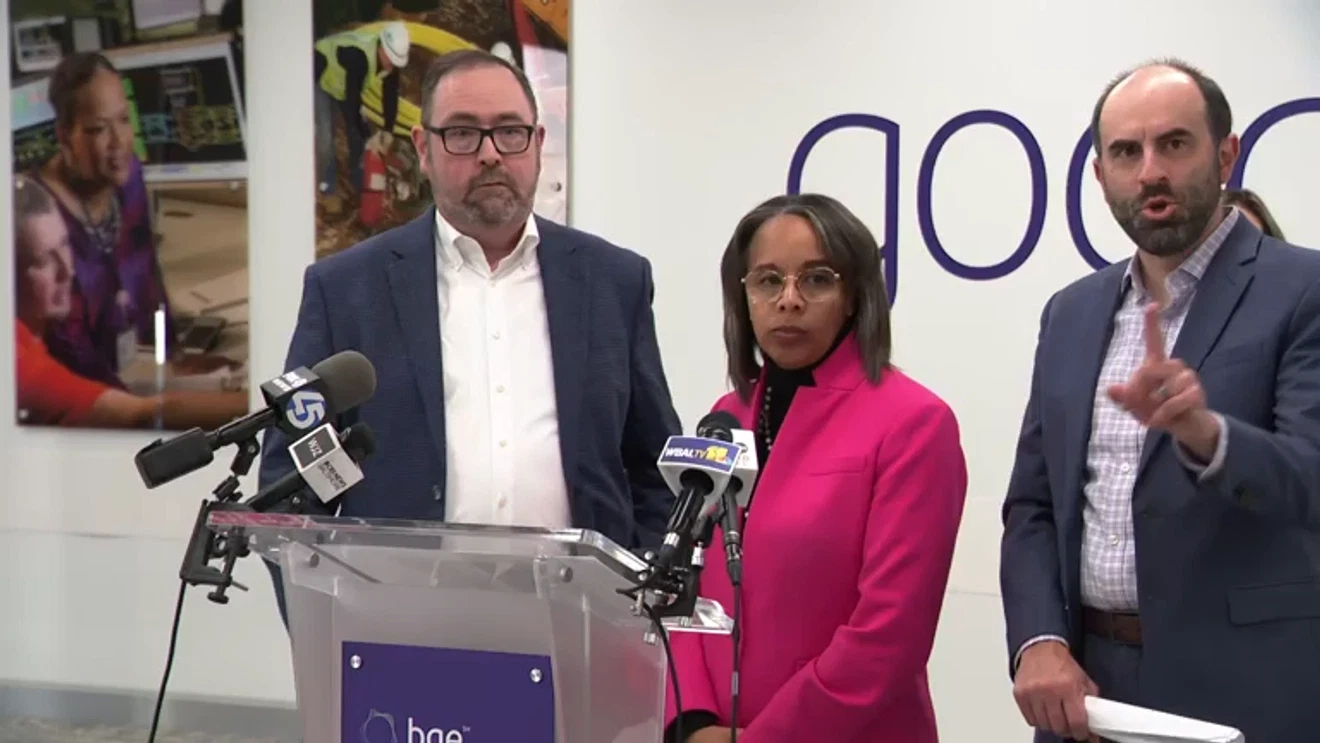
BALTIMORE (WBFF) — Customers across central Maryland could see major changes in their electric bills next year as BGE said that they are moving to shield customers outside Baltimore City from the effects of an 84 percent increase in conduit fees approved by city leaders.
BGE has formally asked the Maryland Public Service Commission to prevent county customers from paying tens of millions of dollars tied to Baltimore City’s fee hike, a decision that immediately puts new financial pressures on many residents. The city’s conduit rate increase functions as an additional infrastructure tax, burdening all BGE electric customers with nearly $50 million in costs in 2027 and Baltimore City intends to automatically increase the fee every year. BGE’s filing comes as community members and business owners across the region express concern over rising costs, with new surcharges poised to appear on city customers’ bills after Jan. 1.
Under BGE’s proposal, only customers within Baltimore City would see a separate conduit surcharge—estimated to be about $9 per month for a typical household, with higher fees for businesses. Customers in surrounding counties would not be responsible for paying for the City-owned conduit system, pending approval by the state commission.
“This is a matter of doing what’s equitable for our customers. BGE cannot support requiring families and businesses outside the City to pay for a revenue increase imposed by Baltimore City,” said Tamla Olivier, president and CEO of BGE. She added, “Customers across central Maryland are already concerned about affordability and our filing ensures that those costs remain where the City’s decision was made.”
Baltimore City owns the underground conduit system that serves electric customers, requiring BGE by law to use its infrastructure for all underground electric facilities in the city. The city is also responsible for maintaining, inspecting and upgrading this system.
Olivier described how “this outcome was avoidable. BGE proposed a path that would continue to deliver substantial improvements to the conduit system while helping protect customers from higher bills. The Baltimore City Board of Estimates, led by City Council President Zeke Cohen, rejected that approach and instead approved a dramatic fee increase without adequately demonstrating why customers should bear costs of this magnitude,” she said.
[embedded content]
The current agreement between BGE and Baltimore City expires at the end of, with BGE having invested about $30 million per year for conduit improvements rather than paying the standard fee. This past approach spread costs over several decades, easing the burden on customers and allowing immediate system upgrades. Some city leaders have called this financial structure a “profit,” but BGE maintains that spreading costs is standard for utility projects.
Large-scale investments from BGE pushed more improvements into the conduit system during the past four years than the city delivered in the previous decade, leveraging contractor pricing and offsetting inflation as part of a broader construction plan. As a result, the system became safer and more reliable for customers. Company officials say BGE offered to continue investing, but city officials demanded a much larger commitment that would significantly increase customer bills.
The Board of Estimates, led by Cohen, ultimately approved the new fee, earmarking additional revenue for city overhead and possible future infrastructure work. BGE is one of around 40 conduit system users now facing much higher costs under the new city plan. City documents show Baltimore collected $375 million in conduit revenue since 2016, but has not provided a clear public accounting on how customers benefited from past spending or how the fee hikes will be used moving forward—a point BGE pressed through a Maryland Public Information Act request that returned only annual revenue figures for the last 10 years.
“The City has a responsibility to maintain its infrastructure, clearly account for the money it collects and demonstrate that any customer charges are supported by a credible plan,” Olivier said. “It should not use our customers as an open-ended source of revenue for City operations. BGE will continue advocating for transparency, accountability and an outcome that protects customers.”
The city’s aging conduit system has been linked to electric outages and several underground fires in recent years, sometimes worsened by crowded manholes and deteriorating conditions. An independent consultant found that BGE’s improvements directly addressed factors contributing to those hazards and supported the push for renewed capital investment.
State regulators are now reviewing BGE’s request to limit the new costs to Baltimore City customers alone and are expected to announce a decision at a later date.
This post was originally published on Fox 45 by Sinclair Media Group.
 Local Story