BALTIMORE (WBFF) — Baltimore has again been recognized as one of the nation’s top cities for violence prevention strategy, earning the second-best score in the country in a new national index.
The Community Justice Action Fund released its 2025 Violence Prevention Index report, ranking Baltimore No. 2 out of 100 cities with a score of 85.
The index evaluates the 100 U.S. cities with the highest incidence of gun violence in 2021 and 2022.
The 2025 index measured cities across 35 criteria in three categories: Intervention and Risk Factor Reduction, Addressing the Root Causes of Violence, and Local Offices of Violence Prevention. Researchers reviewed municipal codes, city contracts, published budgets and city council records to determine whether local governments provided funding or administrative support during the 2025 calendar year.
Violence+Prevention+Index+2025PDF preview
This is the second consecutive year Baltimore has received the second-highest score in the nation. The city’s score reflects investments in community violence intervention, victim services and wraparound supports aimed at people at the highest risk of being involved in violence.
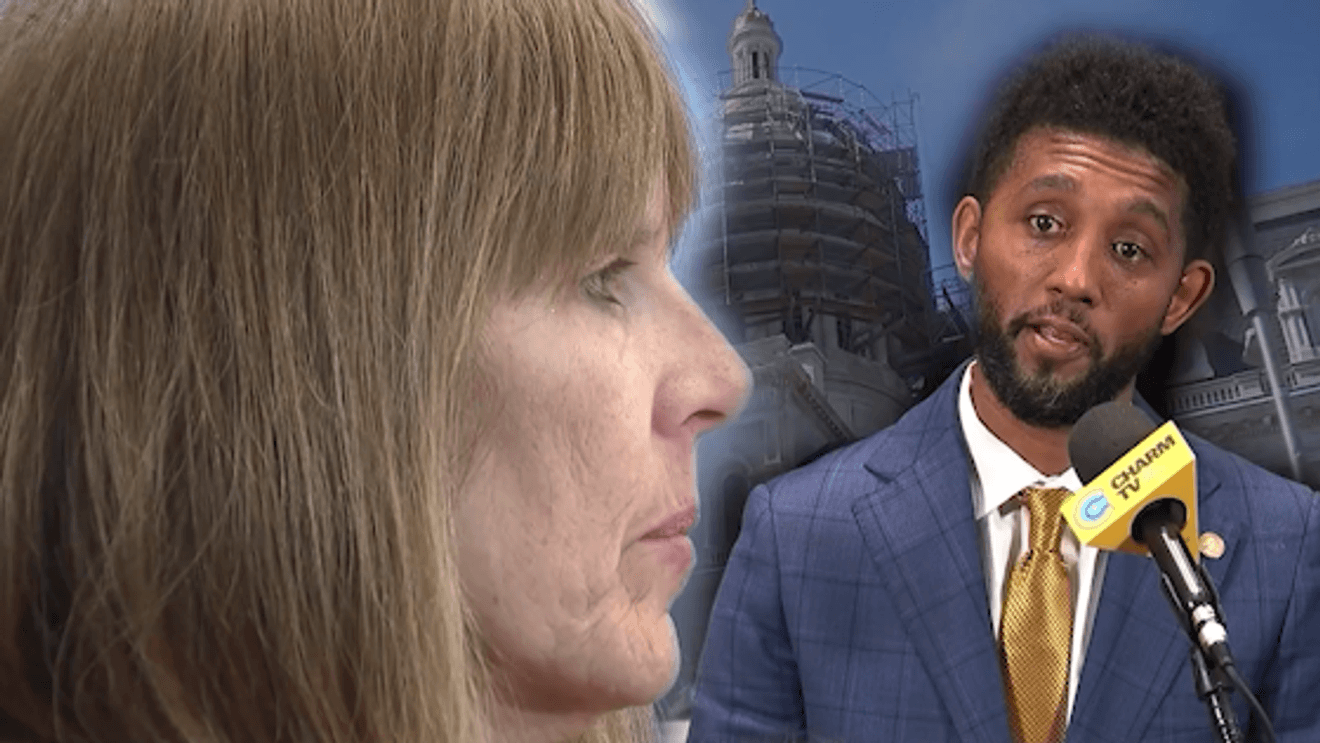
The historic progress we have made as a City is not a coincidence; it’s because Baltimore has been intentional about evolving the way we think about public safety, building the systems needed to support our shared vision for public safety, and investing in intervention and prevention alongside constitutional law enforcement,” Mayor Brandon Scott said. “Our focus now is sustaining this work, because any one life lost to violence in Baltimore is one too many.
City officials also pointed to recent declines in violence. In 2025, Baltimore recorded a 31% decrease in homicides and a 24% decline in non-fatal shootings, which the city attributed to deeper investments in community violence intervention, focused deterrence and trauma support resources. As of Aug. 19, 2026, homicides were down an additional 22.9% and nonfatal shootings were down an additional 6.7%, on top of reductions the city experienced in 2024.
Baltimore continues to show up as a national leader in public safety and violence prevention,” said Stefanie Mavronis, director of the Mayor’s Office of Neighborhood Safety and Engagement. “Our achievements in creating the infrastructure needed to truly address violence as a public health issue are not ours alone. They are thanks to community partners, frontline violence intervention workers, hospitals, government, law enforcement, and prosecutors all working together for Baltimore. This index is a valuable snapshot for how far we have come, as well as a resource as we continue our collective work to create a safer, stronger city for all.
Scott and the Mayor’s Office of Neighborhood Safety and Engagement are working with the public to develop the city’s second Comprehensive Violence Prevention Plan, described as a new five-year roadmap for 2026-2031, covering Fiscal Year ’27 through Fiscal Year ’31.
The plan is expected to be finalized and officially released by early fall 2026.
Residents are encouraged to attend upcoming listening sessions and share feedback through a public survey or by emailing monse@baltimorecity.gov. Session dates and locations are posted on the office’s website.
 Local Story