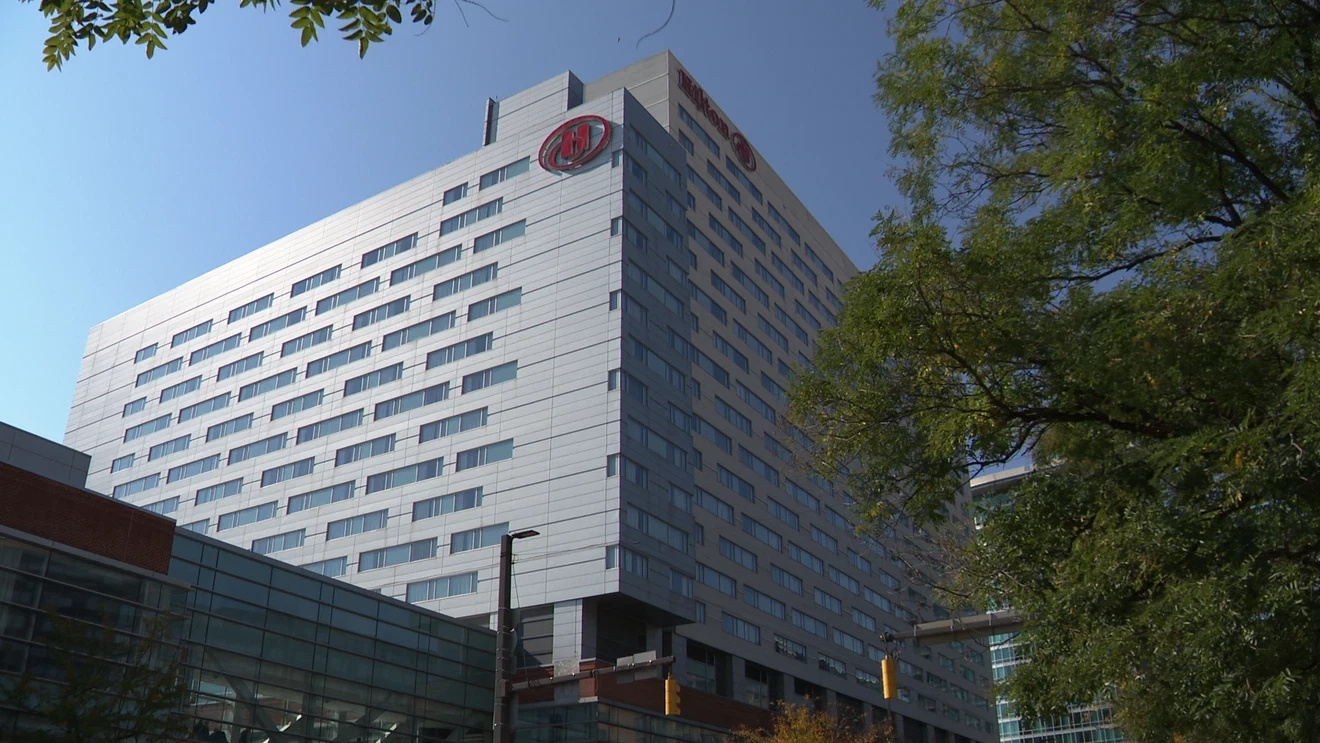
BALTIMORE (WBFF) — Nearly two decades after opening with promises of generating significant revenue for Baltimore City, the city-owned Hilton Baltimore Inner Harbor continues to fall short of expectations, with new financial disclosures revealing declining occupancy rates and mounting concerns over the millions of taxpayer dollars spent keeping the hotel afloat.
The more than 750-room hotel, located in the heart of downtown Baltimore, was built with roughly $300 million in borrowed money. City leaders hoped the investment would become a big money maker. However, the hotel has never reached its original occupancy projections, and its latest financial performance is raising new questions about the long-term viability of the investment.
According to newly released financial disclosures, the hotel’s occupancy rate dropped to just 52.3% last year, meaning nearly half of its rooms sat empty on an average night. Despite declining occupancy, the average nightly room rate climbed to approximately $204. The combination of higher prices and fewer guests resulted in revenue per available room falling to its lowest level since 2009, excluding years impacted by the COVID-19 pandemic.
“So, this was a miserable performance,” said local economist Anirban Basu.
Basu argues the pricing simply doesn’t add up. The hotel was originally projected to reach a 74 percent occupancy rate, but has never hit that target.
“Typically with a business, if you’re not getting enough demand, you lower your price, which they should be doing,” Basu said.
Meanwhile, the financial burden on taxpayers continues to grow.
Baltimore City borrowed roughly $300 million to construct the hotel, expecting it to generate enough revenue to support its operations and repay the debt. Instead, the city has spent or refunded approximately $143 million to help keep the hotel afloat, while much of the original debt remains outstanding.
Taxpayer advocate David Williams argues the city should never have entered the hotel business in the first place.
“This is very unusual for a city to own an investment, a hotel, or really anything,” Williams said, “The city should focus on what they need to do, and that’s infrastructure, education, making people safe.”
Looking ahead, city officials do say business is improving in 2026, citing major events, stronger convention bookings, and the unexpected closure of the nearby Sheraton hotel.
However, Basu cautioned that even a stronger year would not erase nearly two decades of missed financial expectations. He also warned that selling the hotel now could create additional financial challenges for taxpayers.
“Who’s going to buy it and at what price? And the city still owes money on those bonds that it issued,” Basu said, “I think right now you’ve got to tough it out. You’ve got to expand the value of this hotel. Wait for interest rates to fall. Wait for the hotel market to heat up a bit, and then maybe at some point in the future sell the hotel.”
The hotel’s ongoing financial challenges also come as plans move forward to build another hotel just blocks away as part of the proposed Harborplace redevelopment. Both Basu and Williams question whether downtown Baltimore has sufficient demand to support additional hotel rooms when the city-owned Hilton continues to struggle to fill the rooms it already has.
This post was originally published on Fox 45 by Sinclair Media Group.
 Local Story