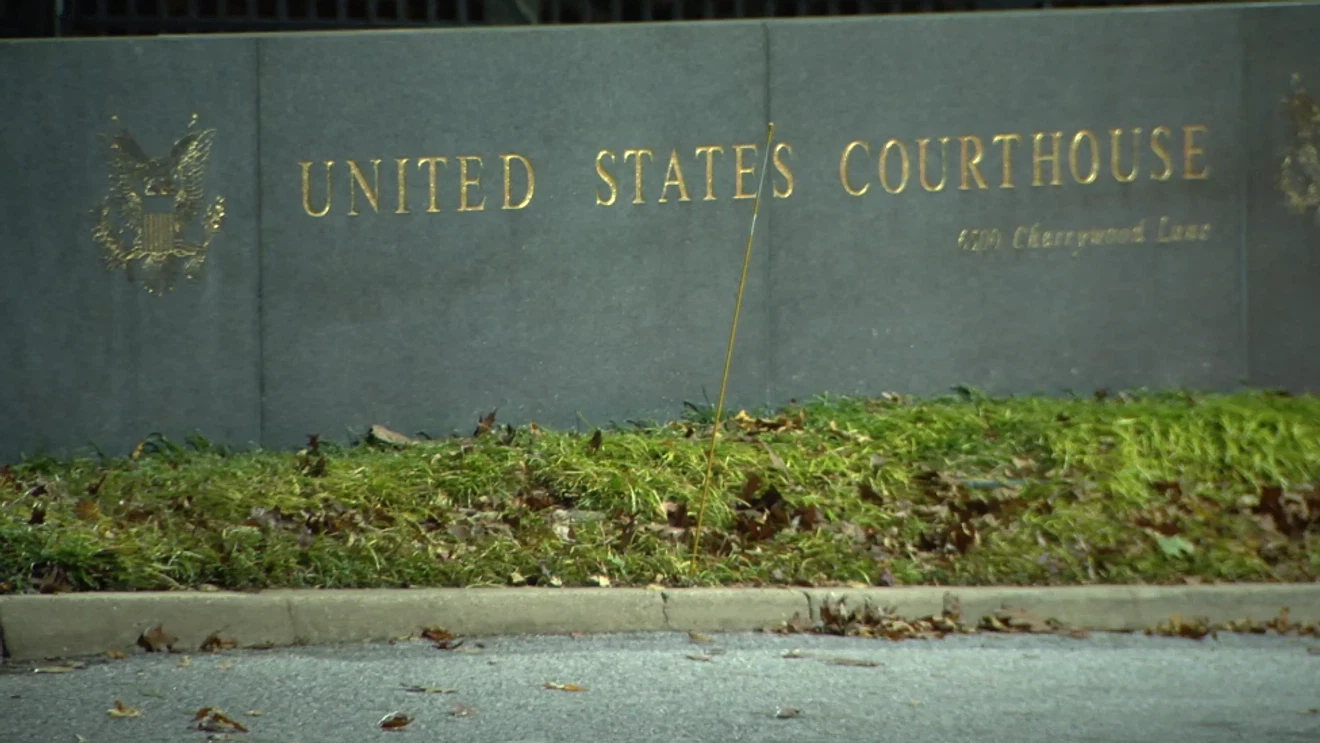
MONTGOMERY COUNTY, Md. (7News) — On Monday, a federal judge dismissed the Department of Justice (DOJ) lawsuit aimed at blocking a Montgomery County, Maryland, law that bans guns near buildings like schools and places of worship.
The Montgomery County law, Expedited Bill No. 23-26, prohibits guns in and within 100 yards of what’s called a “place of public assembly,” which includes the following:
The law makes limited exemptions, such as law enforcement.
In August, the DOJ filed a lawsuit to block this law, claiming it violated the Second Amendment.
ALSO READ | Montgomery County rabbi opposes gun buffer around places of worship
The federal judge ruled against the DOJ on Monday.
Montgomery County Executive Marc Elrich provided the following statement in response to the ruling:
I welcome the court’s decision to dismiss the Department of Justice’s lawsuit challenging Montgomery County’s Expedited Bill 23-26.
This decision is an important affirmation of the County’s responsibility to protect public safety, uphold the law, and exercise its authority to safeguard the communities we serve.
Expedited Bill 23-26 was enacted with a clear purpose: to strengthen public safety and preserve reasonable protections around the places where our residents live, learn, worship, and gather. Our responsibility to protect families, children, and community institutions is not something we take lightly.
The County has consistently maintained that its actions were grounded in the law and informed by our obligation to protect residents. We should not have to choose between respecting constitutional rights and pursuing thoughtful, lawful measures to prevent gun violence.
I am pleased that this legal challenge has been resolved in the County’s favor. We will continue to stand by our responsibility to keep Montgomery County safe and to ensure that our public spaces remain places where residents can gather with confidence.
Our commitment remains unchanged: protecting our residents, supporting our communities, and using every lawful tool available to promote public safety.
Montgomery County Councilmember Dawn Luedtke was the bill’s lead sponsor and told 7News she was “very pleased” with Monday’s ruling.
“What you want to avoid is someone feeling threatened or intimidated by someone who is concealed carrying a weapon and may expose that during a service or where someone is not trained and not authorized under state law to be a security guard,” Luedtke said.
But not everybody is happy with the judge’s decision.
Rabbi Menashe Shapiro of the Silver Spring Jewish Center is suing the county in a separate lawsuit from the DOJ, and said the law prevents him from protecting his congregants.
“[The Montgomery County law] unconstitutionally grabs at the hundred yards around those places. So not just a school, which maybe makes sense, but the hundred yards around the school, which has nothing to do with the school and it reaches into private property,” Shapiro said. “What does happen is an armed attacker [enters], and the people inside the building either will be able to respond or they won’t.”
Shapiro’s lawsuit is being heard by a different judge than the one who ruled on the DOJ suit.
Luedtke said she cannot comment on Shapiro’s lawsuit because it’s an ongoing legal matter, but she pushed back against the notion that allowing guns inside a place of worship would better protect people.
“It’s hard for law enforcement if there is something that goes sideways; you can’t tell when you’re responding to an incident, who’s the bad guy, who’s not the bad guys in those situations. I think there are a lot of times when people think that, ‘Well, if I had a wear and carry permit, I’d be able to just save the day,’ and it really isn’t as helpful in that context as people think it would be. And we should best leave that to our trained professionals.”
Shapiro also pointed to an arrest this weekend at a synagogue as to why he opposes the county’s gun law.
On Saturday, before the Shabbat morning worship, Metropolitan Police Department (MPD) officers arrested a man at the Washington Hebrew Congregation in Northwest D.C.
According to police, Tyler Finn, 32, tried to enter the synagogue with an unregistered gun.
“Every institution needs to be able to set for itself its own security policies. So today’s story [of the Washington Hebrew Congregation arrest] makes two things very clear. First of all, that the threat against D.C. area Jewish institutions is immediate, is real, and is very important that we be able to respond. And number two, it emphasized the importance in institutions being able to have discretion in setting their own institutional policies,” Shapiro said.
Finn claimed he brought the gun to protect himself and others inside the building.
The synagogue’s metal detectors alerted security to his gun.
SEE ALSO | Virginia man arrested after loaded gun found during screening at DC synagogue
But Shapiro said he cannot use that same technology.
“Under a traditional interpretation of Jewish law, the use of electric devices, electricity on the Sabbath is not permitted. So while you can have lights running and you can have the heat or the air conditioning going, to use an electronics detector – to use a device at the door that’s checking for the possession of firearms – that we wouldn’t be allowed to do,” Shapiro said.
However, Luedtke said places of worship can still stay protected.
“Certainly we want people to be able to exercise their right to religious worship and to do so safely,” Luedtke said. “And it doesn’t mean that you can’t have a security guard, or commonly we have off-duty police who may be employed.”
Shapiro’s lawsuit is still ongoing.
In the meantime, the DOJ can appeal Monday’s ruling.
This post was originally published on Fox 45 by Sinclair Media Group.
 Local Story