MONTGOMERY COUNTY, Md. (7News) — A rowdy house party that wreaked havoc on Halloween in a Bethesda, Maryland, community has now placed the issue back under the microscope for community members.
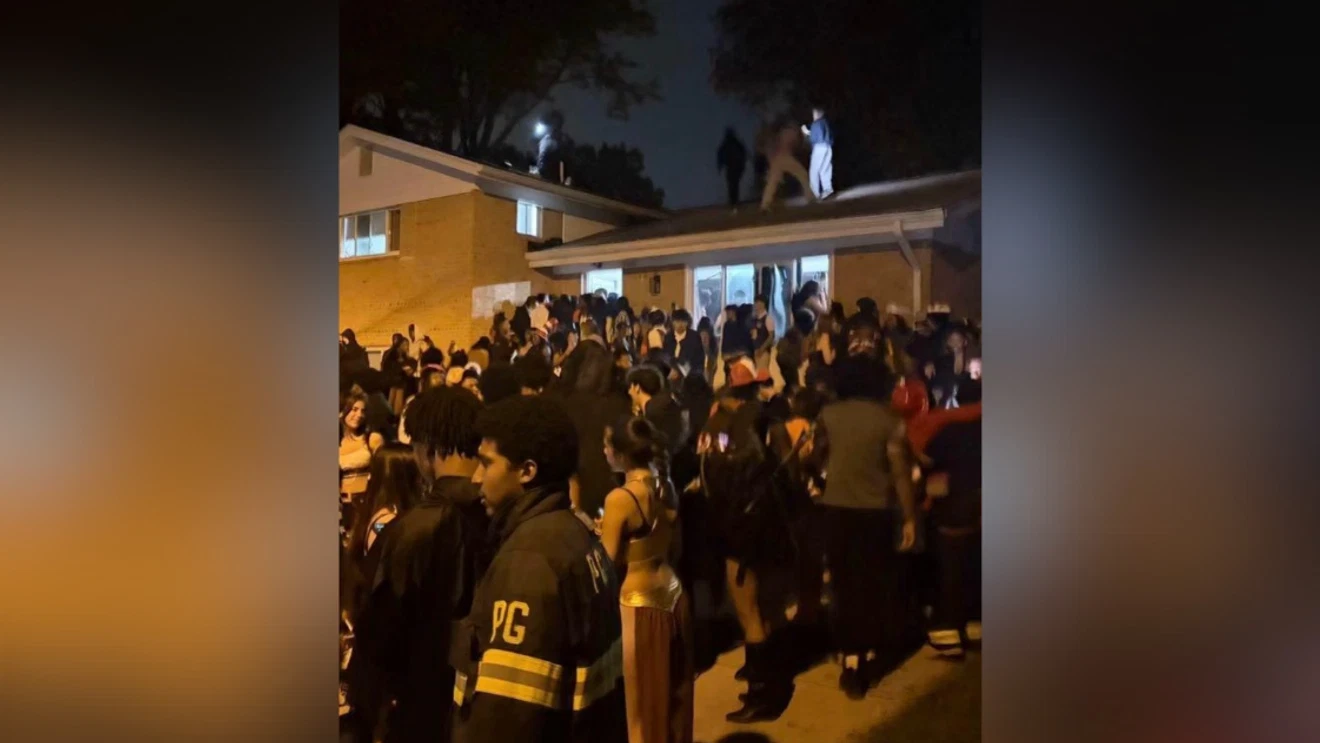
Video from a neighbor shows Carnegie Terrace flooded with what appears to be at least several dozen teenagers spilling out of a short-term rental home at the end of the cul-de-sac.
One picture shows some of the party attendees standing on the roof of the home.
Eventually, Montgomery County Police Department (MCPD) officers arrived, sending the boisterous crowd scattering.
Mark Emory lives in the neighborhood and said he couldn’t believe his eyes when he looked out of his window.
“The whole yard was full of kids,” Emory said. “You could see the yard was like trampled on. The grass was all over the place.”
Rambunctious house parties is an issue elected leaders in the county have recently had to deal with.
In July 2025, the Montgomery County Council approved a measure that increased fines from $500 to a maximum of $5,000 for illegal unlicensed for-profit parties held in residential communities.
That vote came after a party in Gaithersburg’s Woodfield Estates community drew a lot of attention from neighbors, after video showed people setting off fireworks on the lawn and urinating on the property.
This weekend’s Halloween party has shifted the focus back to issues like this.
“First of all, absolutely very disturbing, and just really concerned for the neighbors. I want to always make sure, as well as my colleagues, that our neighbors feel like they’re safe, their neighborhoods are secure, and so I was very disturbed by what occurred in the neighborhood, and looking forward to getting the investigation to hear all the details behind what happened and how it happened,” said Montgomery County Councilmember Shebra Evans.
Evans introduced a bill – Bill 42-26, Transient Lodging Facilities – Short Term Residential Rental – Online Platform Compliance – that’s expected to get a vote during next week’s meeting that aims to increase accountability for short-term rentals.
If approved, the county would create an online database showing which short-term rental properties are licensed with the county.
If they’re unlicensed, websites like Airbnb would be prohibited from allowing them to be booked.
“The Department of Housing and Community Affairs will have a public verification database where the online platforms can go and verify before making a booking transaction that the resident actually has a license in place. And then also what it will do is, on an annual basis, share the information with the county of the address where the short term rental took place, the number of days that the renters stay there as well as the address in the operator’s information,” Evans said. “I felt like that there was some responsibility on the online platforms to be assured that before they make a transaction that residents are actually in compliance, they have a county license.”
Evans said the inspector general recently let the council know around 85 % of the short-term rentals in the county were unlicensed.
She said it’s difficult to say if her bill would have been able to prevent everything seen on the videos of this weekend’s Halloween house party in Bethesda, but it does provide tools to reduce the chances of something like that happening.
“This is an evolving market, and I think it’s really hard to try to address all the things, but as things are coming up, such as what occurred on Halloween, it can help us take a look and just see what we have in place, and see how we need to expand it to continue to keep neighbors safe. We want people to know that, whether they’re property owners or just the neighbors, that we want everybody to feel protected and feel safe. And we want people who are using the short-term rentals or other people’s properties to take good care. You never know what people’s intentions are. You don’t intend for people to destroy property, but we will look and see what we can put in place that can make sure things like this do not happen. This was very disturbing,” Evans said. “What it could have done is make certain that if an operator was going to put their property online, that the online platform could check to make certain that they had a license in place, and in the event that they didn’t, then it would not be booked. So we could have prevented this rental property from being booked if they weren’t licensed.”
The council is expected to take this bill up during their Nov. 10 meeting.
If approved, Evans said she expects it to go into effect in July 2027.
This post was originally published on Fox 45 by Sinclair Media Group.
 Local Story