BALTIMORE (WBFF) — Baltimore paid a private contractor roughly $6 million to maintain two downtown hotels used as homeless shelters. But an inspector general’s report documented mold, possible water damage, poor ventilation and mushrooms growing from carpeting while the company had the contract.
So what did Baltimore get for its $6 million?
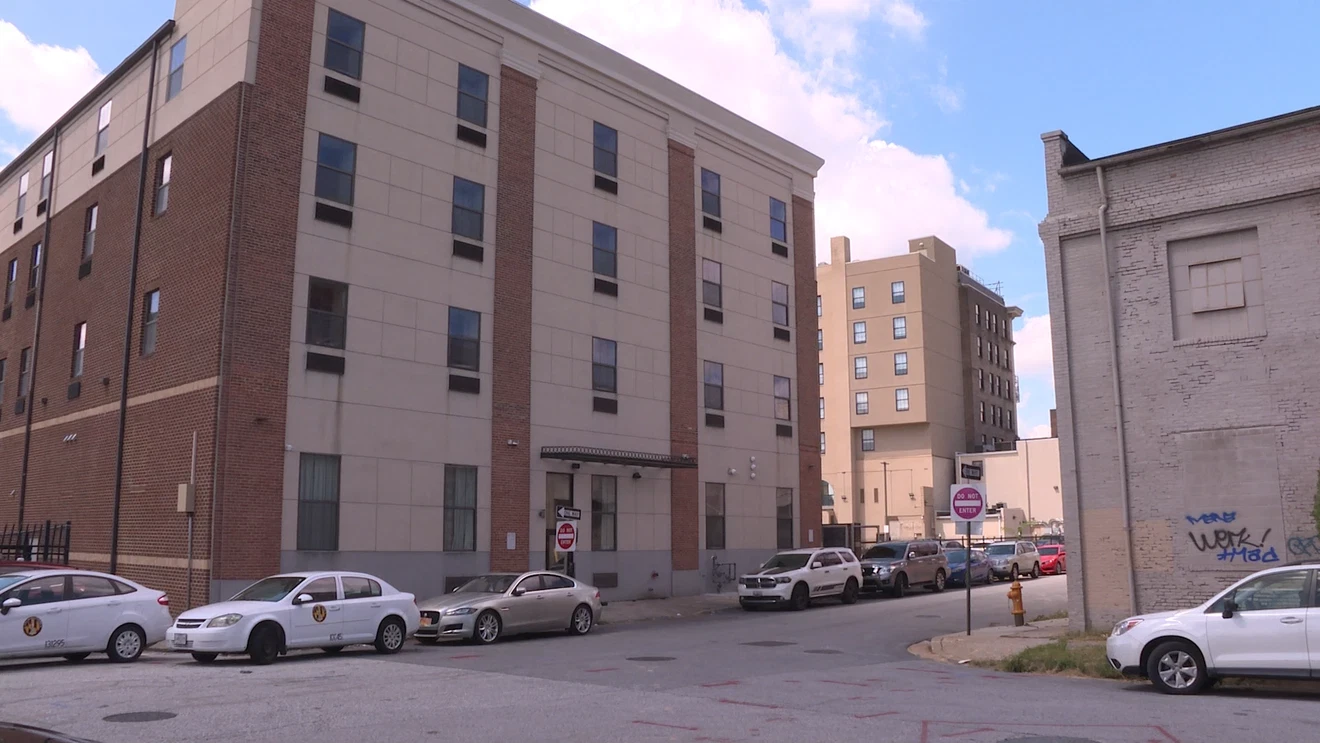
A Spotlight on Maryland investigation has found the contractor, Old Town Hotel Group, was sued in February for allegedly failing to pay $7,000 to a subcontractor servicing one of the hotels — the former Holiday Inn Express at 221 N. Gay Street.
Spotlight on Maryland called a phone number listed online for the Gay Street location and was told that “Old Town Hotel no longer exists.” The person hung up when Spotlight attempted to ask additional questions.
Spotlight could not reach representatives of Old Town Hotel Group who were listed in city records and legal filings.
The company’s first maintenance contract, which was completed prior to the OIG’s September 2025 inspection, totaled around $4 million, and the subsequent contract totaled nearly $2 million. The Mayor’s Office of Homeless Services said it has not had any further communication with the vendor since the second contract ended on June 30, “so we do not know their status,” according to spokesperson Jessica Robey.
What the OIG found
An August report from the city’s inspector general described a September 2025 inspection of the Sleep Inn at 301 Fallsway — the other building that Old Town Hotel Group was paid to maintain — detailing mold, lack of ventilation, and mushrooms growing through the carpeting. The report also described “what appeared to be water stains on the ceiling” and “bowed ceiling tiles” at the Holiday Inn Express.
The OIG report detailed several issues with Old Town Hotel Group, including that they lacked a “sense of urgency” in fixing problems, according to another contractor, and that they “seemed to ‘try to cut corners,’” according to a former MOHS employee. The company also allegedly painted over mold, the report said, and MOHS and the company didn’t want to perform additional mold testing “due to the cost.”
“Having mushrooms growing from a floor in any room in that hotel — it’s not the service that I know the city wants to provide to those individuals and to those citizens,” Deputy Inspector General Matt Neil told Spotlight.
Old Town Properties was among several entities that sold the two downtown hotels to the city in 2024, in exchange for $15.2 million in federal COVID funds. The city purchased a third hotel for another homeless shelter conversion, the Fairfield Inn & Suites on South President Street, for $13.3 million in 2025.
City says contractor was ‘responsive’
MOHS told Spotlight that the OIG’s primary concerns “were limited to three specific units at the Sleep Inn, with no major issues noted in the report for the Holiday Inn.” They added that Old Town Hotel Group resolved all of the issues reported by the OIG in 2025.
“The prior vendor delivered the services they were contracted to provide during the period of performance however, they acknowledged having challenges with the increased demands for running an emergency shelter versus operating as a hotel,” Robey said in an email.
Robey added that MOHS received reports about maintenance concerns in late June 2025 and conducted a walkthrough in July 2025. MOHS said Old Town Hotel Group was “responsive” toward issues that were raised, and that the contractor agreed to add weekly room checks, a preventative maintenance schedule and more pest control service requests.
Regarding the allegedly unpaid invoices, Robey noted that Old Town Hotel Group’s contract ended in June and said the city has “no knowledge and no involvement in any outstanding invoices they may or may not owe to any vendors.”
The city, which was named as a defendant in the lawsuit by the waste management company, claimed in court records that Old Town Hotel Group breached its city contract and said the city should not be held responsible for any unpaid invoices.
Nico Sanders, Chair of the Baltimore City Continuum of Care, noted that the OIG’s report described conditions from 2025.
“The mold testing cited in the report involved six rooms within shelter facilities containing more than 200 units. Of those six rooms, three showed elevated mold spore levels,” Sanders said in an email. “These findings should be taken seriously, but they should not be presented as evidence that the same conditions existed throughout the facilities or that they reflect current conditions.”
Sanders added that MOHS “pursued a new facilities management vendor, strengthened preventive maintenance requirements, implemented a centralized system for tracking and documenting repairs, and established clear response times for emergency and urgent maintenance concerns. MOHS also expanded requirements related to environmental inspections, moisture control, pest management, laundry maintenance, and linen replacement.”
Sanders said, “MOHS demonstrated urgency, transparency, and a willingness to make meaningful improvements.”
Neil, the deputy OIG, said he hopes the measures MOHS is putting in place “will be strong enough measures to prevent something like that from happening again.”
He added that it’s not so much the contractor as the city that needs to be held accountable for taxpayer-funded services.
“We’re the ones responsible to make sure that the services are being delivered to that population of unhoused families and individuals, so that way we can ensure that the city is taking care of its citizens,” he said.
New maintenance contractor
A new maintenance contractor, CORE MD, took over in July after being formed in April, according to business records.
A CORE MD representative said they would reply to questions about their contract but later deferred to the mayor’s office. The business is connected to CORE DC, which provides social services in Washington, D.C., including permanent supportive housing and residential reentry.
Baltimore City is currently converting the former Sleep Inn and Holiday Inn Express to permanent supportive housing. It awarded $2 million in COVID funds to the Episcopal Housing Corporation earlier this year to predevelop the properties.Construction tentatively will begin in mid-2027, Robey said.
“Since 2024, the city has made significant and unprecedented investments in creating non-congregate emergency shelters and the development of permanent supportive housing, including through the purchase of hotels,” Robey said. “The long-term plan is both of these sites to be converted to permanent supportive housing.”
Have a news tip? Contact Brooke Conrad at bjconrad@sbgtv.com or 443-578-2126, or contact the Spotlight team at SpotlightOnMaryland@sbgtv.com or 410-467-4670. Spotlight on Maryland is a joint venture by The Baltimore Sun, FOX45 News and WJLA in Washington, D.C.
 Local Story