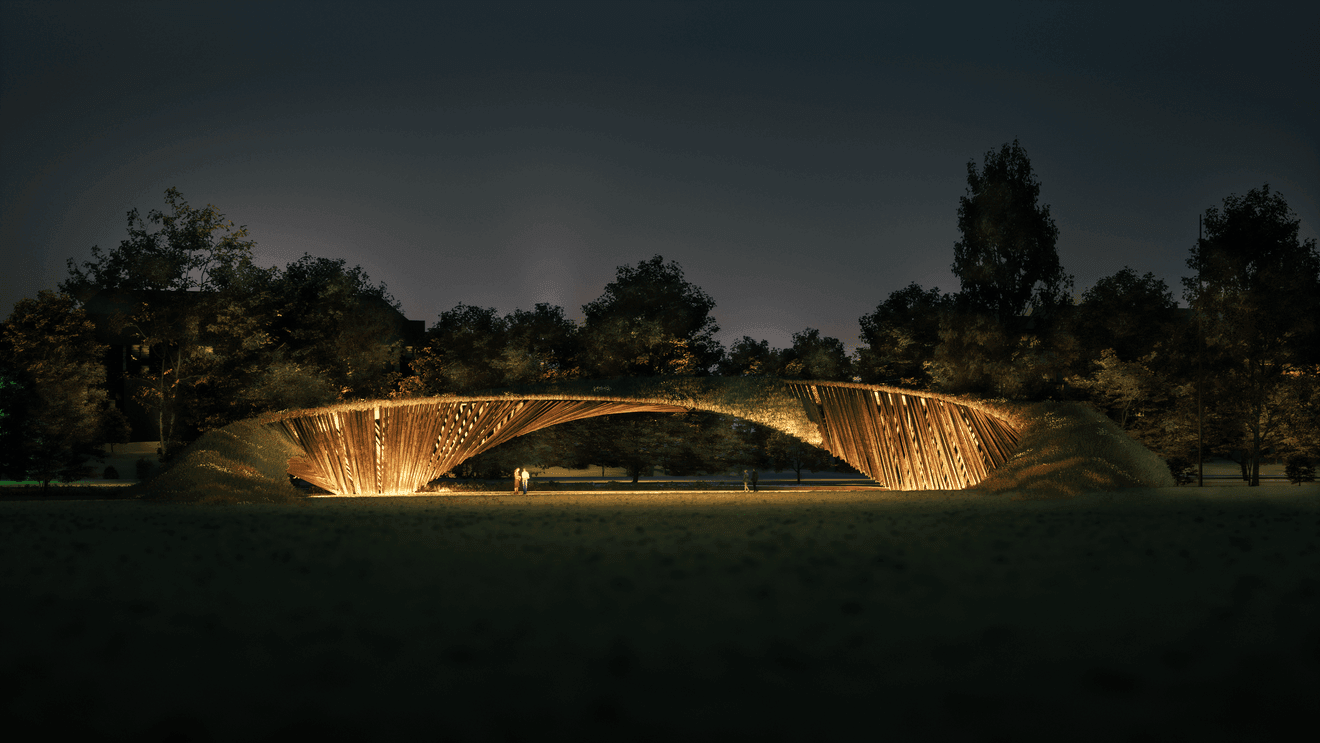
WASHINGTON (7News) — Newly released renderings are giving the public its first look at the planned Global War on Terrorism Memorial on the National Mall.
The Global War on Terrorism Memorial Foundation dropped the first design concept for the memorial, which will honor the generations of Americans who served, sacrificed, and supported loved ones in the conflicts that followed the Sept. 11, 2001, attacks.
The memorial is being designed by internationally known architect Kengo Kuma and Kengo Kuma & Associates.
Foundation leaders said the concept was shaped by feedback from 20,000 Americans across all 50 states and territories, including Gold Star families, service members, veterans, and relatives of those who served.
A 23-member Design Advisory Council made up of Gold Star family members, veterans, veteran families, and service members also helped guide the design team.
SEE ALSO | Public has until June 15 to comment on Trump’s proposed arch in DC
“This design was shaped by history and held sacred from the beginning,” said Michael “Rod” Rodriguez, president and CEO of the Global War on Terrorism Memorial Foundation and a retired U.S. Army Green Beret.
The renderings show a memorial made with three entrances marked by steel and stone relics recovered from the sites of the 9/11 attacks.
The design also includes a classically inspired amphitheater and an arch referred to as “the embrace.” The arch is expected to be made from reclaimed steel from combat operations during the Global War on Terrorism and covered with historically native vegetation.
The memorial is also designed to align with Section 60 of Arlington National Cemetery, where many service members killed during the Global War on Terrorism are buried.
A marble path of honor would connect the memorial to surrounding monuments and memorials on the National Mall. Embedded footprints along the path are meant to represent the weight of war and the experiences of service members and their families.
SEE ALSO | An inside look at Dulles Airport’s first new concourse in decades
Shallow reflecting pools would extend from the footprint paths. As visitors walk through the water and return to stone, their own footprints would temporarily appear beside those representing service members.
Kuma said the project was shaped by listening to those connected to the war.
“Our role was not to impose a design, but to listen,” Kuma said. “The voices of those who served and the families who stood beside them became our source of inspiration.”
The foundation said the memorial will honor the fallen, recognize Gold Star families, acknowledge invisible wounds and create a place for reflection, healing and unity.
Construction, programming and long-term stewardship of the memorial are still ongoing. The foundation said public support remains vital and directed people to learn more at gwotmf.org.

 Local Story