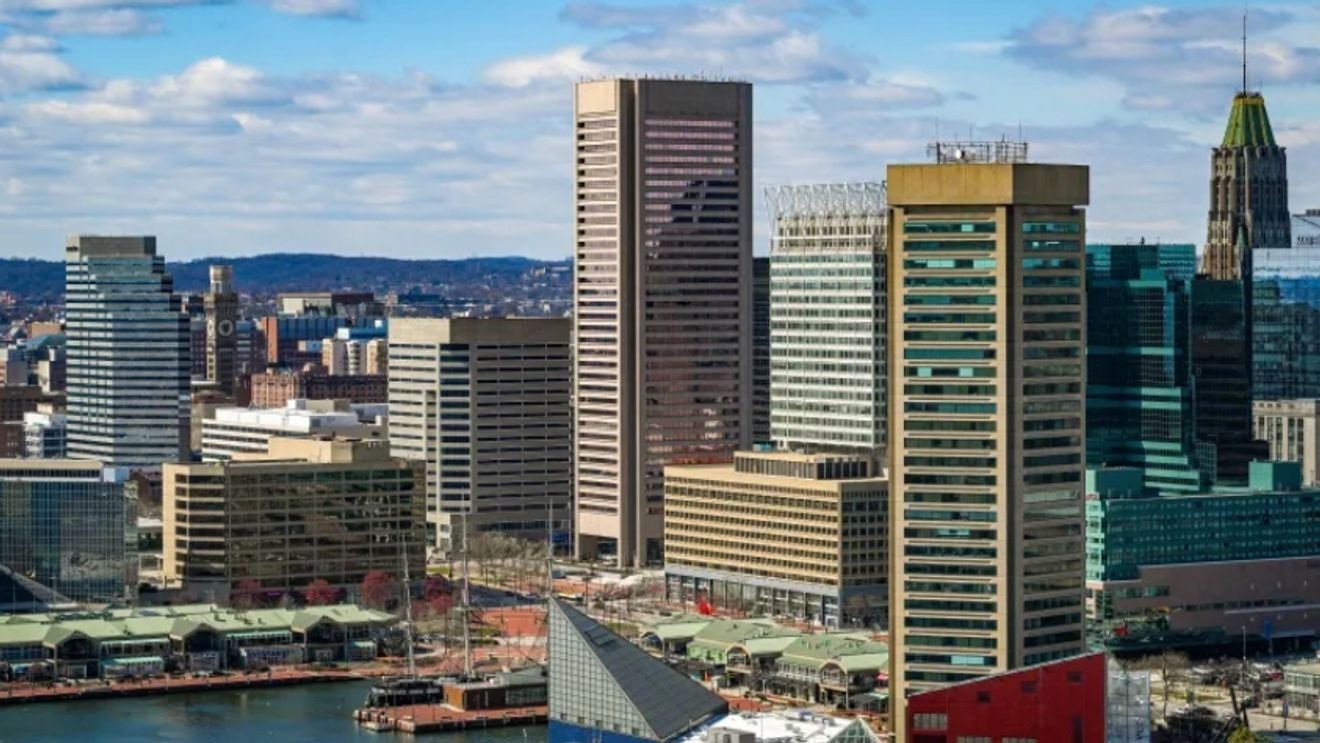
BALTIMORE (WBFF) — A new report finds cities across the country are falling apart, and it comes at a price.
The report was authored by Richard Ciccarone with Merit Research Services, and finds that cities are putting off upkeep into deferred costs that aren’t being factored into current budgets.
According to the report, Baltimore is near the top of the “worst” list with the second-highest infrastructure & capital asset burden at almost $20 billion.
ALSO READ | Report warns cities face soaring costs as officials delay infrastructure maintenance
Baltimore is #5 at almost $8 billion, which works out to over $14,000 per resident.
“Deferred maintenance means that you have surpassed your estimated useful life of an asset, and that gets particularly a concern when you’re dealing with assets that carry some physical risk with them, such as bridges. But it even can go as far as roads, etc., and those particular assets here, when you deferred maintenance, of course, that poses a safety risk, but it also poses a presents something that’s going to have to be fixed eventually. And every year and you wait longer, it’s going to cost you more because of the inflation factor. So you’re running up the tab,” he said.
Baltimore is trying to dig out from a 15-year state funding shortfall that left roads, bridges, and traffic signals deteriorating
The lack of maintenance can’t be ignored in cities like Baltimore, where in 2022, a sinkhole led to several homes being demolished.
ALSO READ | Scott’s updated Baltimore action plan targets infrastructure, public safety
There are also dozens of aging city-owned buildings with deferred maintenance needs of over $165 million dollars.
“There are cities in which are struggling, and it looks like it’s only going to get worse. Unfortunately, those cities happen to be most frequently older industrial cities or cities that have passed their heyday, and they have large footprints of assets, but they have smaller population to pay for those assets and less vibrant economic basis. And that’s a problem,” he said.
The city of Baltimore responded to the report in the following statement:
“Baltimore’s neighborhoods, economy, and quality of life depend on well-maintained infrastructure, and this report underscores the need for continued infrastructure investments. While Baltimore under Mayor Scott has made significant progress in tackling infrastructure challenges, there is more to be done. As laid out in the City’s 10-Year Financial Plan, Mayor Scott will continue making smart investments that address the City’s aging infrastructure while driving economic development in every corner of Baltimore.”
“As a historic East Coast city that continues to adapt around the impact of centuries-old urban planning decisions, many factors have impacted Baltimore’s infrastructure needs. However, likely none are more consequential than the decisions made by the State of Maryland under prior administrations to slash Baltimore’s Highway User Revenue funding following the Great Recession. This decision alone cost the City nearly $1 billion in funding over the last 15 years, forcing us to defer critical maintenance and adjust operations, while continuing to be the sole jurisdiction in the state required to maintain every roadway in our borders. Mayor Scott will continue fighting at the state level to maintain and restore Baltimore’s share of HUR funds.”
 Local Story