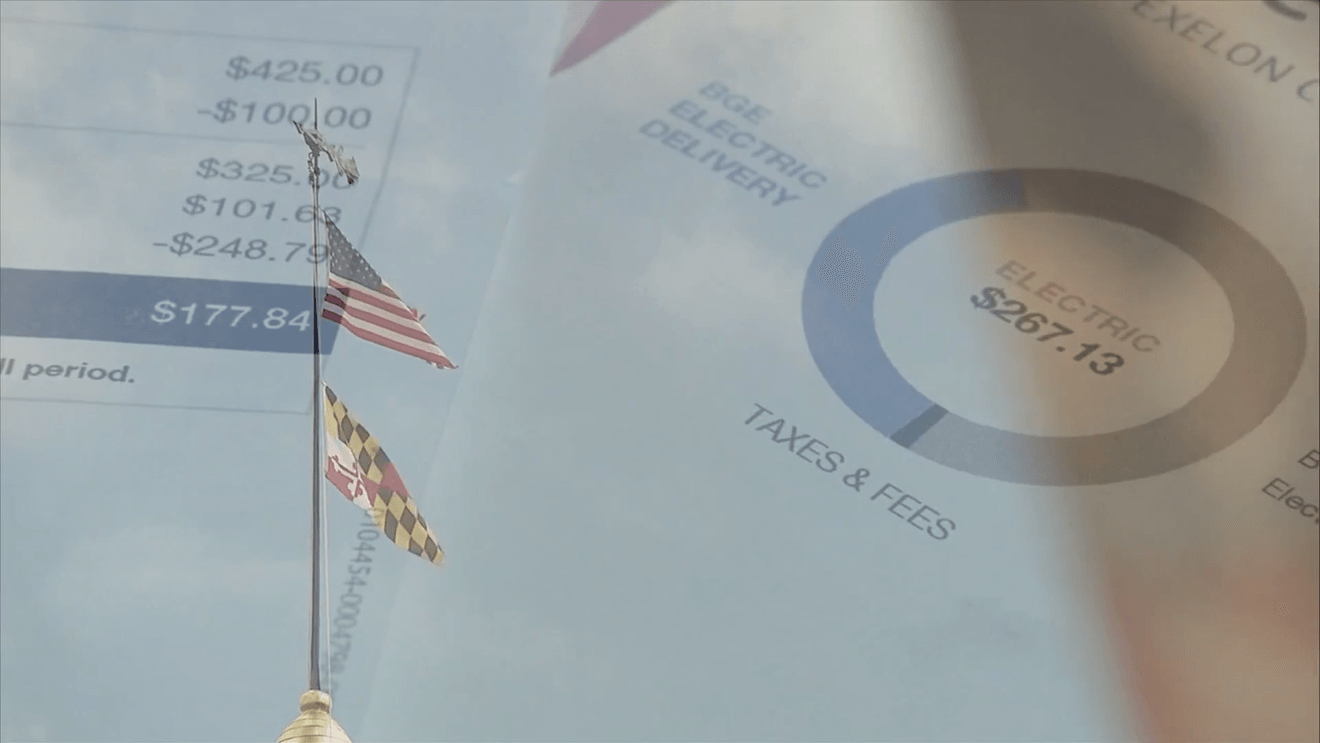
MARYLAND (WBFF) — In the middle of a heatwave, when many Marylanders are worried about high energy bills, state officials filed a complaint with federal regulators trying to end an “unfair” surcharge passed onto ratepayers from utility companies.
This comes after the Utility Relief Act was signed into law this past session. One part of the sweeping energy bill was ending a financial incentive for utility companies to be members of PJM, the regional transmission organization. While utility companies have been allowed to collect a surcharge to incentivize companies to join Regional Transmission organizations, the state law now makes membership mandatory, removing the need for such incentive.
In the complaint filed with the Federal Energy Regulatory Commission, officials with the Maryland Energy Administration, the Public Service Commission and Office of the People’s Counsel called the surcharge “unjust and unreasonable.”
“As the cost of living rises nationally, we refuse to allow big corporations to pad their profits on the backs of hardworking families,” Gov. Moore said in a statement. “With this complaint, we are enforcing the Utility RELIEF Act, holding utility companies accountable, and putting money back where it belongs—in the pockets of Maryland families.”
The move is estimated to save Maryland ratepayers about $20 million annually.
ALSO READ | Amid high temperatures, Department of Energy issues emergency order for electric grid
“This is one of many important steps we’re taking to reduce costs to Maryland households,” said Director of the Maryland Energy Administration Kelly Speakes-Backman. “Thanks to enabling legislation like the Utility RELIEF Act, we are closing loopholes like this, encouraging more local clean energy, and providing support for energy efficiency programs across the State at a crucial time.”
“I do think the RTO fee that they’re talking about, trying to get refund, trying to get exempted out from, that’s very fair policy debate about trying to get that off of coming back to consumers, but again, that’s a small piece of what’s causing people’s prices to skyrocket,” Senate Minority Whip Justin Ready said. “It’s a supply issue, and it’s artificially created government regulations and fees that are really driving up people’s bills, and we should get rid of some more of those. We should scale those back, and we really didn’t do that this last session at all.”
While the Utility Relief Act made numerous changes to energy policy in the state, on average, it is expected to save customers roughly $12 a month. While some lawmakers argue the cost savings could be greater, they were unable to quantify the total amount last session. However, with utility rate hikes looming, that cost savings could quickly be absorbed in rising costs.
“I think the state has got to stop with the attitude that natural gas and other types of reliable thermal energy generation are the enemy,” Senator Ready said.
“We’ve got to get serious about increasing supply generation,” he added.
Currently Maryland imports about 40 percent of its energy. Part of the Utility Relief Act is aimed to generate more energy in the state, largely through funding for certain clean energy projects. However it is not clear how much additional energy could end up getting connected to the grid based on the legislation or other state efforts.
 Local Story