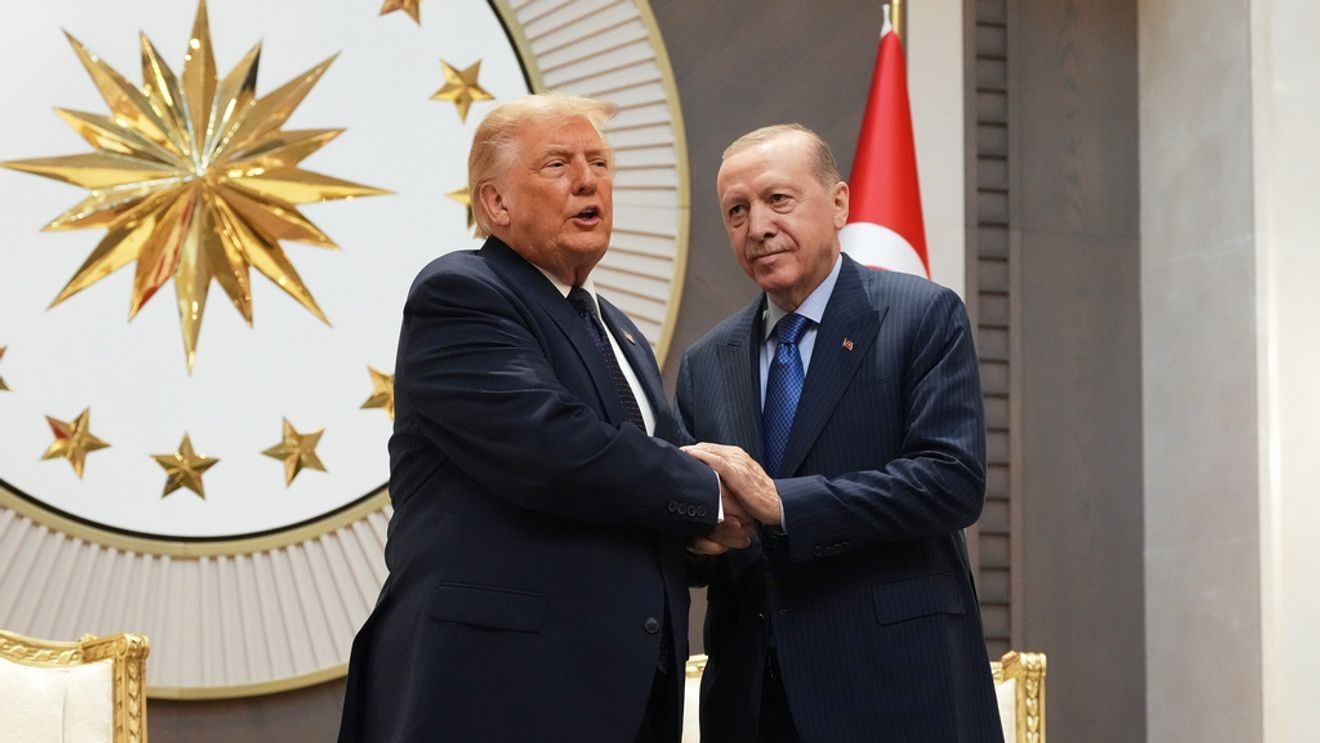
ANKARA, Turkey (TNND) — President Donald Trump arrived in Turkey on Tuesday, where he received a welcome ceremony from Turkish President Recep Tayyip Erdogan ahead of a high-stakes NATO summit expected to focus on a Trump-backed push for higher defense spending, Europe’s security responsibilities and continued support for Ukraine.
Ahead of Trump’s arrival in Ankara, NATO Secretary General Mark Rutte previewed the summit’s agenda, calling on allies to present “clear, concrete and credible” plans to meet the alliance’s new 5% defense spending target — a goal strongly backed by Trump — while stressing the need to ramp up weapons production and maintain long-term support for Ukraine.
“Over the next two days, 32 #NATO Allies, along with partners from Ukraine, the EU, the Indo-Pacific and the Gulf will gather here in Ankara to ensure that NATO continues to deliver,” Rutte wrote alongside a video on X.
“Allies have already shown that they’re stepping up in a big way. We are stronger together, in NATO, with our partners, to ensure the freedom and security we all hold dear,” he continued.
The summit comes as Trump has repeatedly argued that European allies must shoulder a greater share of the alliance’s defense burden, at times branding NATO a “paper tiger” that would struggle to function without American arms and leadership.
Speaking at the NATO Defense Industry Forum on Tuesday, U.S. Undersecretary of Defense Michael Duffy echoed that message, saying, “The reality is that we need production increases across the board.”
“We will be looking to increase our exports to those who are looking to buy our equipment, and we’ll also be looking to partner with the expansion of production capacity here in Europe,” he said.
The Trump administration has warned allies that Europe must increasingly take responsibility for its own security as the United States shifts its strategic focus toward China and the Indo-Pacific. The Pentagon has promoted what it calls “NATO 3.0,” a vision of the alliance in which European nations assume greater responsibility for their own defense, allowing the U.S. to concentrate more resources elsewhere.
The push for higher defense spending, however, is expected to present political and economic challenges for many member nations, forcing governments to weigh tax increases, additional borrowing or cuts to domestic spending. Last month, U.K. Defense Secretary John Healey unexpectedly resigned, saying the British government was unwilling to significantly boost military spending despite rising security threats.
Separately on Tuesday, Ukrainian President Volodymyr Zelenskyy renewed his push for Ukraine to join NATO, arguing that his country’s battle-tested military would strengthen the alliance’s defenses.
Zelenskyy pointed to Ukraine’s ability to adapt on the battlefield, including carrying out long-range strikes inside Russia targeting oil refineries and other energy infrastructure. He also claimed Ukrainian forces are eliminating an average of 30,000 Russian troops each month.
“Frankly, we take no pride in this,” Zelenskyy said, noting that the war with Russia — now in its fifth year — is “a war we did not seek but one we are forced to fight.”
The urgency surrounding the debate has intensified as several NATO members in Northern and Eastern Europe warn that Russia could expand its use of hybrid warfare — including cyberattacks, sabotage and disinformation campaigns — while President Vladimir Putin continues his war in Ukraine.
_____
Editor’s note: The Associated Press contributed to this article.

 Local Story