The Savvy Investor
10:00 am - 11:00 am
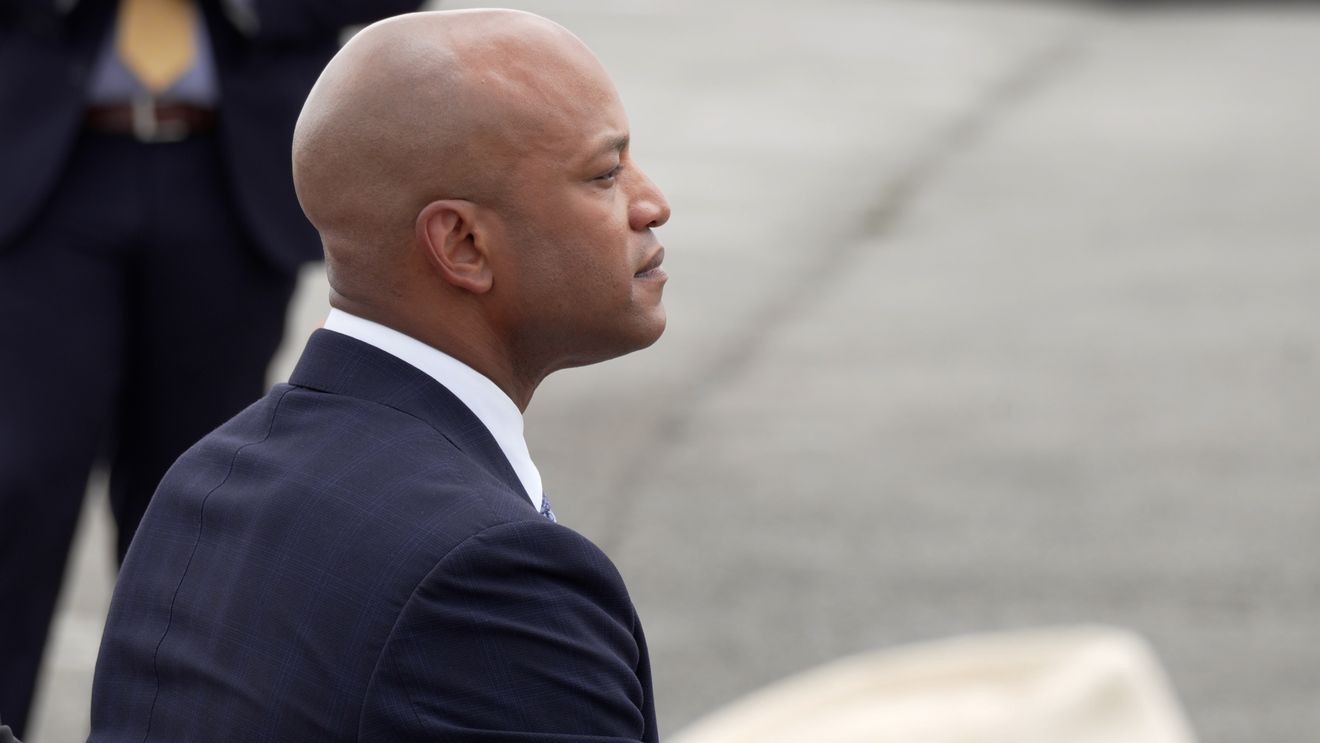
On Mar. 1, 2006, just days before the headquarters of the 1st Brigade, 82nd Airborne Division, completed its deployment to Afghanistan, Capt. Wes Moore stood in formation at Forward Operating Base Salerno for an end-of-tour awards ceremony.
The brigade’s commander, then-Col. Patrick J. Donahue, trooped the line, presenting military medals and badges to soldiers and officers. Each award citation was read aloud by an announcer.
When Donahue stopped in front of Moore, the award presented to him was not a Bronze Star Medal.
It was an Army Commendation Medal, or ARCOM.
A photograph provided to Spotlight on Maryland by retired Army Lt. Col. James “Jamie” Gottschling, Moore’s first-line supervisor during the deployment, shows Moore standing in formation with the medal pinned to his desert uniform.
“The picture clearly shows Moore receiving an ARCOM, not a Bronze Star,” Gottschling said.
That photograph now sits at the center of a controversy Moore has carried since 2022: his repeated claim that he received a Bronze Star for his service in Afghanistan. A claim he made to a White House Fellows selection committee and intentionally allowed to stand publicly for nearly two decades without correction.
In a three-hour sit-down interview, Gottschling told Spotlight the photograph and the ceremony confirm what he has known since first seeing Moore’s military falsehoods in news coverage.
“I knew this day would come. It’s been on my mind for years.”
Setting the record straight
Gottschling, 57, said he has spent years watching Moore’s public accounts of his Afghanistan service grow farther from what he knew Moore actually did while working for him at FOB Salerno.
Spotlight asked why Moore received the ARCOM and not the Bronze Star.
“He was junior and he did not do the entire deployment. He did about half. That would make senselength of service matters,” Gottschling said.
When Gottschling was asked if Moore — despite his shorter tenure in Afghanistan — did anything in his view that would have merited a Bronze Star, he said he did not.
“The Bronze Star without valor is a meritorious-service award in a combat zone. For a field-grade officer[major through colonel]in a yearlong deployment, it might be relatively standard. For a junior brigade staff officer there for half the deployment, I would say there is virtually nothing he could have done in that job to justify a Bronze Star in the normal course.”
Gottschling also told Spotlight about an infantry major he knew in the brigade — a field grade officer — who, like Moore, was not there for the full deployment. He also received an ARCOM as his end-of-tour award.
Gottschling said he did not recall Moore’s ARCOM being an interim award while awaiting possible Bronze Star approval. He said Moore receiving the Army Commendation Medal aligned with what others in his staff section received.
That’s significant because Moore himself acknowledged in a statement posted on a state website after an Aug. 2024 article in The New York Times, that he knew he had not received the Bronze Star.
“Towards the end of my deployment, I was disappointed to learn that I hadn’t received the Bronze Star,” Moore said.
The ARCOM revelation also creates a problem for retired Army Lt. Gen. Michael R. Fenzel, Moore’s friend and mentor, who arranged Moore’s deployment to Afghanistan and led the effort with the Army to orchestrate Moore’s retroactive Bronze Star award in 2024.
Fenzel, who was a lieutenant colonel in 2006, has made inconsistent statements supporting the claim that paperwork for the Bronze Star had been lost and that Moore should have departed Afghanistan with the award.
Fenzel told The New York Times in Aug. 2024 that he told Moore that he and others had approved the Bronze Star and that Moore should include it in his White House Fellows application. In the same article, Fenzel also claimed he saw a fully approved Bronze Star application, a DA Form 638 Recommendation for Award, for Moore.
“I had never seen it signed by all of the appropriate individuals and then not be processed,” Fenzel said.
But Fenzel later gave a different account to U.S. Marine veteran and author, Rye Barcott, for his 2026 book, “Courage Can Save Us,” claiming Moore’s Bronze Star had been approved by verbal orders confirmation, or “VOCO” in military terminology.
Army awards are not approved by voice communication. Under federal law and Army regulation, an award does not legally exist until an official, written, permanent order is published and signed by an authorized approving authority.
Spotlight has found no evidence supporting either claim — and the photograph of Moore receiving the Army Commendation Medal calls Fenzel’s explanations into question.
If Moore’s Bronze Star packet had been fully approved, why was he standing in formation receiving an ARCOM? If the Bronze Star had been approved by verbal order, which it couldn’t have been, why was an ARCOM pinned to Moore’s uniform at the brigade’s end-of-tour awards ceremony? If Moore really was to receive a Bronze Star, why didn’t Fenzel, as the brigade’s deputy commander, do something to fix it before the ARCOM was presented?
Only one of two things could have happened: Moore was submitted for an ARCOM as his end-of-tour award and it was approved by Donahue, the brigade commander; or Moore was submitted for a Bronze Star and the recommendation was disapproved and downgraded to an ARCOM by the higher headquarters, Combined Joint Task Force 76, commanded by Maj. Gen. Jason K. Kamiya.
Either way, the award Moore appears to have actually received in Afghanistan was the Army Commendation Medal.
And despite claims about a lost Bronze Star approval, it now appears that the award paperwork that went missing from Moore’s official military personnel file was not for a Bronze Star at all. It was for the ARCOM.
That reality should have carried significant weight with the Army when Moore sought and received a retroactive Bronze Star medal in 2024.
‘A fair amount of PowerPoint slides’
But Gottschling’s criticism of Moore is not rooted in his performance in Afghanistan. In fact, Gottschling was careful to credit Moore for the work he actually did.
Gottschling was the brigade commander’s principal advisor for integrating lethal and non-lethal fires. He controlled artillery fires and coordinated information operations. His staff had, at different times, between six and nine people, and the workload was intense.
He said he was “thrilled” when Moore showed up to help. Gottschling did not care that Moore was a newly qualified Military Police officer with no troop-leading experience or formal training in information operations. Until Moore arrived, Gottschling was personally handling both the artillery and information operations workload, and the help was welcome.
“If you compare him to a brand-new lieutenant or captain who had not been to a[captain’s]career course, he had more staff capacity. I did know he was a Rhodes Scholar and was being described as the best thing since sliced bread. If Fenzel wanted him to be the IO officer, fine.”
Gottschling said Moore had a positive impact on the staff and interacted well with his peers. He described Moore’s role as a staff job inside the brigade headquarters.
“It was mostly staff operationsan office job, even if the office was in a combat zone.”
He described Moore’s day-to-day duties as involving “a fair amount of PowerPoint slides.”
“You read situation reports, talk to counterparts, get information for analysis, and figure out what to do. You would get updates from civil-military operations – maybe a[humanitarian]clinic today and hearing from public affairs about what to say or communicate.”
Gottschling said he had no problem with Moore’s performance in Afghanistan. He also acknowledged that he authored the rater comments in Moore’s Officer Evaluation Report, even if he now acknowledges some of that language as inflated — a problem the Army as a service was battling at the time in its officer evaluation reporting.
‘Stolen valor is a real thing’
Where Gottschling departs from Moore is what happened after the deployment: the Bronze Star claim, Moore’s descriptions of leading soldiers in combat, his accounts of being constantly outside the wire, his public discussions of PTSD, and what Gottschling views as Moore’s use of the death of 1st Sgt. Tobias “Toby” Meister to advance his Afghanistan narrative.
“I think he is a fraud,” Gottschling said, owing to Moore’s many false stories of his time in Afghanistan.
“He’s misrepresenting his military service. Stolen valor is a real thing. He could have walked away and said, ‘I served my country. I was in a combat zone,’ But when you use it for financial benefit, writing a book, or political benefit, and you embellish, it minimizes the people who actually did those things.”
Gottschling, who had firsthand knowledge of Moore’s daily activities while he was deployed, said that Moore’s post-deployment accounts of his time in Afghanistan created a false narrative designed to enhance his public image.
One of the most troubling examples involved Meister, a member of the 321st Civil Affairs Brigade, who was killed by a roadside bomb on Dec. 27, 2005.
Moore claimed in his 2015 book, “The Work: My Search for a Life That Matters,” and again in Barcott’s 2026 book, “Courage Can Save Us,” that on the day Meister was killed, he had helped coordinate support for Meister and his Asadabad Provincial Reconstruction Team (PRT), assisting with their convoy route more than 220 miles by vehicle from FOB Salerno.
Moore’s account suggested that Meister’s death had a significant impact on him because of their friendship and because Moore had helped support the PRT team’s movement that day.
But there is a major problem with that account.
On the day Meister was killed, Moore was home in the United States on emergency leave following the death of his grandfather.
Gottschling confirmed to Spotlight that there was no plausible way Moore could have known Meister. Meister, by all accounts, was a beloved soldier and a standout member of the Army Reserve, once winning the Army Reserve’s Drill Sergeant of the Year.
Gottschling also said it was highly unlikely that Moore would have coordinated route support for Meister’s PRT.
“I see no scenario where a junior brigade staff officer is giving tactical advice to a PRT about route security. Afghanistan does not have a bunch of highways. There is Highway 1 and a lot of dirt roads or dry riverbeds. The people on the PRT are getting intelligence from interpreters and local contacts. I would be very hesitant to take route advice from headquarters at Salerno if I am in Asadabad trying to meet locals.”
The Asadabad PRT commander, retired Army Lt. Col. Pete Munster, who was with Meister the day he was killed, confirmed to Spotlight that his team had never received support from Moore, did not know who he was, and that Meister did not know him.
“It looks like he is embellishing and using the story to his advantage, maybe to seem more sympathetic,” Gottschling said, “I saw the same thing in his TED Talk. He plays on people’s emotions about veterans and PTSD while holding his combat patch on the wrong sleeve. That is offensive to me because there are people who have truly seen and suffered a lot. That was not most people’s experience.”
Spotlight asked Moore for evidence supporting a connection between him and Meister, and he has refused to answer.
Gottschling also refuted continuous claims made by Moore, and most recently by his press secretary, Ammar Moussa, that Moore led soldiers in combat and was constantly outside the wire on missions.
In the introduction to his 2015 book, Moore dramatically tells of a direct fire combat action he was allegedly involved in, by writing, “As a soldier, you never forget the first time you get shot at. A sudden, stunning commotion engulfs you –– the sound of shells buzzing past your ears, a flurry of divots leaping out of the earth around your feet” It’s a dramatic, action-packed story that never happened.
Gottschling confirmed this and also that Moore did not leave FOB Salerno often, but if he left the base, it was usually to go to the relatively secure nearby town of Khost.
“When he did [leave], it was probably as a strap-hanger[someone tagging along],” Gottschling said, “A brigade staff officer’s role is not to be out constantly. You are a coordinator and assessor, and you are limited when you are away from headquarters because you lose access to information.”
Humanitarian work
Rather than leading offensive direct-fire combat missions outside the wire, Gottschling said Moore’s actual missions were quite different. While showing Spotlight photographs from one of those missions, he described the work as civil-military assistance.
“A lot of what we did was humanitariansoldiers are deworming kids, deworming camels, doing medical work, winning hearts and minds. They[Moore and his fellow soldiers]are not set up like they are rolling out for combat. There is security, of course, but most of this is humanitarian.”
Gottschling also rejected Moore’s claims that he led large numbers of soldiers and controlled civil affairs and psychological operations functions in the brigade’s geographic area, known as Regional Command East. Civil affairs and psychological operations units belong to the Army’s special operations function and have their own chain of command.
Moore did not lead soldiers in Afghanistan, Gottschling said. He was an officer performing a staff job.
“When I think of Wes Moore as the IO officer at brigade levelHe was a coordinator. He was not out there commanding operations. His job would be coordinating the IO working group, calling people, pulling information, and helping answer questions for the brigade.”
Asked about Moore’s repeated claims over the years, Gottschling said the pattern troubled him.
“It almost seems habitual. Each step seems to come from a lack of integrity in the step before. He gets over there, then he gets the[White House]Fellowship probably because he was over there, and then he gets something else because of that. Who knows when it started?”
But the photograph from FOB Salerno brings the story back to where it began.
Moore was not photographed being presented with a Bronze Star medal in Afghanistan. He was photographed receiving an Army Commendation Medal.
That fact does not diminish the work Gottschling says Moore actually did on his shorthanded staff. But it does undercut the story Moore told afterward –– a story that helped him win a White House Fellowship; a story that appeared in public biographies and interviews; and a story that only received significant scrutiny after the Bronze Star controversy became a public embarrassment.
It also raises new questions about the Bronze Star Moore received in 2024, nearly two decades after his Afghanistan deployment, through a process whose full records neither the Army nor Moore has released to Spotlight. That process remains under investigation by Spotlight and will be the subject of future reporting.
Gottschling said that the retroactive Bronze Star award only deepened his concern.
“I knew there was controversy about it, because I had been following it for years. I think during his inauguration somebody introduced him that way, and I thought, “Did they just say Bronze Star?” I was always piqued by the whole thing. I knew it was coming someday. When it came out and they retroactively fixed it, I thought there was some funny business going on. They clearly wanted to fix a political problem.”
For Gottschling, the issue is about integrity, truthfulness and whether someone who may seek to become commander-in-chief of the Armed Forces can be trusted if he cannot be honest about his own military service, which is why he decided to speak publicly now.
“I care about my faith and country. I do not really care whether Moore is elected governor of Maryland, but I do care if he is in contention for the presidency. I could not live with myself if I was not vocal about the truth.”
Spotlight has provided both Moore, and Fenzel, multiple opportunities to answer questions about these issues and they have refused.
Drew Sullins can be reached at dpsullins@sbgtv.com. Spotlight on Maryland is a joint venture by FOX45 News, The Baltimore Sun and WJLA in Washington, D.C. Send story tips to spotlightonmaryland@sbgtv.com or call our hotline at (410) 467-4670. Follow us on X at @SpotlightMDNews, and on Instagram and Facebook at Spotlight on Maryland.
 Local Story