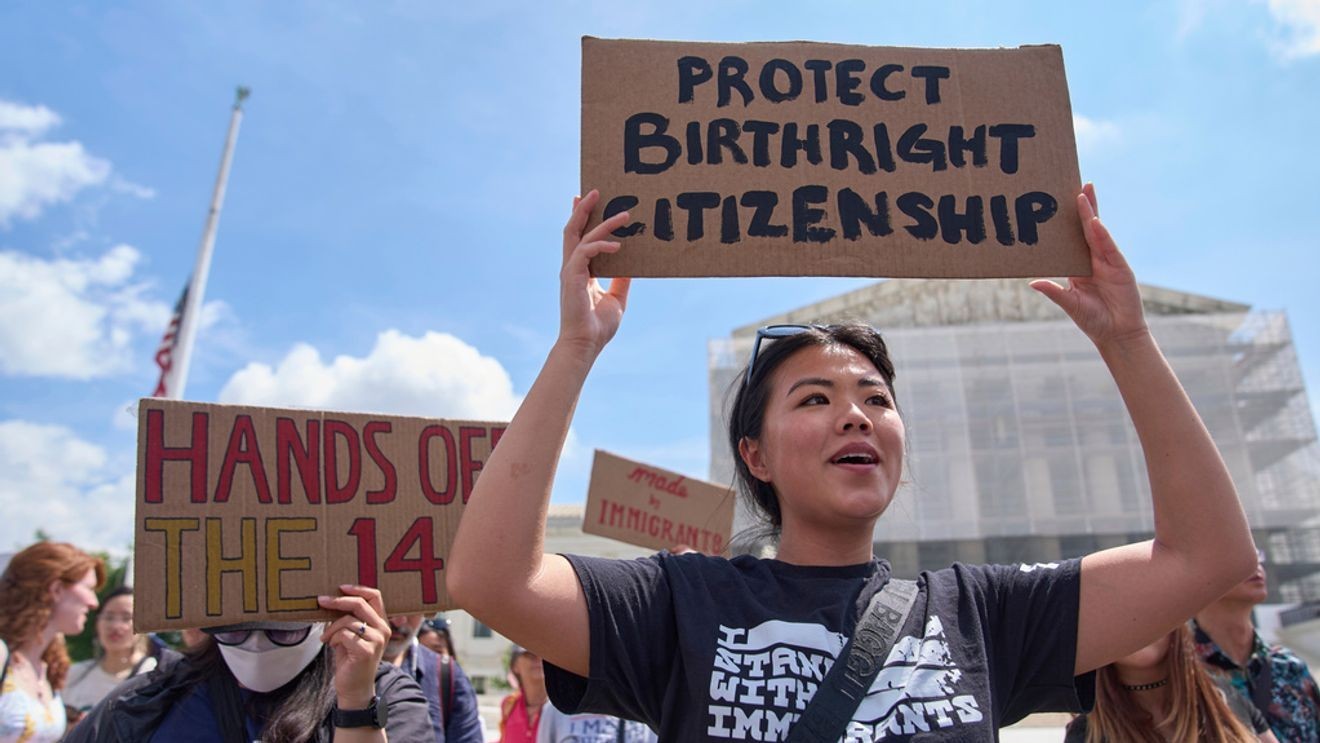
(TNND) — Supreme Court justices are expected to deliver their final opinions on Tuesday ahead of the court’s summer recess, and the biggest decision — President Donald Trump’s attempt to end birthright citizenship — has yet to be announced.
At the center of the dispute is the 14th Amendment, ratified in 1868 after the Civil War, which states that all “persons born or naturalized in the United States, and subject to the jurisdiction thereof,” are U.S. citizens.
The Supreme Court’s 1898 ruling in United States v. Wong Kim Ark has long been interpreted as guaranteeing birthright citizenship to nearly everyone born on U.S. soil, with limited exceptions, such as children of foreign diplomats.
Trump signed the birthright citizenship executive order on Jan. 20, 2025, just hours after being sworn in for his second term.
His order argues that children born to noncitizen parents who are either in the country unlawfully or who have temporary legal status, such as tourists or foreign students, are not “subject to the jurisdiction” of the U.S. and are therefore ineligible for automatic citizenship.
The policy was immediately challenged in court, and multiple federal judges blocked it from taking effect while the legal challenges proceeded.
During oral arguments in April, which Trump attended, several conservative justices appeared skeptical of the administration’s position, questioning whether the executive order could be reconciled with the 14th Amendment and the Supreme Court’s longstanding interpretation of birthright citizenship.
After the hearing, Trump wrote on Truth Social, “We are the only Country in the World STUPID enough to allow ‘Birthright’ Citizenship!”
Trump has repeatedly argued that birthright citizenship is a “scam” that has allowed wealthy adversaries to take advantage of American benefits and has “ripped off” taxpayers by providing government assistance to children of undocumented immigrants. He has also repeatedly claimed the U.S. is the only country that grants birthright citizenship.
However, the U.S. is not alone. Canada, Mexico and numerous countries throughout Central and South America also automatically grant citizenship to most children born within their borders.

 Local Story