The Savvy Investor
6:00 pm - 7:00 pm

Can you separate a nation from its economic structure? More importantly, should you?
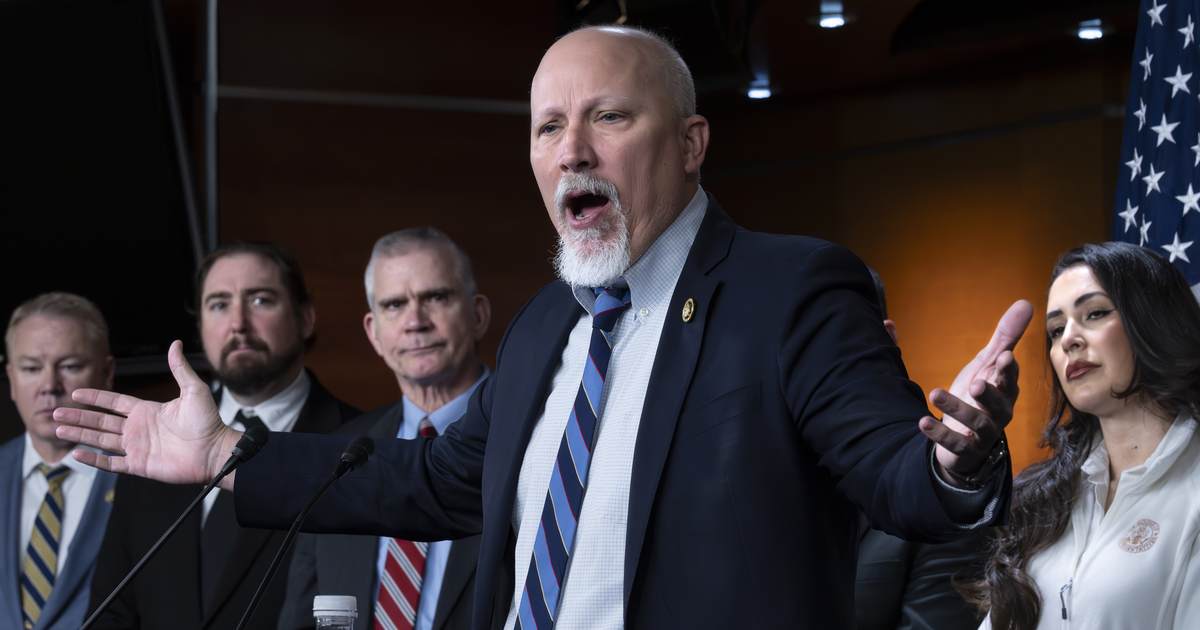
As Republicans scrambled to understand what went wrong in the midterm elections two weeks earlier, Texas Representative Chip Roy took to the House floor with an odd complaint.
“No one stood on the wall at the Alamo shouting, I want 3.9 percent economic growth. We’re a nation, we’re not an economy,” Rep. Roy said. “None of the Founders were running around talking about earnings per share or what Wall Street was doing. None of the people that signed their death warrant, pledging their lives, their fortunes, and their sacred honor were doing so for corporate interests. And so corporate boards could tell their great, great, great, grandchildren that there are six genders or that they’ve got to get in line with some corporate interest or they got to work for the profit of some billionaire over them.”
His point seemed to be in part that economic prosperity and national flourishing are competing goals. That the economy is a means to national flourishing. He even invoked the Founding Fathers and their supposed lack of concern for “shareholders.” But his distinction between a nation and its economy rests on a fundamental misunderstanding of what a nation is, what ours in particular was founded on, and what allows it to flourish.
GOP Rep. Chip Roy: “No one stood on the wall of the Alamo shouting, ‘I want 3.9% economic growth!’ We are a nation, we are not an economy. None of the Founders were running around talking about earnings per share.” https://t.co/11r8aFeflF
— TheBlaze (@theblaze) November 13, 2026
First, does Rep. Roy sound like a conservative or a member of the Democratic Socialists of America? For months, I’ve pointed out that Republicans claim to oppose socialism. Yet rhetoric like this makes it increasingly clear that their objection is not to economic interventionism itself, but to its left-wing variety. Here we have a Republican vilifying corporations and their boards for supposedly failing to put America’s interests first (Which I’ll add that DEI issues from companies came straight from government). But companies have a straightforward purpose: to provide goods or services and pursue profits by making them better or cheaper. And while an economy and a national identity are distinct, that does not mean a nation can flourish without economic prosperity.
Recommended
Second, the Founding Fathers were absolutely concerned with American prosperity and industry. The United States was founded to escape tyranny and establish self-government grounded in liberty: a system in which individuals could pursue their own interests, and their own versions of prosperity without infringing on the rights of others.
The Declaration of Independence states: “We hold these truths to be self-evident, that all men are created equal, that they are endowed by their Creator with certain unalienable Rights, that among these are Life, Liberty and the pursuit of Happiness.” What does Representative Roy think that pursuit entails? Surely it includes the freedom to build a business, earn a living, and pursue prosperity on one’s own terms, otherwise known as the structure of the economy.
Even further, while the Founders did not discuss earnings per share, they did discuss prosperity. In his first inaugural address, Thomas Jefferson asked what was necessary to make Americans “a happy and a prosperous people.” His answer was a “wise and frugal Government” that would leave people “free to regulate their own pursuits of industry and improvement” and would not “take from the mouth of labor the bread it has earned.” Economic freedom was not a distraction from his vision of good government. It was intrinsic to it.
And even Alexander Hamilton, who differed sharply from Jefferson over economic policy, called commercial prosperity “a primary object” of a statesman’s attention.
As for the charge that Republicans have put corporate interests ahead of individual rights, that criticism has been warranted for at least a century. Too often, the party has defended particular businesses rather than economic freedom. Crony capitalism has done more to corrupt the free market than its opponents ever could. But that is no excuse to punish corporations, as Democrats, the DSA, and increasingly Republicans seem determined to do. It is no excuse to dismiss GDP growth on the absurd premise that prosperity serves no individual American’s interests. And above all, it is no excuse to abandon the pursuit of economic freedom.
The United States is a creedal nation. Our identity rests on the principles our country, and we as Americans, are supposed to embody. Liberty is meant to guide both our politics and our economy. Economic freedom is not merely a source of prosperity; it is a safeguard against tyranny and a necessary condition for political freedom. Republicans, conservatives, and Americans more broadly should care deeply about economic growth because our ability to prosper, individually and as a nation, is bound up with our economic freedom.
America’s strength and global standing were not built on patriotic rhetoric. They were built on our economy. Our prosperity is not incidental to our national strength, and our identity. It is its foundation.
We are in a war against socialism. And right now, the greatest threat to our economy, our economic freedom, and our political freedom comes not from those who openly oppose them, but from those who claim to defend them, and attack them anyway.
 National Headline
