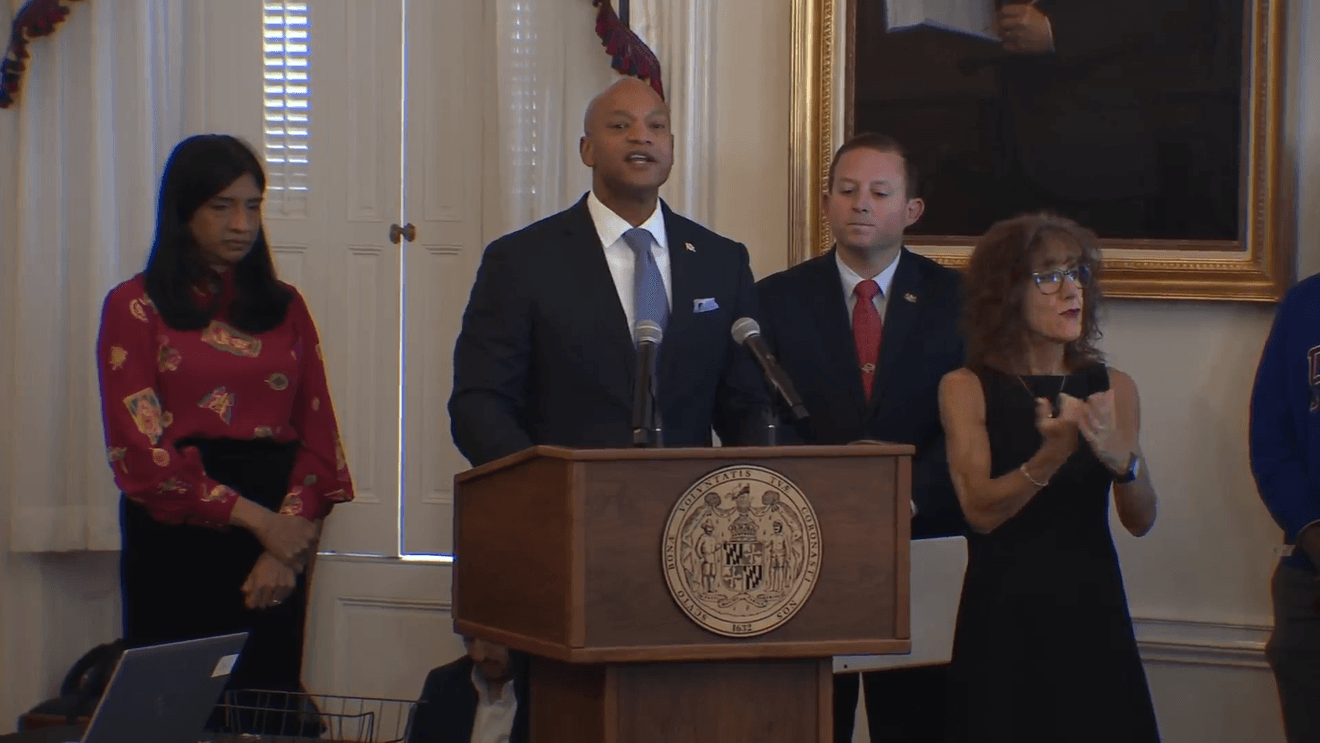
BALTIMORE (WBFF) — Gov. Wes Moore is slated to sign more than 100 bills into law Tuesday, including a bill aiming to stop the automatic charging of some juvenile offenders as adults, despite pushback from top prosecutors from around Maryland.
The General Assembly passed the Youth Charging Reform Act this year, which was sponsored by Sen. Will Smith, D-Montgomery County. The legislation ends the automatic charging of 16- and 17-year-olds who are facing certain offenses, including first degree assault, as well as some drug and weapons charges, as adults; instead, the legislation starts the cases in the juvenile court system.
Supporters of the bill argue that most cases end up in the juvenile system regardless, and therefore, it makes sense to start them in the Department of Juvenile Services.
“They’re already ingesting that work anyway; they’re already doing that workload anyway,” Sen. Will Smith previously told FOX45 News. “We’re just wasting time and money by sending them to the adult system first.”
However, several top prosecutors have come out against the legislation, including Baltimore City State’s Attorney Ivan Bates, Prince George’s County State’s Attorney Tara Jackson, Montgomery County State’s Attorney John McCarthy, and Anne Arundel County State’s Attorney Anne Colt Leitess.
“DJS is not equipped to deal with these increased violent offenders, and the legislature should defer the implementation of this bill until the programs are in place,” McCarthy said.
While speaking at a Center for American Progress event last week, Gov. Moore said he will sign the legislation into law and committed to ensuring young people get the services they need sooner.
“The most serious offenses like murder and rape and carjacking, they will stay in adult court as they should,” Moore said. “But for the cases that belong in juvenile court, we are going to act faster and make sure that accountability can actually mean something.”
Bates recently told FOX45 News he and other prosecutors asked for a three-year delay for implementation to ensure DJS had adequate services. But, that plan was denied, and now Bates said there’s not much state’s attorneys can do.
“It’s almost as if what they’re doing, what we talked about, they’re flying the plane and building at the same time,” Bates said. “We’ve objected to what happened with the legislature. They have overruled us, and we will continue to do our job and do the best we can with the law as they’ve decided.”
After Gov. Moore signs the bill, the legislation will take effect on Oct. 1, 2026.
“The judges are already acting, and a number of people, are already viewing this law being actually already in legislation,” Bates added.
Not found on the list of bills to be signed by Gov. Moore: the Community Trust Act. Last week, Gov. Moore issued a statement indicating he would allow the legislation to become law without his signature.
The bill seeks to further limit cooperation with ICE and comes after the General Assembly banned the formal 287(g) in Maryland.
Keeping local law enforcement focused on what’s helped Maryland drive down rates of violent crime is a priority, Gov. Moore said in a statement.
“That said, this bill presents real implementation challenges that must be addressed through executive action and in next year’s legislative session,” he said. “Protecting our communities requires seamless coordination among federal, state, and local partners, and the bill creates ambiguities around joint investigations that we are working with the Attorney General’s office to clarify. Local law enforcement must also retain the flexibility they need to operate within the law, share appropriate information, and keep communities safe.”
Sheriffs from around the state, however, argued the governor should have vetoed the legislation.
“Again, it’s public safety. It’s a danger for our community. It puts the state of Maryland in a status all by itself as an ultra-sanctuary jurisdiction,” Harford County Sheriff Jeff Gahler said.
“I believe it’s unconstitutional. I don’t believe that that state legislature can do it, and I think what you’ll see next week is the sheriffs throughout the state look for injunctive relief or emergency relief for that, so that we can continue keeping our jurisdiction safe from this overreach of Annapolis,” Carroll County Sheriff Jim DeWees said.
Under the legislation, a felony conviction or a judicial warrant must be present before local law enforcement could communicate with ICE about someone’s immigration status. The legislation also outlines that law enforcement can notify ICE of someone who is detained in a correctional facility if that person would be on the sex offender registry, sentenced between 12 and 18 months in a state prison, or committed an offense in another state that resulted in at least five years served in prison.
Supporters of the bill argue the legislation ensures due process for everyone. Senate President Bill Ferguson said his chamber based the bill to ensure communities are safe.
“The Community Trust Act keeps local police focused on the work that has driven violent crime in Baltimore to its lowest point in modern history,” Ferguson said via statement. “When Donald Trumo’s ICE is ripping mothers from their cars and detaining five-year-olds, states have to decide what they stand for.”
While the legislation will take effect, the sheriffs indicated they plan to sue.
“He should have vetoed it because he knows that it has severe risks of public safety throughout the state of Maryland,” DeWees said. “I believe it’s unconstitutional.”
The bill signing is scheduled to begin at 9 a.m. on Tuesday, May 26, 2026.
Follow Political Reporter Mikenzie Frost on X and Facebook. Send tips to mbfrost@sbgtv.com.
 Local Story