ANNAPOLIS, Md. (WBFF) — As Gov. Wes Moore takes the national stage with a speech on America’s 250th birthday, he faces a growing list of questions in Maryland over whether his administration is delivering on promises that helped propel him into office.
The scrutiny extends well beyond Moore’s long-running military records controversy. The Democratic governor has defended claims about lowering energy costs as Marylanders face historically high electric bills, pushed back against criticism from climate activists over his environmental agenda, and confronted growing friction with organized labor.
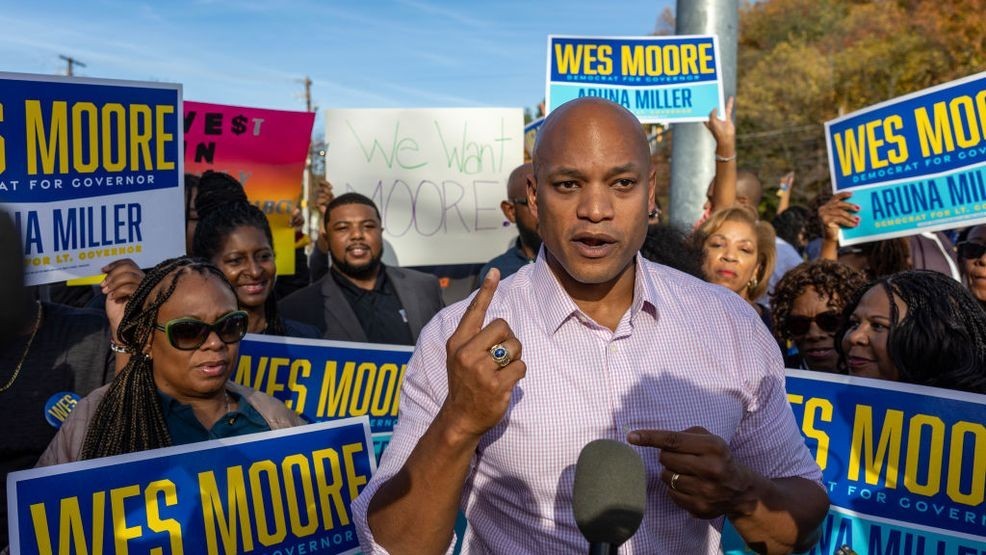
LARGO, MARYLAND – NOVEMBER 04: Maryland Democratic gubernatorial nominee Wes Moore talks to reporters while campaigning at Prince Georges Community College on November 04, 2022 in Largo, Maryland. Moore will face Republican nominee Dan Cox in the midterm general election on November 8. (Photo by Tasos Katopodis/Getty Images)
At the same time, Spotlight on Maryland continues to press Moore for answers about inconsistencies between his military service and his public biography.
The questions come nearly four years after Moore launched his first campaign centered on service, transparency and a promise to leave no one behind.”
Military records remain the most persistent source of scrutiny.
Moore recently told CNN, “I have never mischaracterized my military career.”
I have nothing to hide and nothing to be ashamed of,” Moore said.
Spotlight on Maryland has continued reporting on inconsistencies involving Moore’s military service, honors and public biography, including his repeated public claims that he received a Bronze Star before the award was retroactively issued nearly two decades later.
ALSO READ | Wes Moore’s military record: what’s known, what isn’t
FOX45 News first reported in 2022 that Moore had claimed the Bronze Star for nearly two decades despite not having received it at the time. Moore ultimately received a Bronze Star during a private ceremony in December 2024, 18 years after returning from Afghanistan. He has called listing the award on a 2006 White House Fellowship application before it had been awarded an “honest mistake.”
Veterans and political opponents have since called on Moore to release his complete military records, arguing they would resolve lingering questions. Moore’s office has dismissed some of the criticism as politically motivated and rejected claims that he misled the public.
A University of Maryland, Baltimore County poll released in April found Moore’s job approval rating had fallen below 50% for the first time since he took office, with 48% approving, 42% disapproving, and 9% unsure. The survey of 804 Maryland adults was conducted March 17-22 and had a margin of error of 3.5%.
Questions have also emerged over Moore’s energy agenda.
In April 2023, standing at Tradepoint Atlantic, Moore promoted Maryland’s offshore wind ambitions, saying the state’s energy future would be “cleaner and greener” while creating jobs and economic growth.
But Spotlight on Maryland later visited the site where offshore wind manufacturing had been promoted and found little visible development. Asked in July 2025 when construction would begin, Moore said his administration was working with partners to build “a strong energy future” but did not provide a timeline.
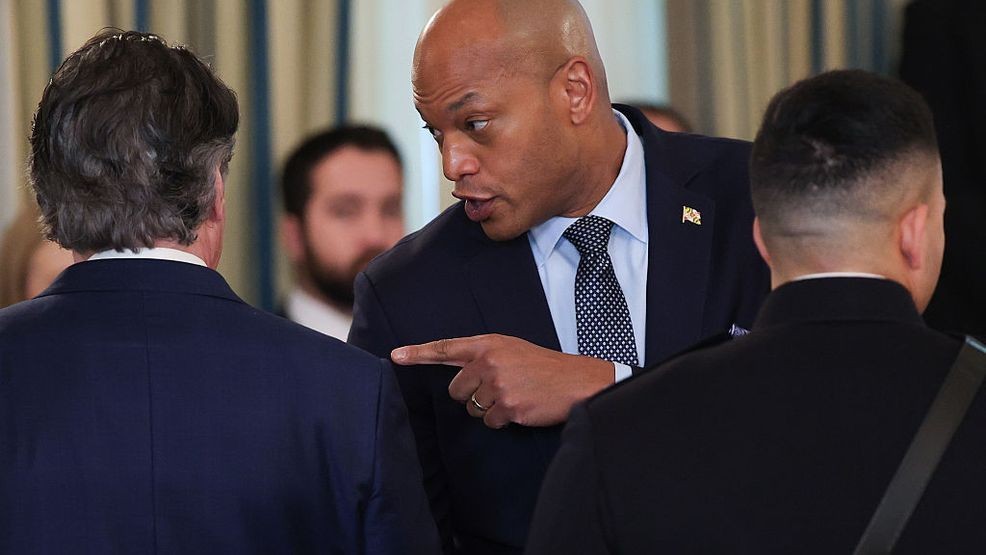
WASHINGTON, DC – FEBRUARY 20: Maryland Gov. Wes Moore attends an event where U.S. President Donald Trump delivered remarks during a working breakfast with governors in the State Dining Room at the White House on February 20, 2026 in Washington, DC. Trump met with a group of governors, who are in town for the National Governors Association winter meeting, after he initially invited only Republican members of the group, causing a backlash from the bipartisan organization. (Photo by Kevin Dietsch/Getty Images)
The governor has also defended his administration’s claims on electricity costs.
Moore’s campaign website this year said his administration had lowered energy bills. Asked during a June event in Salisbury whether that claim was misleading as ratepayers reported historically high bills, Moore responded, “No, I’m not being misleading.”
His administration has pointed to the Utility RELIEF Act, which Moore and legislative leaders said will save the average Maryland household at least $150 annually, or $12.50 per month. Republicans have argued that the savings fall far short of rising utility costs.
RELATED | Gov. Wes Moore dodges question on energy bills as state faces sharp increase
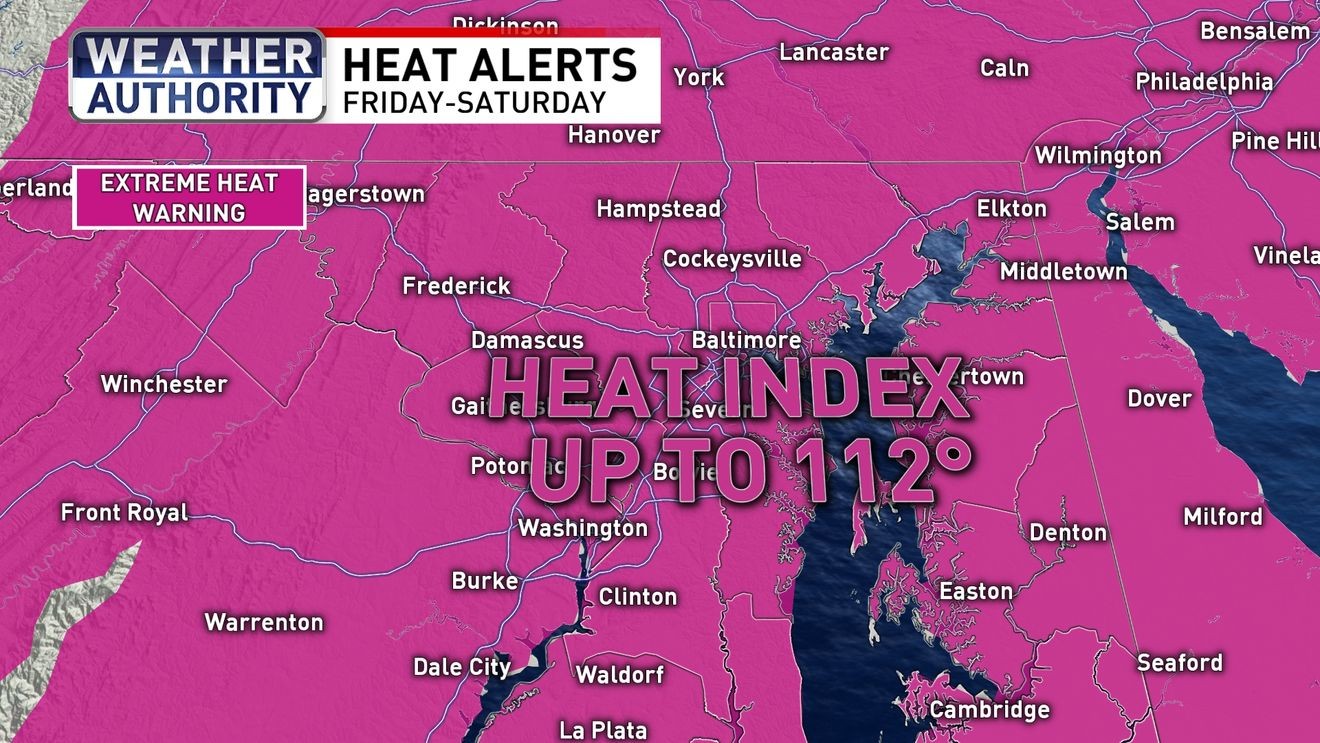
Energy concerns intensified this week when the U.S. Department of Energy issued an emergency order directing PJM Interconnection to take steps to preserve grid reliability during extreme heat and surging electricity demand.
Del. Lauren Arikan, a Republican representing Baltimore and Harford counties, criticized Moore in an X post following the federal action.
“Trump always answers the call so the people living in the woke state of Maryland don’t get their lights and AC turned off on the hottest days of the year,” Arikan said.
Moore has also drawn criticism from parts of his political base.
Climate Defiance activists have repeatedly confronted the governor over environmental policies, accusing him of retreating from campaign promises after he vetoed major climate legislation.
You campaigned on ‘leave no one behind,’ but Black kids are being left behind due to environmental racism,” one activist said when confronting Moore. “We can do better. You campaigned on climate justice. Why not meet those promises?”
Rhyan Lake, a spokesperson who works for Moore’s official government office and his campaign operation, pushed back against questions about the governor’s trustworthiness and the high claims that seem unlikely to materialize on their current trajectory.
“Even as the Trump administration works to cancel energy sources that are quicker, cleaner, and cheaper for Maryland families, the governor is committed to transitioning to a clean economy,” Lake wrote.
When asked if detractors, including progressive climate change activists who criticize the governor’s delayed efforts on his escalated green energy agenda, are accurate in their criticism, Lake said “no.”
“Maryland is committed to a clean energy economy,” Lake wrote.
Labor relations have become another source of tension.
Axios reported this week that Moore’s relationship with some labor leaders has frayed amid concerns over communication and the rebuilding of the Francis Scott Key Bridge. Moore’s office told Axios the administration has worked closely with organized labor by increasing wages, expanding collective bargaining rights and strengthening workplace protections.
The criticism is not new.
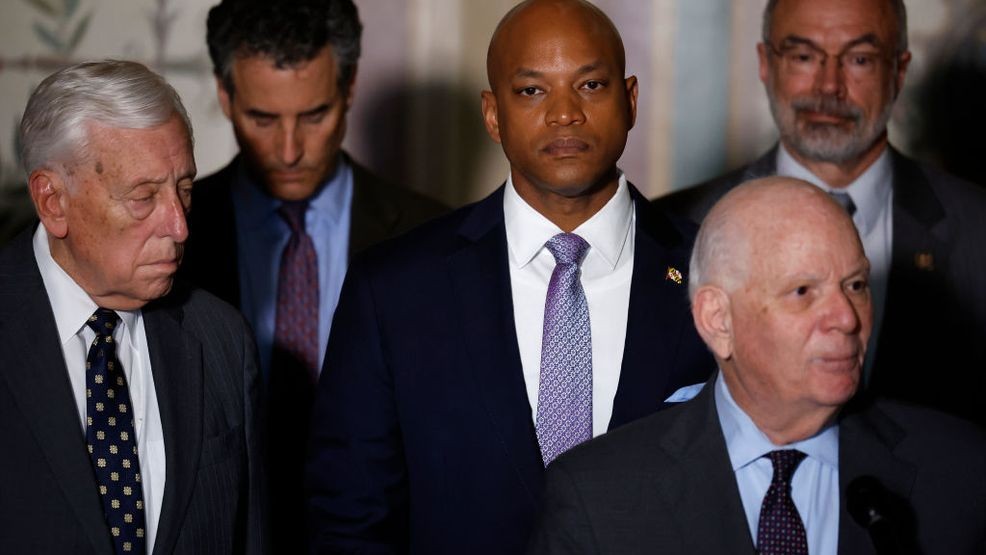
WASHINGTON, DC – APRIL 09: Maryland Governor Wes Moore (C) joins members of his state’s Congressional delegation (L-R) Rep. Steny Hoyer (D-MD), Rep. John Sarbanes (D-MD), Sen. Ben Cardin (D-MD) and Rep. Andy Harris (R-MD) to talk to reporters following a meeting at the U.S. Capitol on April 09, 2024 in Washington, DC. Cardin said he expects bipartisan support for full federal funding to cover the costs of removing and replacing the destroyed Francis Scott Key Bridge in the Port of Baltimore. (Photo by Chip Somodevilla/Getty Images)
Last year, AFSCME members held a news conference criticizing the Moore administration’s handling of working conditions inside state agencies.
“It’s getting harder and harder to be a DJS employee,” one worker said at the time.
That news conference followed Spotlight on Maryland and FOX45 News reporting documenting assaults and unsafe working conditions inside Maryland’s juvenile detention facilities.
Do you have any tips or information related to this story? Send news tips togmcollins@sbgtv.comor contact Spotlight on Maryland’s hotline at (410) 467-4670.
Follow Gary Collins on X and Instagram. Spotlight on Maryland is a collaboration between FOX45 News, WJLA in Washington, D.C., and The Baltimore Sun.
 Local Story