ANNAPOLIS, Md. (WBFF) — Maryland lawmakers returned to the capital this week to rewrite the state’s congressional redistricting rules. Many challenges were left off the narrow agenda, including another issue carrying far greater financial consequences—a potential multibillion-dollar liability stemming from more than 12,000 child sexual abuse claims against the state.
The decision to convene a special session for redistricting while leaving unresolved how Maryland will pay for claims under the Child Victims Act has renewed questions about the priorities of state leaders.
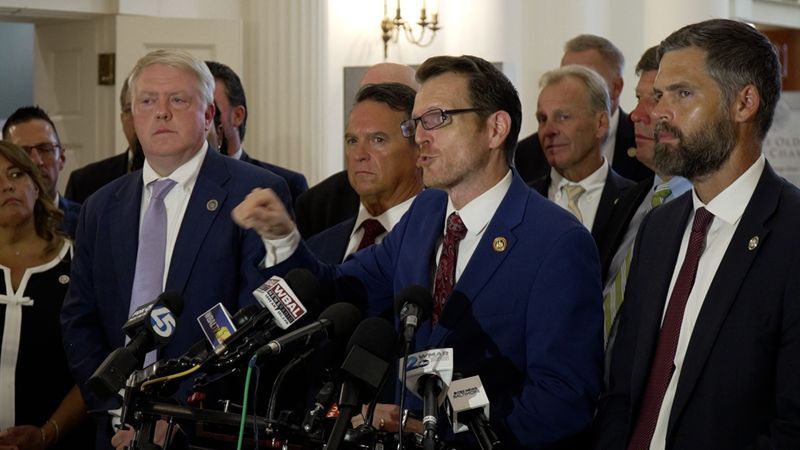
Maryland Republican lawmakers held a conference in the State House Rotunda on Monday, August 3, 2026, denouncing mid-decade redistricting and the legislature’s priorities. (Steve Pierce/Spotlight on Maryland)
Although lawmakers and the governor acknowledge the abuse litigation could reshape state finances for years, there is still no dedicated funding plan. Officials say resolving the issue will require years of court rulings, hearings and budget negotiations.
“We are prohibited from introducing any amendments, any legislation to deal with any important issues that impact Marylanders,” Del. Jesse Pippy, a Frederick County Republican, said during a news conference on Monday.
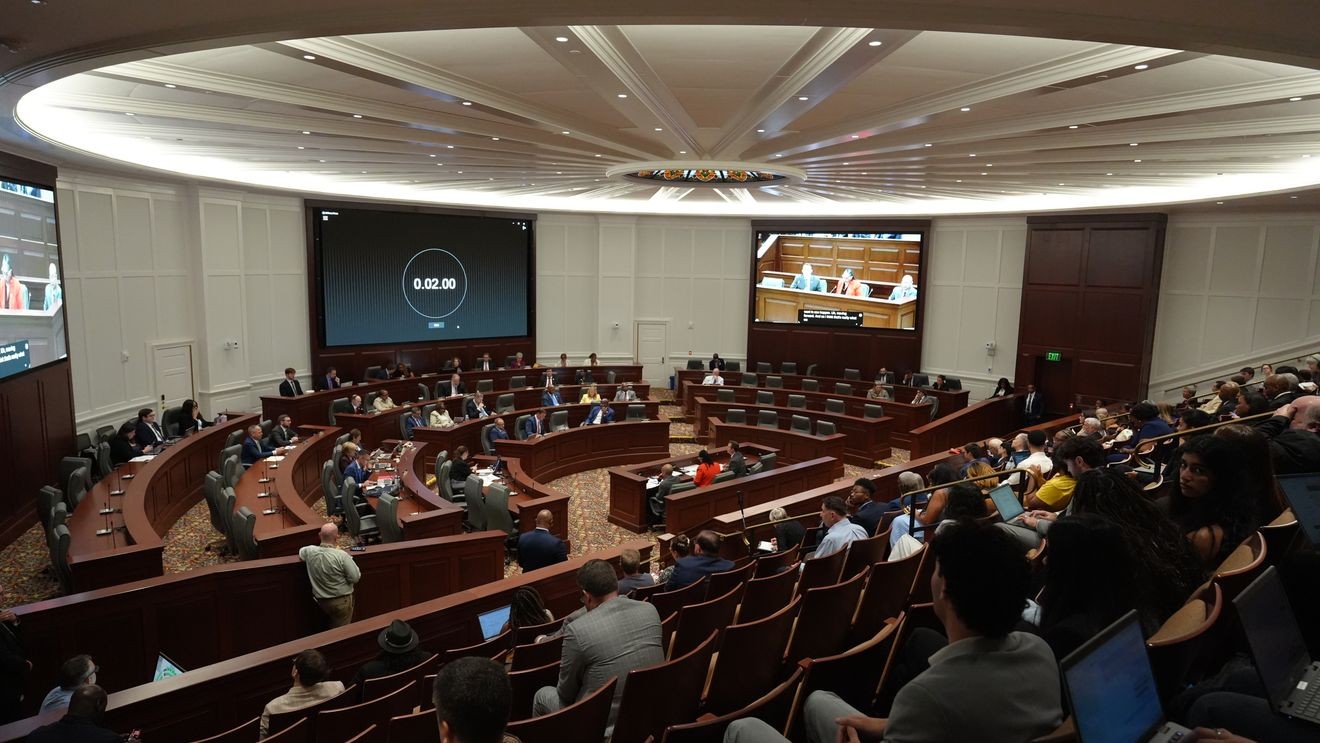
Legislative leaders limited the August 3-5 session to a proposed constitutional amendment that would allow Maryland to redraw congressional districts in the middle of the decade. Democratic leaders have said the measure is intended to remove legal barriers that contributed to a Maryland court striking down the state’s congressional map in 2022.
If approved by three-fifths of both chambers, the amendment would go before voters in November.
Outside the debate over political boundaries, another question remains unanswered: how much taxpayers could ultimately owe to people who allege they were sexually abused as children in state-run or state-supervised institutions.
Spotlight on Maryland questioned lawmakers about the unresolved liability as they arrived for Monday’s special session.
There has been no real provision on how to pay for those lawsuits,” said Sen. Justin Ready, a Republican representing Carroll and Frederick counties. “It’s almost like, I think, the decision-makers around here and the governor seem to pretend it doesn’t exist, but it very much exists.”
The Child Victims Act of 2023 eliminated Maryland’s statute of limitations for civil lawsuits alleging childhood sexual abuse. In March, Maryland’s highest court upheld the law’s constitutionality, enabling thousands of previously time-barred claims to move forward.
In April, the Maryland Attorney General’s Office told Spotlight on Maryland that state entities faced 12,305 asserted claims. Many of those claims could be subject to an $890,000 cap per incident or occurrence rather than the lower $400,000 cap lawmakers approved in 2025 for certain newly filed claims.
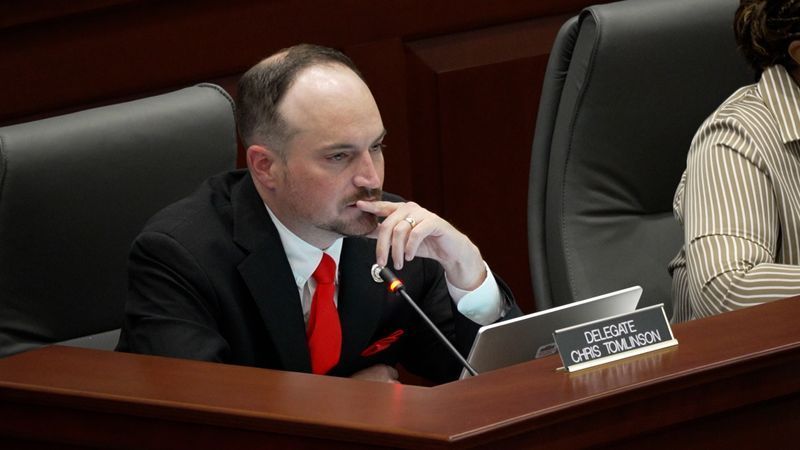
Maryland Del. Chris Tomlinson, R-Carroll and Frederick counties, on Monday, August 3, 2026. (Steve Pierce/Spotlight on Maryland)
The state’s ultimate financial exposure remains unknown because courts have not yet determined how damages will be calculated in many cases, including whether plaintiffs may recover for multiple incidents of abuse.
Estimates approaching $60 billion represent a theoretical maximum based on thousands of claims involving numerous recoverable incidents, not an amount Maryland currently owes. Several lawmakers, including Sen. Chris West, a Republican representing Baltimore and Carroll counties, have cited that figure in recent months while warning about the state’s potential exposure.
“If they are permitted to recover for multiple incidents, that can be $60 billion,” West told Spotlight on Maryland in April.
Even under more conservative estimates, lawmakers acknowledge the potential costs could reach into the billions. Spotlight on Maryland previously reported that the state has not established a dedicated fund to pay future judgments or settlements.
Del. C.T. Wilson, a survivor of childhood sexual abuse and the principal architect of the Child Victims Act, said the issue could not be resolved during a brief session focused on a single constitutional measure.
“Most of those matters will take a lot more time and energy in figuring out, especially because the solutions are very complex and complicated,” said Wilson, a Charles County Democrat. “The bill we’re here dealing with today is not a complex bill.”
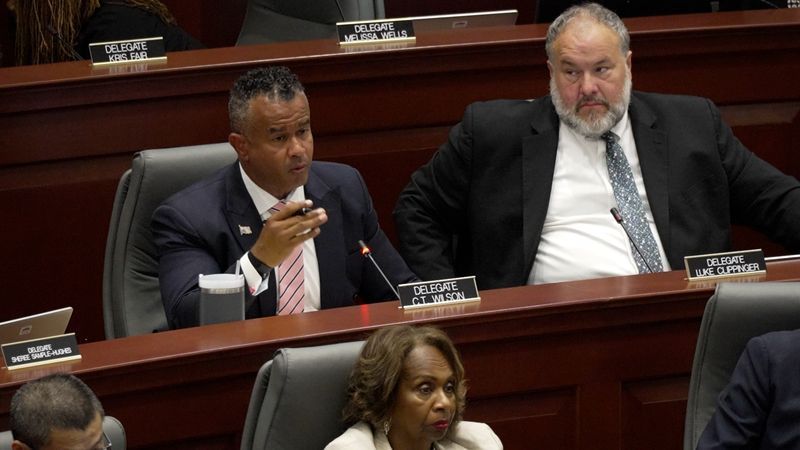
Maryland Del. C.T. Wilson, D-Charles County, on Monday, August 3, 2026. (Steve Pierce/Spotlight on Maryland)
When pressed on where allegedly abused children fit in among the state’s priorities, Wilson rejected the premise.
This is not about a triage issue,” Wilson said. “This is about what can be done quickly, what can be put on the constitutional ballot versus what’s going to take multiple sessions to realize and figure out.”
At the same time, Maryland is seeking to limit its financial exposure in court. State attorneys have argued that sovereign immunity should bar roughly 1,300 lawsuits alleging abuse before 1982. If the state prevails, those cases could be dismissed before trial.
Del. Chris Tomlinson, a Republican representing Carroll and Frederick counties, said lawmakers understood when they passed the Child Victims Act that it would impose substantial costs on state and local governments.
“We all knew this is exactly where things were going to end up,” Tomlinson said. “This is going to cost county governments, municipal governments and especially the state. It’s going to cost us, added up together, billions of dollars.”
“I think what we need to do is quite frankly repeal it,” Tomlinson added.
Send news tips about this story or others to gmcollins@sbgtv.com or contact Spotlight on Maryland’s hotline at (410) 467-4670.
Follow Gary Collins on X and Instagram. Spotlight on Maryland is a collaboration between FOX45 News, WJLA in Washington, D.C., and The Baltimore Sun.
 Local Story