The Scott Jennings Show
8:00 pm - 10:00 pm

ANNAPOLIS, Md. (WBFF) — Maryland has increased school funding by billions of dollars in recent years. But students are falling well short of the academic goals set by the state, and Governor Wes Moore says he’s not concerned.
Project Baltimore attended Wednesday’s Maryland Board of Public Works meeting to speak with Governor Moore about the student academic goals set by the state.
“The state did not achieve any of the goals,” Project Baltimore’s Chris Papst said to Moore. “Is it concerning to you that the Maryland State Department of Education set academic goals that were not met?”
“Well, no,” Moore responded. “Because I think you want to set high goals and high standards.”
ALSO READ | Maryland schools spend billions more, miss academic goals, education leaders not concerned
In 2024, the Maryland State Board of Education, whose members are appointed by the Governor, set academic goals it wanted students to reach by 2026. For third through eighth grade English Language Arts, the state set a goal of 62% proficiency. For math, the goal was 46% proficiency.
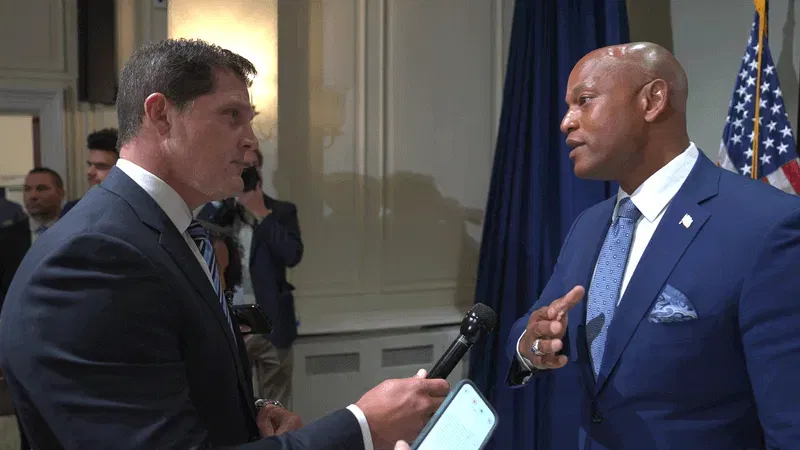
Project Baltimore attended a Maryland Board of Public Works meeting to speak with Governor Wes Moore about student academic goals set by the state (WBFF)
One year later, in 2025, the state revised the 2026 goals down to 57% in ELA and 37% in math.
When the 2026 results were released in July, Mayland students did not come close to meeting any of the goals. In ELA, 50.2% of students tested proficient. In math, 27.1% of students tested proficient. Overall, in ELA, the state fell short of its initial goal by 12 percentage points. In math, the state fell short of the initial goal by 19 percentage points.
“What’s the point of setting high goals if you don’t achieve them, and you say it’s not a big deal?” Questioned Papst.
“You always want to set high goals,” replied Moore. “You always want to set high standards. I think part of the problem we had before is we had low expectations and we had no intention of actually even being able to push towards.”
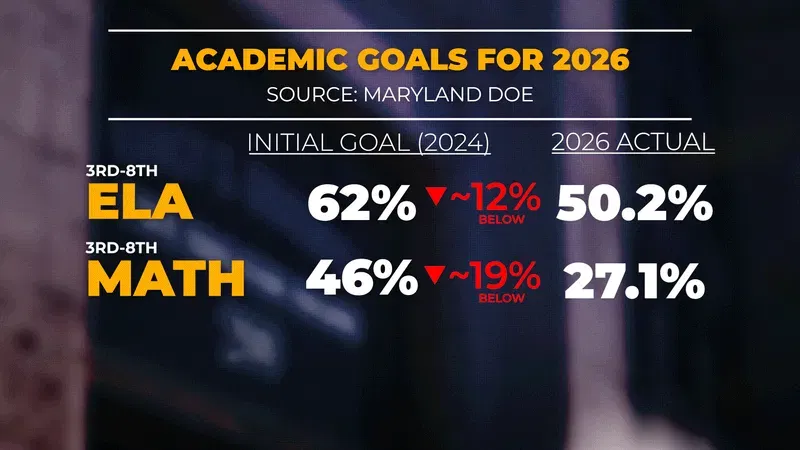
Overall, in ELA, the state fell short of its initial goal by 12 percentage points. In math, the state fell short of the initial goal by 19 percentage points (WBFF)
“I’m real concerned about what we’re getting for the massive taxpayer investment that we’re making in public education,” said State Senator Justin Ready, who represents Carroll and Frederick Counties.
Ready says he’s concerned because as the state’s academic goals are not being met, Maryland has invested billions of additional dollars into public education as part of the Blueprint for Maryland’s Future, which passed in 2021. Since 2024, taxpayers have increased school funding by nearly $1.5 billion annually to a total of $15.5 billion.
“We’re not getting the kind of results that we should be getting,” said Ready.
ALSO READ | As funding soars, Maryland students post modest gains on state testing
From 2024 to 2026, overall math and English proficiency rates have increased by about three percentage points, which the Governor did reference.
“We’ve already started to see what that turnaround can look like, where we’ve seen them both in math and reading,” stated Moore. “We’ve seen increases in virtually every single grade and Maryland had amongst the fastest recovery post-Covid of any state in the entire country.”
But Ready says three percentage points in exchange for billions of dollars is not a good return on the taxpayer investment – especially when the goals set by MSDE in 2024 were significantly higher.
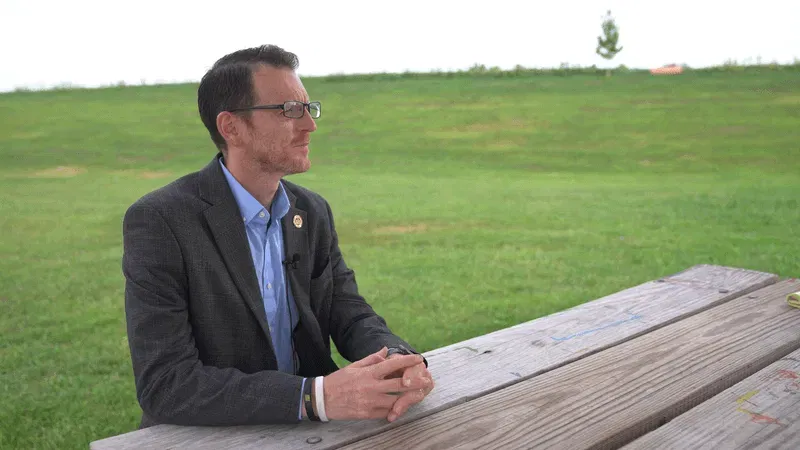
State Senator Justin Ready says he’s concerned because as the state’s academic goals are not being met, Maryland has invested billions of additional dollars into public education as part of the Blueprint for Maryland’s Future (WBFF)
“We need to figure out what’s holding us back because it’s not money,” said Ready. “What’s holding us back to really achieving these targets? While there are probably some isolated successes, we’re not seeing the kind of results that we need to justify more and more money being pumped into the same system.”
Project Baltimore recently spoke with State Superintendent of Schools Dr. Carey Wright, who also said she is not concerned that Maryland fell short of its academic goals. Wright, similar to Moore, added there is some academic progress, which is encouraging.
Follow Project Baltimore’s Chris Papst on X and Facebook. Send news tips to cjpapst@sbgtv.com
 Local Story