NEW YORK — Sonny Rollins, the influential tenor saxophonist whose improvisation and experimentation helped shape modern jazz, has died at 95.
A spokesperson says Rollins died Monday at his home in Woodstock, New York.
No specific cause of death was released, though spokesperson Terri Hinte said Rollins had dealt with physical problems in recent years.

Over a career spanning more than five decades, he became known for constantly evolving his sound and pushing beyond traditional jazz styles.
Photo: American Jazz musician Sonny Rollins (left) plays tenor saxophone as he performs with his group (‘Friends’) at Carnegie Hall, New York, New York, April 13, 1991. Pictured with him are Al Foster (center), on drums, and special guest Roy Hargrove (1969 – 2018), on trumpet. (Photo by Jack Vartoogian/Getty Images)
Rollins was widely considered one of the defining saxophonists of the bebop era alongside Charlie Parker and John Coltrane.
Over a career spanning more than five decades, he became known for constantly evolving his sound and pushing beyond traditional jazz styles.
Despite his reputation, Rollins often described himself as “a work in progress.”
“I don’t consider myself a musician that has learned as much as I want to learn,” he told The Associated Press in 2007.
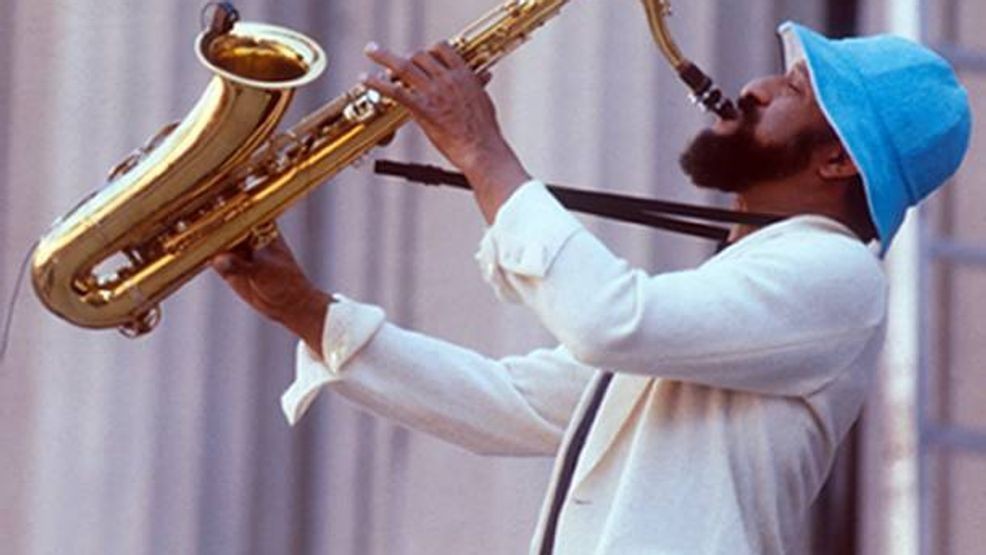
Rollins also became known for taking lengthy breaks from performing, including a period in the late 1950s when he famously practiced alone on the Williamsburg Bridge in New York. CIRCA 1980: Jazz saxophonist Sonny Rollins performs onstage in circa 1980. (Photo by Tom Copi/Michael Ochs Archives/Getty Images)
His best-known recordings include “Saxophone Colossus,” “Way Out West,” “Freedom Suite” and “A Night at the Village Vanguard.”
Outside the jazz world, many listeners recognized Rollins from his saxophone work on the Rolling Stones song “Waiting on a Friend.”
Rollins also became known for taking lengthy breaks from performing, including a period in the late 1950s when he famously practiced alone on the Williamsburg Bridge in New York.
He later embraced free jazz and avant garde styles, decisions that sometimes divided fans.
Rollins played his final concert in 2012 before health problems forced him into retirement.

American Jazz musician Sonny Rollins performs onstage at the New Orleans Jazz & Heritage Festival, New Orleans, Louisiana, April 1977. (Photo by Chuck Fishman/Getty Images)
His final years still brought recognition.
He won Grammy Awards in 2001 and 2006 and remained one of jazz’s most respected living figures.
Born in Harlem in 1930, Rollins started on piano before switching to saxophone as a child.

A spokesperson says Rollins died Monday at his home in Woodstock, New York. FILE – Sonny Rollins performs during a concert in Tokyo, Oct. 4, 2010. (AP Photo/Junji Kurokawa, File)
He played alongside legends including Miles Davis, Thelonious Monk and Max Roach while still a teenager.
Rollins also openly discussed his struggles with heroin addiction in the 1950s and the spiritual transformation that followed his recovery.
“I began to have a deeper philosophy of what life was about,” he said.
He is survived by several nieces and nephews.
The Associated Press contributed to this report.
 Local Story