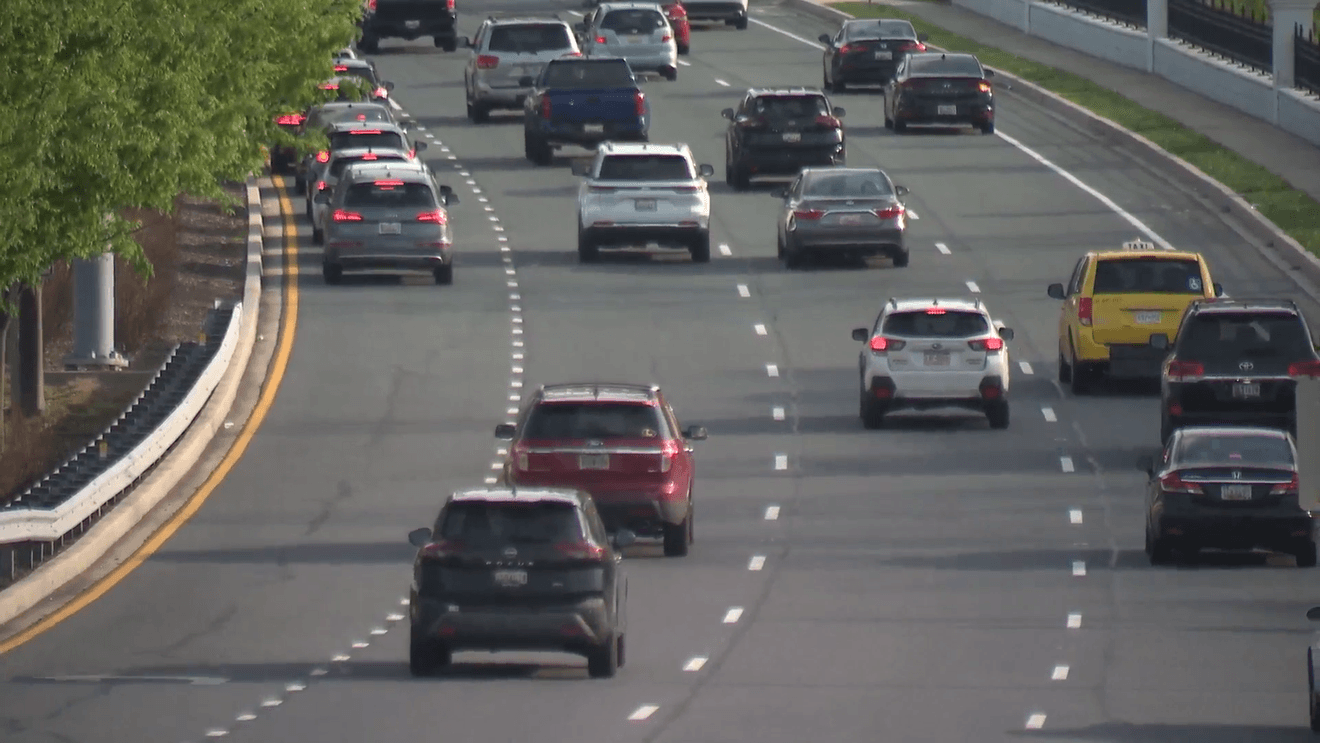
MARYLAND (WBFF) — Maryland lawmakers are moving to crack down on chronic speeders with a new pilot program that would require some high-risk drivers to use technology designed to prevent them from exceeding posted speed limits.
The “Stop Super Speeders” legislation passed this session as House Bill 107 and Senate Bill 366 and is now awaiting Gov. Wes Moore’s signature.
If signed, the law would require targeted motorists to install Intelligent Speed Assistance, or ISA, technology. The system uses GPS and onboard sensors to keep a vehicle from going over the speed limit.
ALSO READ | Baltimore police officer hit by civilian vehicle during chase to arrest wanted suspect
Del. Nicholas “Nick” Allen, a Democrat from Baltimore County who co-sponsored the House version, said the bill is aimed at repeat offenders who would otherwise face license suspension or revocation.
“Typically, it’s anyone who would be eligible to have their license suspended or just completely revoked,” Allen said.
Allen said the proposal is also intended to address what he described as a common problem with suspended or revoked drivers continuing to drive.
“One of the things I learned again talking with MVA is they estimate that when someone has their license suspended or revoked, up to 75% of those people just keep driving anyway,” Allen said. “So, this way, these people, who, again, 75% of whom would continue driving anyway, can continue driving. But, we’re going to ensure that they do it safely through this technology.”
The technology works by limiting acceleration once a vehicle reaches the posted speed limit. Brandy Nannini of Smart Start, a company that makes one of the devices, explained: “What it does is it controls the accelerator, and once the person is trying to speed over the speed limit, it will stop you.”
Some motorists raised concerns and offered differing views about the approach.
One man said, “I think it’s an invasion of privacy for the average person.”
A woman said, “I mean, as long as everybody stays safe, we’re all responsible…good.”
Another man argued for steeper penalties instead of technology, saying, “If they were really trying to stop people from speeding, instead of fining you $50 or $100. They should charge you $500 for the first offense, $1,000 for the second offense and to suspend your license for the third offense.”
Allen said the goal is to add another option for improving roadway safety.
The bottom line for me is I want to give Maryland every tool they can in their toolbox to help keep Marylanders safe on the roads,” he said.
The bill would take effect in October if signed, but the program would not begin until 2027 to give the Maryland Motor Vehicle Administration (MVA) and other agencies time to set it up. The measure would then be reviewed after a few years to determine whether it is effective.
 Local Story