Best of Sean Hannity
5:30 am - 6:00 am
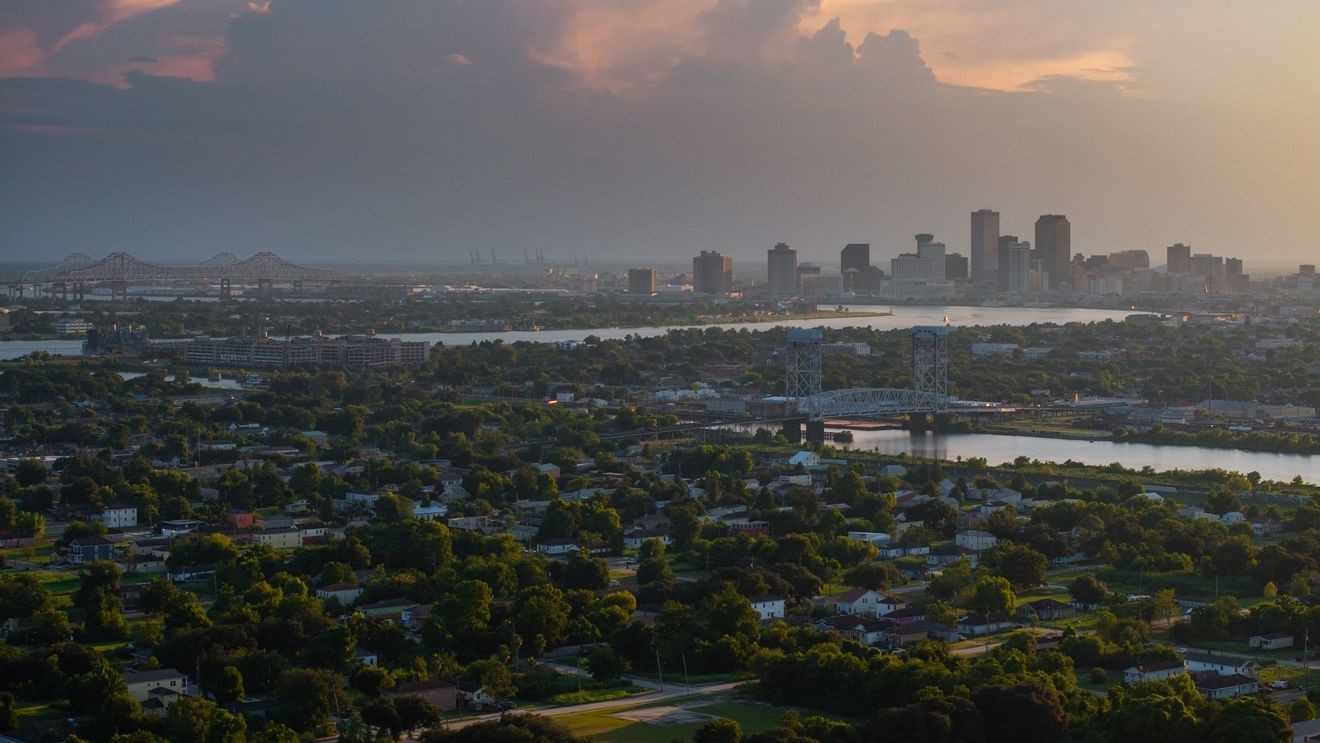
(TNND) — A new study warns the clock is ticking for New Orleans and coastal Louisiana amid rising sea levels, and the authors urge officials to begin planning now for the eventual resettlement of the city’s population or risk crisis displacements for future generations.
They are forecasting New Orleans to be overtaken by the sea, though that’s not expected to happen for a long time.
Still, the risks warrant planning without delay, said one of the study’s authors, Torbjörn Törnqvist.
New Orleans should still exist by the end of this century, even if it’s a very different place, said Törnqvist, a geology professor at Tulane University in New Orleans.
Törnqvist likened New Orleans’ future in 75 or so years to modern-day Venice.
“But by the end of the following century, I don’t think New Orleans is going to exist anymore as we know it,” he said.
New Orleans, mostly below sea level and protected by levees, could evolve into a “fortress that is sitting in the Gulf of Mexico,” creating a “very precarious situation” that insurers won’t touch, Törnqvist said.
Törnqvist lives in the city and has no plans to leave. And he’s not telling anyone else to leave New Orleans, either.
“The most important thing is that we start planning,” he said.
Törnqvist and his co-authors saw their study published this month in the scientific journal Nature Sustainability.
Törnqvist said his team’s previous research projected that about 75% of Louisiana’s remaining coastal wetlands could disappear by 2070.
The wetlands that surround New Orleans provide an additional buffer against things like storm surge, but they’re disappearing. And Törnqvist said they are expected to disappear increasingly rapidly throughout this century.
The wetlands have been weakened by decades of human activity, including oil and gas canals and levees along the Mississippi River that prevent sediment from naturally rebuilding the delta, he said.
The study authors wrote of the “inevitable transformation of coastal Louisiana from land to sea.”
And they said the shoreline is bound to migrate as much as 62 miles inland.
That could make Louisiana’s capital, Baton Rouge, a coastal city. But the authors said that would require sea levels to rise around 23 feet from where they are now, and Törnqvist said that’s a process that’s likely to take centuries to unfold.
“We’re at risk of losing many historic cities to sea level. This is not at all a unique thing to New Orleans,” Törnqvist said. “But it is true that … New Orleans is a little bit in the forefront of experiencing these things.”
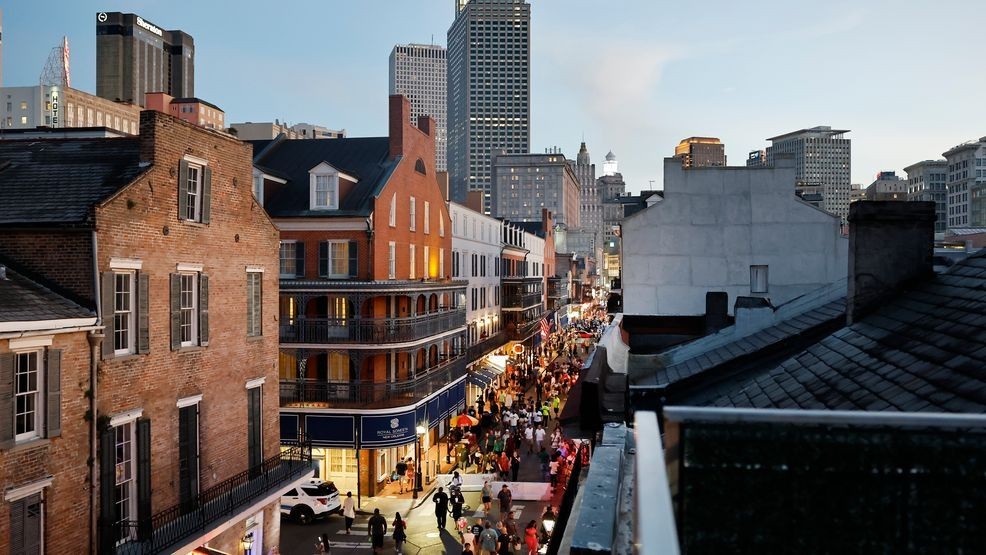
FILE – People walk on Bourbon Street in the French Quarter with the downtown skyline beyond on August 8, 2025, in New Orleans. (Photo by Mario Tama/Getty Images)
Coastal Louisiana is a “canary in the coal mine” with respect to climate change, he said.
New Orleans sits in the middle of the most vulnerable coastal zone in the world due to the extremely high rate of relative sea level rise, he said.
“We see the impacts of accelerating sea level rise here earlier than almost anywhere else in the world, and it’s not only because of these rapid rates of rising sea level, but it’s also because the land elevation in this region is very low. … Louisiana has these extensive coastal wetlands, and they’re sitting generally within 1 foot above sea level,” Törnqvist said. “So, in other words, it doesn’t take a whole lot of sea level rise to get them in trouble.”
People are already leaving coastal Louisiana, Törnqvist said.
The coast has been losing population for decades, he said.
Orleans Parish’s population has dropped from around 568,000 people 50 years ago to about 362,000 now.
Törnqvist said planning for managed relocation can help preserve New Orleans’ historically important culture and community, and he said it can help ensure an equitable population move, even if the most dire situation won’t come to fruition for lifetimes from now.
That might mean there’s a “New Orleans 2.0 in a different location,” he said.
Törnqvist said they were intentional about not putting a timeline on their forecast.
“Of course, that’s what everyone wants to know,” he said. “But … you could even argue that it’s to some extent unknowable right now, because a lot of it is going to depend on whether or not there will be more serious action in the next few decades to reduce greenhouse gas emissions. So, it’s really partly in our own hands what that timeline is going to look like.”

 Local Story