The literature arriving in Maryland mailboxes ahead of the June 23rd primary presents a curious paradox. On the surface, it bears the hallmarks of traditional partisan broadsides: aggressive fonts, stark warnings, and urgent framing. But a glance at the mandatory campaign finance disclosures reveals a deeper, more transactional reality. These mailers targeting the Republican gubernatorial primary are not the work of ideological purists or independent dark-money groups. They are funded, in black and white, by the Maryland Democratic Party.
To the casual observer, the idea of a political party spending its own capital to amplify messaging in an opponent’s primary feels counterintuitive, if not entirely surreal. In reality, it is a cold piece of behavioral engineering—one that treats the primary electorate not as a distinct body of independent voters, but as a variable to be managed.
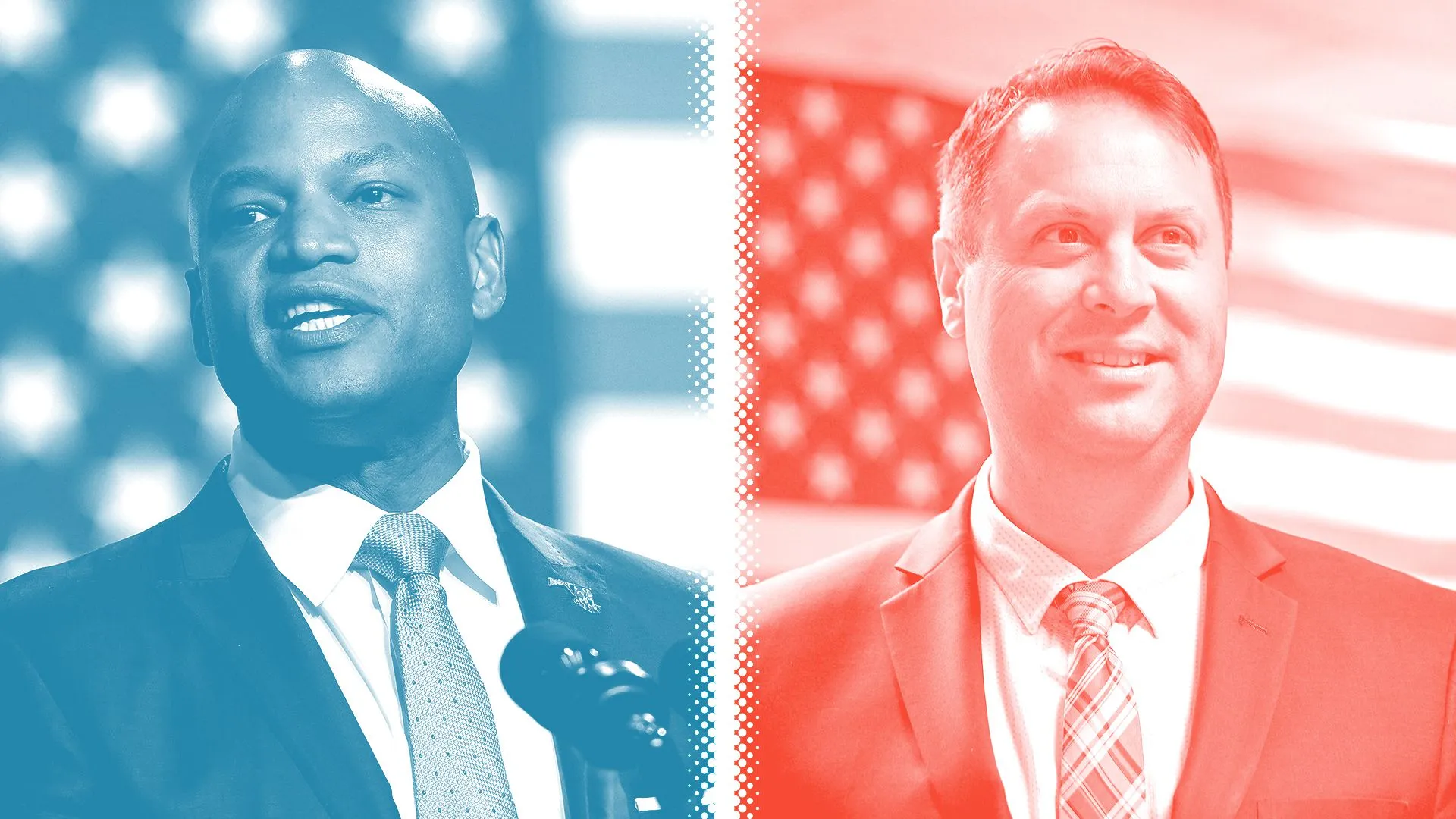
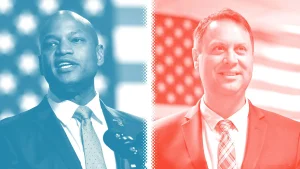
This is not a new experiment, but rather the scaling of a proven prototype. In 2022, the Democratic Governors Association (DGA) executed a masterclass in electoral curation by channeling more than $1.2 million into the Maryland Republican primary. The objective was entirely mathematical.
In a state where registered Democrats outnumber Republicans two-to-one, statewide victory for a majority-party nominee is historically insulated, provided the opposition behaves predictably. In 2022, internal modeling suggested that a business-aligned, moderate conservative possessing cross-party appeal could construct a competitive coalition of independent and swing voters.
By contrast, candidate Dan Cox offered no such mathematical threat. His platform, while resonant within a specific, highly energized segment of the primary base, faced a steep structural ceiling in a broader November electorate.
By spending over a million dollars to elevate Cox’s profile among core primary voters—framing him as “too conservative” in regions where that exact descriptor acted as an implicit endorsement—outside strategists effectively selected their own general election opponent. The strategy was validated by the final tally in November: a historic 32-point blowout that cleared the path for the current administration. Cox was never the opposition’s target; he was their preferred path of least resistance.
Four years later, the arrival of official party-funded mailers signals that the same panic button has been pressed, triggered by a changing tactical landscape.
The 2026 Republican field is crowded, fractured, and largely underfunded. Yet the entry of businessman Ed Hale has introduced a structural variable that disrupts the majority party’s traditional general election calculations. As a prominent private-sector employer and former Democrat, Hale possesses the exact cross-party, pragmatic profile that independent analysts view as a legitimate statewide risk. He represents a return to the competitive, moderate model—the exact kind of candidacy that forces an incumbent administration to expend real resources in November.
This explains why the official party apparatus has stepped out from behind the veil of independent political action committees to intervene directly. The goal of the current mailer campaign is to replicate the 2022 dynamic: to steer the primary electorate away from a candidate with independent viability and guide them toward a matchup that yields a predictable, pre-determined November outcome.
When an opposing political machine buys its way into your primary, it is not an act of democratic engagement. It is a calculated intervention designed to induce an unforced error. The establishment is counting on the primary electorate falling for the exact same reverse-psychology play twice, betting that voters will mistake an opponent’s curated spotlight for genuine momentum.
A news organization’s role is not to endorse a candidate or dictate the ideological direction of a party. The choice between a grassroots conservative platform, a private-sector moderate, or any other vision belongs exclusively to the registered voters casting ballots on June 23rd.
But as those voters sift through the deluge of glossy mailers this week, the most critical piece of data isn’t the headline on the front—it is the compliance line on the back. When a political party uses its own treasury to tell you who your choices are, they are revealing precisely who they are afraid to face when the real curtain goes up in November.
 Local Story