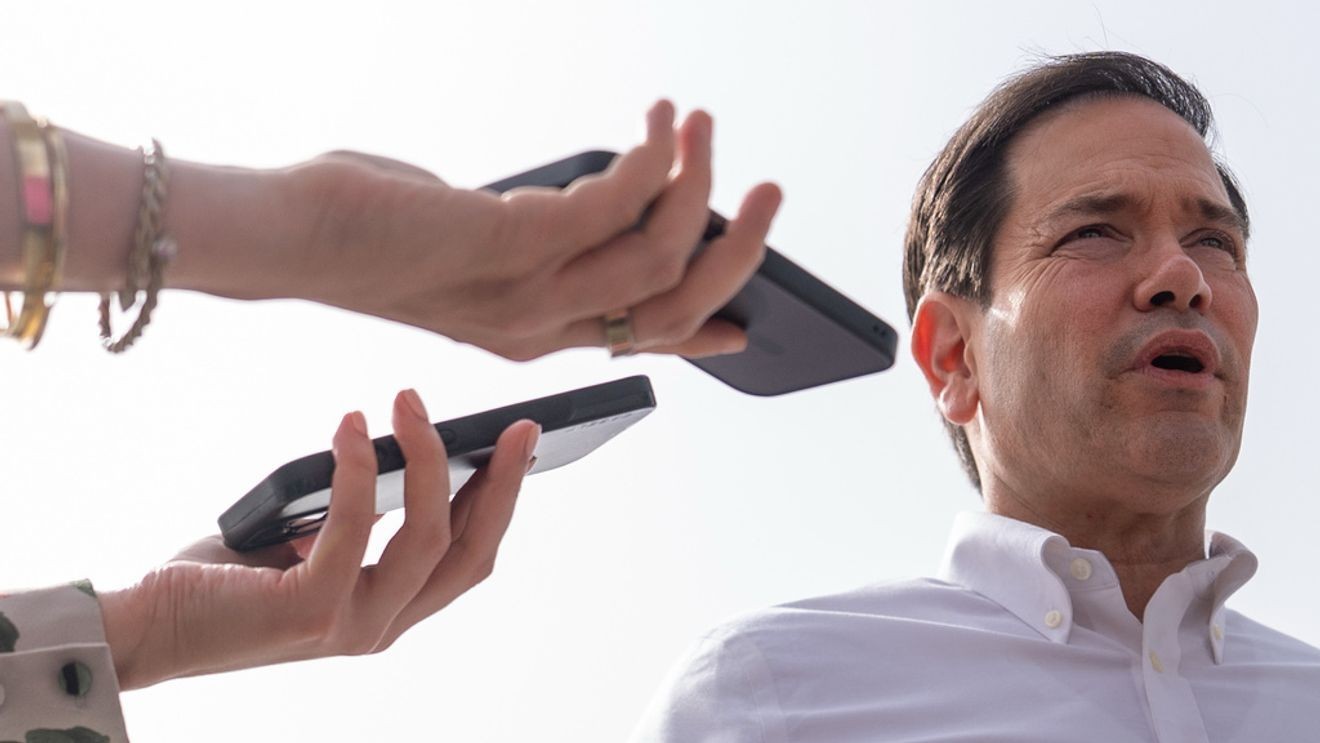
(TNND) — Secretary of State Marco Rubio told reporters Tuesday that the Strait of Hormuz will remain open “one way or the other” if the U.S. reaches an agreement with Iran.
Speaking during a multi-nation diplomatic tour, Rubio said no country supports what he described as Iran’s self-imposed “tolling system” in the vital shipping lane.
“It’s unsustainable for the world. It’s unacceptable. Um, I don’t know of any country in the world that does it,” Rubio said. “The Russians are not in favor of a tolling system. The Chinese are not in favor of a tolling system. I mean, there’s no country in the world that’s in favor of it, except the regime in Iran.”
Rubio said early Tuesday that a deal with Iran was still possible despite what the U.S. described as “self-defense” strikes in southern Iran.
“There were some talks going on in Qatar today, so we’ll see if we can make progress. I think it’s a lot of talking back and forth going on about specific language in the initial document, so it’ll take a few days,” Rubio told reporters in Jaipur during an official visit to India.
“The president’s expressed his desire to make it. He’s either going to make a good deal or no deal,” he said.
Rubio also addressed ongoing negotiations between the U.S. and Iran, saying regional leaders broadly support a preliminary framework for a potential deal, though talks are expected to continue for several more days.
The president had a very important, I think, historic call just a couple days ago with a number of leaders from the region. I think there’s strong alignment and agreement on what a preliminary draft should look like,” Rubio said. “I think, like anything with something like this, it’s going to take a couple days to settle on If there’s going to be a deal, we’re going to have to work through that, but this is, you know, it’s either going to be a good deal or there isn’t going to be one.”
Earlier Monday, President Donald Trump projected optimism about negotiations, writing on Truth Social that discussions were “proceeding nicely!”
Trump later claimed Iran’s enriched uranium would either be surrendered to the U.S. or destroyed as part of a potential agreement, calling it “nuclear dust.”
Iranian Supreme Leader Mojtaba Khamenei — who succeeded his father after he was killed earlier in the war — said Tuesday that Middle Eastern countries “will no longer serve as shields for American bases.”
“The hand of time does not turn back,” Khamenei wrote on X. “America will no longer have a safe haven for mischief and the establishment of military bases in the region.”
 Local Story