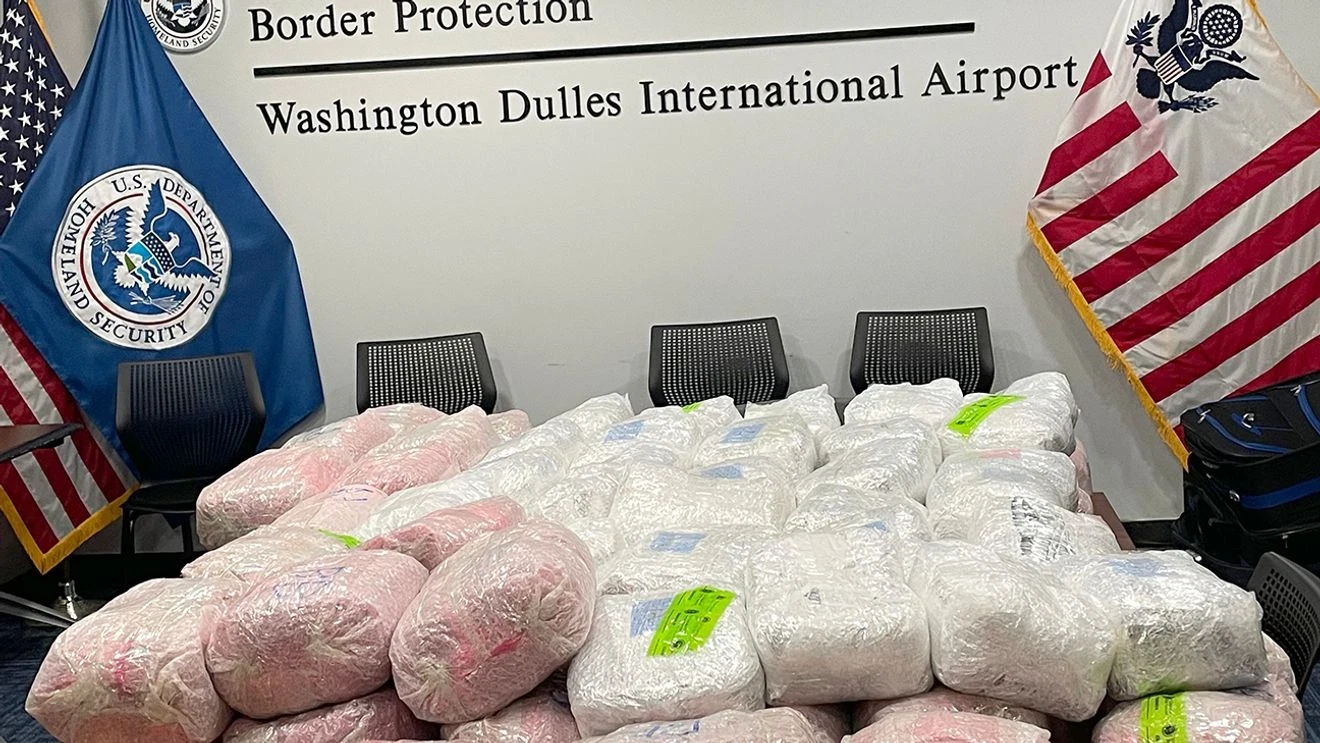
STERLING, Va. (WBFF) — Authorities arrested two men at Washington Dulles International Airport after officers found 764 pounds of khat stuffed into their bags.
U.S. Customs and Border Protection officers discovered the large amount of the illegal stimulant on the morning of Aug. 20 during separate inspections of travelers arriving from Casablanca and Paris.
Officials said Dorian Lamin Cham, 33, of Woodstock, Georgia and Dama Jawara, 33, of the Bronx, New York, each had seven checked bags and a carry on, all packed with bundles of dried plant material.
According to Customs and Border Protection, field tests showed the substance was khat, a leaf that acts as a stimulant and is classified as a controlled substance in the United States. Officers determined the street value of the seized khat is about $90,000.
Virginia State Police troopers charged Cham and Jawara with felony possession with intent to distribute and transporting a controlled substance into Virginia. Customs and Border Protection officers turned both men over to state police after the search.
“These arrests should be a warning to all would-be smugglers that the small fee drug trafficking organizations are paying you to haul khat and other illicit drugs won’t cover the cost of the severe consequences you’ll face when Customs and Border Protection officers catch you,” said CBP Area Port Director Christine Waugh, Area Port of Washington, D.C. “We appreciate our partners willingness to hold these smugglers accountable and help us put an end to this brazen khat smuggling trend.”
Recent seizures show CBP officers are seeing more attempts to transport khat in traveler baggage.
On Aug. 14, Metropolitan Washington Airports Authority police arrested a New York man after officers found 368 pounds of khat at Dulles Airport. On the same week, officers at Baltimore Washington International Thurgood Marshall Airport seized 412 pounds and 847 pounds of khat in separate busts.
Khat—also known as Abyssinian tea or African salad—is typically grown in East Africa and the Arabian Peninsula. It is chewed or brewed as a stimulant, but authorities warn of health risks ranging from delusions and loss of appetite to difficulty breathing and increased heart rate.
 Local Story