BALTIMORE (WBFF) — Demand is growing for a state-funded scholarship program that helps low-income Maryland families pay for private school. But as Project Baltimore found, fewer students are receiving help.
It’s now been 10 years since then-Maryland Governor Larry Hogan signed into law the BOOST program. BOOST, Broadening Options and Opportunities for Students Today, provides scholarships for children of low-income families to attend nonpublic schools.
Since 2016, BOOST advocates, such as Elizabeth Green, say the program has been a success.

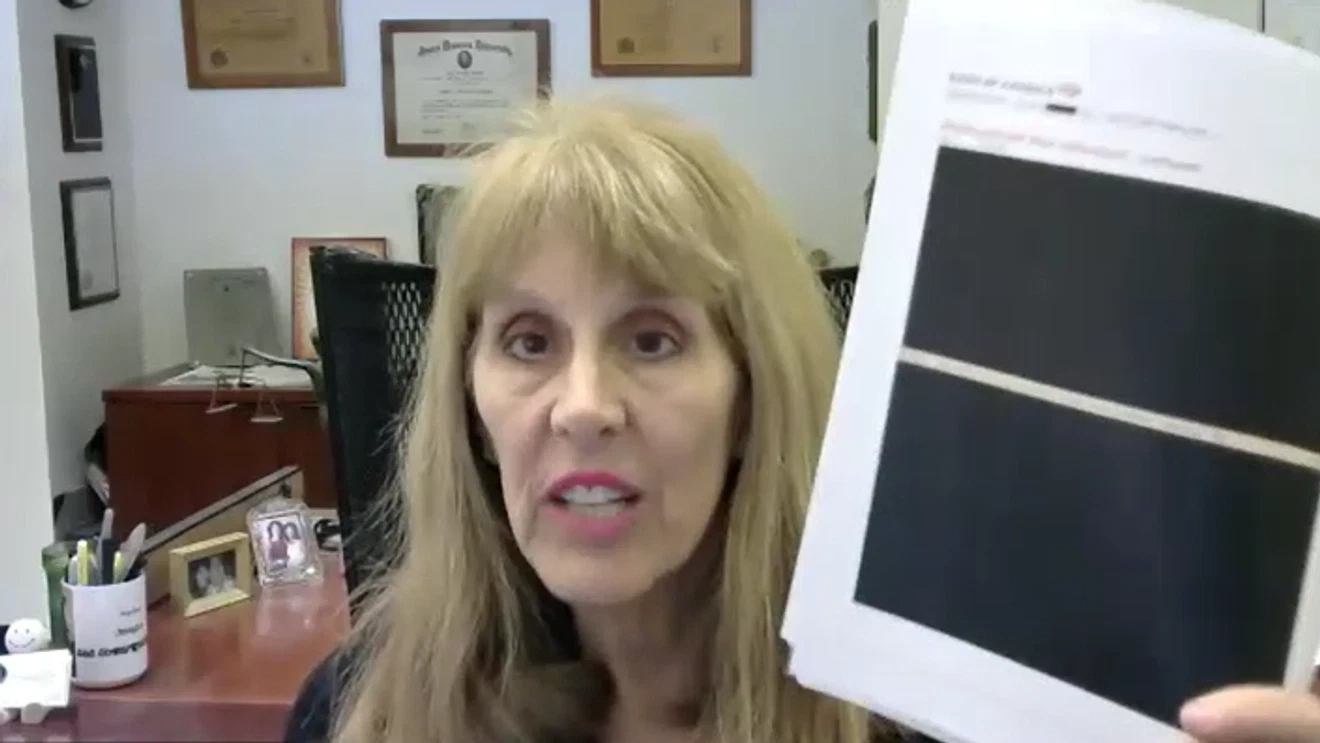
BOOST advocate Elizabeth Green works at Bnos Yisroel of Baltimore, an all-girls parochial school (WBFF)
“Everyone deserves to have access to a good education,” said Green. “It shouldn’t be defined by your job. It shouldn’t be defined by your zip code. [BOOST] has helped thousands of families in seeking choice for their children.”
ALSO READ | Maryland Governor calls federal education scholarship program a “tax scheme”
Green served on the BOOST advisory board for 10 years. She also works at Bnos Yisroel of Baltimore, an all-girls parochial school. Green tells FOX45 News, she has seen how BOOST has helped families escape failing or unsafe public schools. At Bnos Yisroel, about 550 students are enrolled – 98 receive BOOST scholarships.
“These very good parents who are able to, with the assistance of BOOST, move their children to successful environments and they are able to achieve,” said Green.
But a Project Baltimore investigation found, in recent years, as demand for BOOST scholarships has increased, the number of scholarships awarded by the state has decreased.
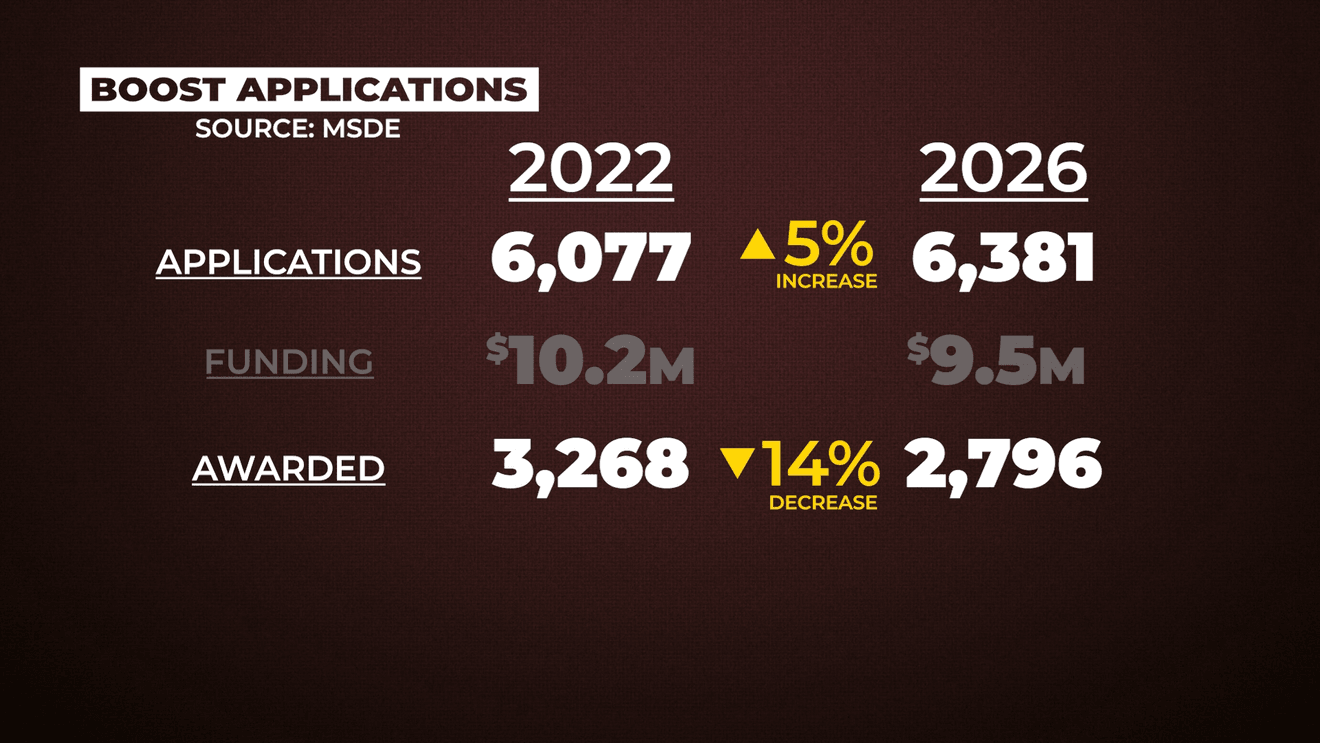
According to the Maryland State Department of Education, in 2022, 6,077 families applied for $10.2 million in BOOST scholarships, with 3,268 awarded scholarships. By 2026, 6,381 applications were received totaling $9.5 million in scholarships, with 2,796 being awarded.
Since 2022, the number of students receiving BOOST scholarships has decreased by 14%, while the number of BOOST applications has increased by 5% (WBFF)
In 2023, in his first budget after being elected, Governor Wes Moore cut BOOST’s funding from $10 to $9 million. When the funding was reduced, the number of families receiving scholarships also declined.
Since 2022, the number of students receiving BOOST scholarships has decreased by 14%, while the number of BOOST applications has increased by 5%. Green says that number would be even higher than 5%, but many families know the program has been cut back and they stopped applying for scholarships.
“They got tired of giving all of their information year after year after year and getting denied,” remarked Green.
ALSO READ | Despite controversial tenure, former Baltimore Schools CEO takes global education post
Back in 2023, FOX45 News asked Moore about BOOST at a press conference. “As we are thinking about what needs to happen with public dollars, public dollars do not need to be going to private schools,” Moore said.
When Governor Moore reduced BOOST’s funding in 2023, the move was celebrated by the Maryland State Education Association, the teachers union, which advocates for a total “Phase Out” of the BOOST program.
“There are very, very loud voices in Annapolis that are critical of the program and don’t see the benefit and don’t see the point,” stated Green.

Project Baltimore emailed Governor Moore’s office asking, after 10 years, if he considers BOOST a “success” or a “failure”? (WBFF)
But Green says she doesn’t understand why Governor Moore would be one of them. In his memoir, The Other Wes Moore, the governor describes how his family sacrificed so he could attend a private school.
“I think BOOST is very much in keeping with the message of that book—that with advocacy and with a little bit of assistance, your child can achieve,” said Green.
Project Baltimore emailed Governor Moore’s office asking, after 10 years, if he considers BOOST a “success” or a “failure”? We also asked, “What are Governor Moore’s intentions moving forward with BOOST regarding funding?”
We have not yet heard back.
“If we did live in a world in which BOOST didn’t exist, you would have families whose children are not going to succeed in school,” stated Green. “I think we are going to see either students that are pushed through the system without really, truly achieving or kids that just leave the system.”
Follow Project Baltimore’s Chris Papst on X and Facebook. Send news tips to cjpapst@sbgtv.com
 Local Story