MARYLAND (WBFF) — Government agencies continued sending hundreds of millions of taxpayer dollars through Medicaid to Maryland-based companies that, in many cases, already carried warning signs, including massive tax debts, lawsuits, neglect findings and federal investigations.
“I’m not paying s— to nobody,” Emmanuel Ajong Khumah told Spotlight on Maryland when asked about his company’s nearly $2 million in unpaid tax debts. “Zero. I don’t pay taxes. Why should I pay?”
Even as Khumah’s debts mounted, government records show his Kensington homecare company, Hope Found, collected roughly $29 million in taxpayer-funded Medicaid payments between 2020 and 2024.
Khumah’s company was not an isolated case.
A months-long Spotlight on Maryland investigation identified roughly a dozen Maryland-based homecare providers billing Washington, D.C.’s Medicaid program that collectively received hundreds of millions of taxpayer dollars while carrying significant tax liens, facing labor and malpractice lawsuits, operating from seemingly vacant offices or being cited in serious allegations involving patient care.
Federal and local officials say Medicaid has safeguards to detect fraud, waste and abuse. But records reviewed by Spotlight on Maryland show companies continued receiving taxpayer money long after many of those warning signs had surfaced.
Khumah’s company owes $1.85 million in federal taxes dating back to 2017, according to court records, and owes another $144,716 to Washington, D.C. Still, the government continued to send his company millions of taxpayer dollars through Medicaid.
“This is an example of the fraud industrial complex,” said OJ Oleka, the executive director of the State Financial Officers Foundation and the former deputy treasurer of Kentucky. “Here is somebody who is taking money from the federal government. They’re asked to pay taxes, and they refuse to do so.”
Hope Found is one of roughly a dozen companies based in Maryland billing primarily homecare health services through Medicaid—all of which are clustered in Montgomery and Prince George’s counties and receive federal taxpayer funds overseen by the Washington, D.C. government.
The federal Medicaid database reviewed by Spotlight on Maryland covers billing from 2018 to 2024. The federal Centers for Medicare and Medicaid (CMS) provided data showing that each company detailed in Spotlight on Maryland’s investigation continued to receive funding between 2024 and 2026 through D.C.
Hope Found and the companies detailed in Spotlight on Maryland’s investigation have not been accused or found guilty of Medicaid fraud in public records.
Parker Thayer, an investigator at the Capital Research Center, said that homecare Medicaid is particularly difficult for the government to oversee because it’s conducted in personal residences instead of medical facilities.
“The whole program has exploded,” Thayer said. “There are more companies and more patients and more providers than ever before. And they’re billing more money than ever before, largely because the word has gotten out that this program is just another easy way to get money and that there’s basically no oversight.”
He said that Medicaid fraud documented across the country has often included companies overbilling for patients, billing for fake patients, and in some cases bribing families and doctors to get approved for unnecessary care.
“This matches 100 percent with the trends of fraud that have been observed elsewhere in the nation,” Thayer said after reviewing Spotlight’s findings. “It’s largely the government’s fault because of a lack of oversight.”
A spokeswoman for Maryland Gov. Wes Moore said that the Maryland Department of Health (MDH) “employs rigorous oversight of Medicaid programs and takes swift action if improper conduct is found.”
The D.C. Department of Health Care Finance (DHCF) confirmed that each company mentioned in Spotlight’s reporting received funding between 2023 to 2025. A spokesperson for the department said that the city has extensive measures in place to counter Medicaid fraud.
On Presidents Drive in Lanham, Maryland sits a commercial office building listed in federal records as the primary practice address for Alight Supports, which billed about $8 million taxpayer dollars through Medicaid from 2018 to 2024.
When Spotlight on Maryland visited the address, the listed suite number had no sign for the business and appeared to be vacant. Spotlight contacted Alight Supports by phone and email, but did not receive a response.
The company has not been accused or found guilty of Medicaid fraud in public records.
A Washington, D.C., Department on Disability Services (DDS) report in 2022 revealed that local investigators substantiated neglect against Alight Supports after a disabled client was left inside a burning building.
The client has cerebral palsy, according to court records. She was receiving in-home support from Egonwei Mutama, an Alight employee. The client was taken to Mutama’s personal apartment in Landover, Maryland, where a fire broke out.
According to the DDS report, Mutama called an Alight supervisor during the fire and said she did not know where the disabled client was. Firefighters later rescued the client inside the apartment, where she sustained smoke inhalation and burns to multiple parts of her body. She was admitted to an intensive care unit, placed on a ventilator, and received a tracheostomy and feeding tube before being transferred to long-term care.
The DDS investigator found, by a “preponderance of evidence,” that the disabled client was a “victim of neglect.” The report said Mutama violated DDS policy by taking the client to her residence, placed her at risk of harm and failed to ensure her health and safety.
The incident later became the subject of a civil lawsuit against Alight. Court records reveal that lawyers have been unable to locate Mutama as part of the ongoing case.
The DDS report also noted that the property manager at the apartment complex told investigators there had been “random chatter” about possible home health-care activity in the building and that he believed there were multiple instances of residents bringing disabled people into apartments.
The fire incident was in 2022. Still, Alight went on to receive $7 million taxpayer dollars through Medicaid between 2023 and 2025, according to data provided by DHCF.
Oleka said Alight should be disqualified from receiving taxpayer dollars.
“It doesn’t show a system that’s working,” he said. “Imagine if that was your relative, that was your uncle, your mother, your grandfather, and as a result of this home health care agency that was given your taxpayer money, they were effectively left there to die in a fire. That’s what’s happening in Maryland.”
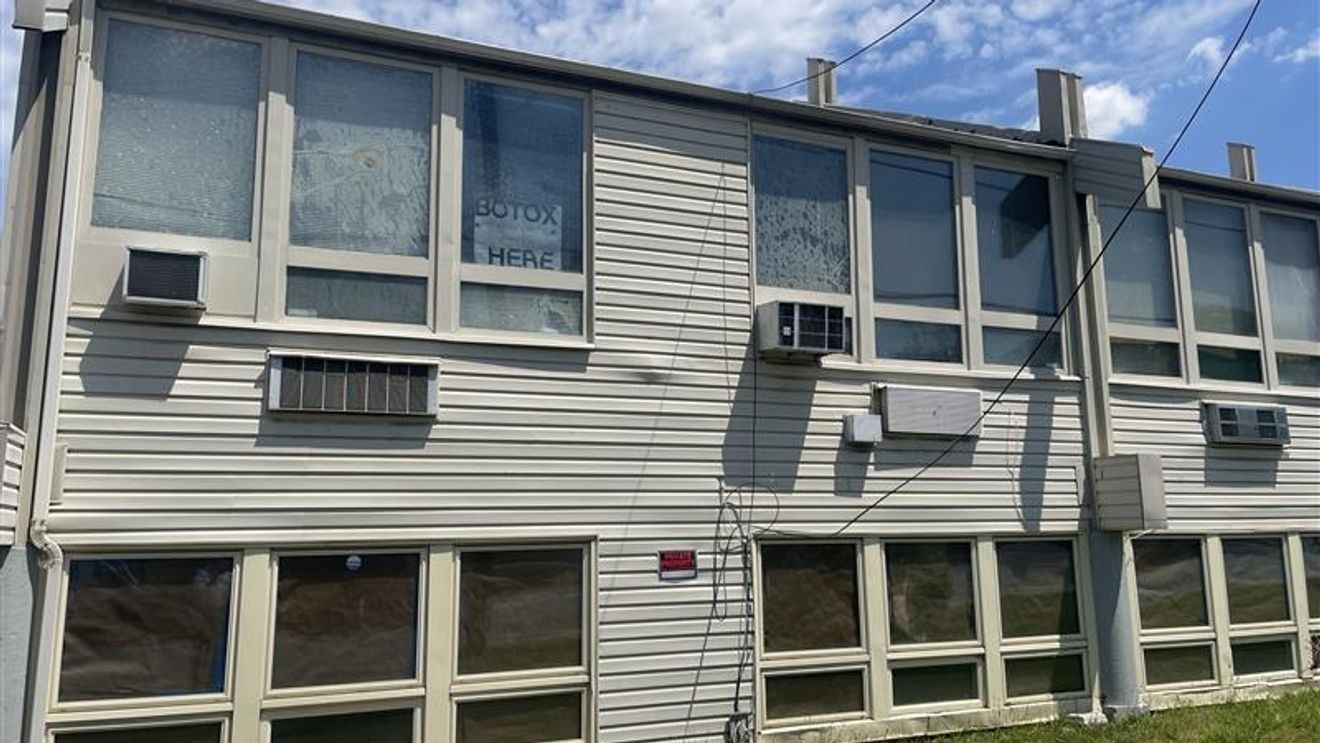
A dated commercial office building on Annapolis Road in Bladensburg, Maryland has the entirety of its windows covered, the first floor by brown paper and the second floor by blinds. The only visible sign on the building reads, “BOTOX HERE.”
One suite in the building is listed in federal records as the primary practice address for Lifeline Inc., which billed nearly $104 million for Medicaid in Maryland from 2018 to 2024.
Court records show Lifeline owes $1.56 million in federal taxes. The company is facing a federal labor investigation and settled in a separate medical malpractice case regarding the death of a disabled Maryland child under their care.
Still, millions of Medicaid dollars continued to flow to Lifeline.
A 2024 lawsuit from the U.S. Department of Labor (DOL) alleges Lifeline failed to pay overtime to homecare workers and then interfered with the government’s investigation.
Court records show DOL alleges that Lifeline sought to avoid overtime complaints by hiring workers “who had emigrated from Africa” because the company believed they were “financially dependent on their job” and “less likely to file a complaint.”
DOL alleges that the head of Lifeline, Rhoda Makinde, attempted to subvert the investigation as she searched employee email accounts, locked employees out of their accounts, reassigned passwords, directed staff to falsify payroll records, sent falsified records to investigators and reduced hours or terminated workers suspected of cooperating with the investigation.
Lifeline denies the allegations in court records and did not respond to a request for comment.
Court records in a Baltimore City medical malpractice case reveal that Lifeline paid a $250,000 settlement to the family of a 10-year-old disabled child who died in their care at an Anne Arundel facility in 2014. The lawsuit was filed in 2018, and the settlement was paid in 2021 in exchange for dismissal with prejudice and a release of claims.
The medical malpractice lawsuit listed the same Bladensburg address currently listed as Lifeline’s primary practice location for its Medicaid homecare services.
“If you are a company that had a child die in your care, and you’ve had multiple issues in terms of lawsuits, you don’t have a right to taxpayer dollars,” Oleka said. “People just turn the other way. You oftentimes don’t have the right incentives for the elected officials to do the right thing.”
Lifeline went on to receive nearly $39 million taxpayer dollars from 2024 to 2026 for its practice at the Bladensburg address, according to data provided by CMS.
Federal data shows that Lifeline billed another $12.15 million taxpayer dollars through Medicaid from 2018 to 2024 at a separate primary practice address listed in D.C.
One Lifeline official listed in the medical malpractice lawsuit was Peter Makinde. According to Maryland property records, he owns the Bladensburg suite listed as the primary practice address for Lifeline’s Medicaid services.
Peter Makinde was listed as the CEO of Lifeline Inc. in Georgia, along with CFO Rhoda Makinde, and the current head of the Maryland Lifeline entity. The Georgia Lifeline company dissolved in 2016, according to state records.
Lifeline did not respond to a request for comment. Attempts to reach Rhoda and Peter Makinde were unsuccessful.
Thayer said companies committing Medicaid fraud often move states with ease.
“This is a trend we’ve seen all over,” he said. “It’s developed into an industry called fraud tourism, where you go from state to state to state and just run your scam for as long as the government will let you. And then they tell you to go away, and you go and start up again in the next state, because it’s just too easy to create these companies. It’s too easy to get certified. And it’s too easy to submit billings because nobody’s really checking or able to check.”
Lifeline has not been accused or found guilty of Medicaid fraud in public records.
Capital Care billed about $102 million taxpayer dollars through Medicaid from 2018 to 2024 at a listed primary practice address in Silver Spring, Maryland. When Spotlight on Maryland visited the office building, the listed suite number had no sign for the business and appeared vacant.
The head of Capital Care, Paul Tizibong Atang, told Spotlight on Maryland that his company moved to Lanham in April.
Court records show Atang paid off a $2.7 million tax lien in 2024. When asked about these taxes, Atang hung up.
“Absolutely not,” he said. “I’m not going to continue this call.”
Oleka said that across the country, tax liens have become a strong indicator of fraud at Medicaid billing companies.
“When you think about the idea of fraud, particularly as it relates to Medicaid fraud, if there are companies that repeatedly owe and owe and owe, it’s likely because they’re getting their money in a fraudulent way and they don’t exactly want to pay their taxes the right way. Again, you can’t put fraud on a W-2,” Oleka said. “This is what we say when there is a culture of fraud. And this is what we say when this is a feature of the system, not a bug.”
Capital Care has not been accused or found guilty of Medicaid fraud in public records.
A Silver Spring, Maryland townhouse valued at about $660,000 is listed as the primary practice address for Family Comes 1st, which billed $3.7 million taxpayer dollars through Medicaid for homecare services from 2022 to 2024.
Repeated calls to the listed phone number for Family Comes 1st went straight to voicemail. The company did not respond to questions emailed by Spotlight on Maryland.
Oleka expressed concern with companies billing millions of Medicaid funds to homes.
“That is a concern to me when you have these companies that are listed in locations where there’s nobody there, or they’re listed in townhomes where you can’t exactly do the work,” he said. “This is the same thing we saw in Minnesota. It’s the same thing that we saw in California, in some of these other states where there have, in fact, been prosecutions as it relates to fraud. And again, this goes to the brokenness of the system.”
Family Comes 1st has not been accused or found guilty of Medicaid fraud in public records.
In Clinton, Maryland sits a house listed as the primary practice address for Fescum Inc., which billed more than $36 million taxpayer dollars for homecare Medicaid services from 2018 to 2024.
The head of Fescum, Forlorunso Paul Ijiti, owes $776,654 in federal taxes, according to court records.
Fescum has multiple open offices in a commercial office building listing in Maryland business records for the company.
Court records show that Fescum and Ijiti are facing a pending lawsuit from a former employee who alleges Ijiti removed her salary position then reclassified her as an hourly worker “to avoid overtime premiums.”
The lawsuit alleges that Ijiti “leveraged his absolute authority to subject Plaintiff to unwelcome physical scrutiny, explicit comments regarding her body, and overt demands for sexual ‘dates’ in exchange for the promotion was already qualified to hold.” The employee was allegedly fired days after rejecting sexual advances. Ijiti allegedly installed video surveillance cameras in her office.
Attempts to reach Ijiti were unsuccessful. Fescum did not respond to a request for comment.
DHCF explained in a statement to Spotlight on Maryland how exactly Maryland companies are eligible for Medicaid through D.C.
“Health care providers located in Maryland, Virginia, and other jurisdictions may enroll as DC Medicaid providers if they meet the District’s enrollment and program requirements. Once enrolled, those providers may furnish covered Medicaid services to eligible DC Medicaid beneficiaries and bill DC Medicaid for those services,” a DHCF spokeswoman said.
“DHCF only pays for Medicaid-covered services that are medically necessary,” she added. “The DHCF Division of Program Integrity is tasked with overseeing the Medicaid program to reduce and eliminate fraud, waste and abuse, through a skilled team of investigators, auditors, data analysts, and other specialists who conduct routine oversight, including auditing, fraud investigations, and advanced data analytics to target suspicious activity and conduct follow-up operations.”
MDH in a statement to Spotlight on Maryland, said Capital Care was a licensed Maryland Medicaid provider up until 2021, while specifying that the remaining companies “were not Medicaid providers during 2018-2024, and are currently not Medicaid providers.”
“Maryland Medicaid has a strong and comprehensive program integrity framework designed to prevent, detect, investigate, and recover fraud, waste, and abuse while protecting taxpayer dollars and ensuring beneficiaries receive appropriate care. Program integrity efforts span all Medicaid programs,” the MDH spokeswoman wrote in an email statement, adding that the department works closely with other offices in the state and federal government.
A spokeswoman for Gov. Wes Moore told Spotlight on Maryland, the state has “zero tolerance for waste, fraud, or abuse of taxpayer dollars.”
“Our state Department of Health employs rigorous oversight of Medicaid programs and takes swift action if improper conduct is found. The Moore-Miller administration will continue working with anyone, from our partners in the General Assembly to the federal administration, to identify ways to strengthen oversight and ensure every taxpayer penny is accountable to the people of Maryland,” Moore’s spokeswoman wrote in an email.
The U.S. Justice Department announced its National Health Care Fraud Takedown in June, which included 295 defendants accused of submitting more than $518 million in false claims to Medicaid.
Oleka said officials in Maryland and D.C. need to work together alongside federal investigators to better crack down on Medicaid fraud.
“It’s a matter of effort, but it is also a matter of resources, because I will say, if you have the interest as a state financial officer, and you’ve got the political courage, but you don’t have the authority, your state legislature hasn’t given you the resources, then it will be difficult,” he said.
A spokesperson for Maryland Attorney General Anthony Brown cited successful investigations and prosecutions against millions of dollars of Medicaid fraud. When asked if Brown is confident that Medicaid money in Maryland is being spent appropriately, the spokesperson responded, “decline to comment.”
Spotlight on Maryland is a joint venture by The Baltimore Sun, FOX45 News and WJLA in Washington, D.C. Have a news tip? Call 410-467-4670 or emailSpotlightOnMaryland@sbgtv.com. Contact Patrick Hauf atpjhauf@sbgtv.comand @PatrickHauf on X.
 Local Story